The Best CRM for VC Firms in 2026
The best VC CRM depends on fund size. Established funds usually pick Affinity or DealCloud. Emerging managers pick Attio, 4Degrees or Edda for deal flow. Small firms that mostly need to know who at the firm knows a founder or an LP use Dex for Teams, on its own or next to a pipeline tool.


Ask five partners how their fund tracks deals and you'll hear five answers: Affinity, Attio, a Notion board, a spreadsheet, and "it's mostly in my inbox." That last one is the honest answer at most small firms, and it's why people go looking for a VC CRM in the first place.
The trouble is that a venture firm needs two different things from one tool. It needs a deal flow system, to move companies from first meeting to IC to close. And it needs a relationship layer, to know who at the firm already knows the founder, the co-investor, or the LP you're about to email. Most "best VC CRM" lists are written by a vendor that ranks itself first and blurs the two.
This guide separates them. It covers nine VC CRM options, what each costs for a five-person fund (prices checked on each vendor's site in November 2026), and which one fits a solo GP, an emerging manager, or an established firm.
Fast facts:
Affinity is the default VC CRM for established funds. It costs $2,000 to $2,700 per user per year, sold through sales, with a contract minimum on every plan.
For a 5-person fund, a year costs $10,000 on Affinity Essential, about $2,160 on Attio Plus, $2,400 on Dex for Teams, $2,940 on Streak Pro, and $1,440 on folk Standard.
4Degrees, Edda and DealCloud are deal flow CRM platforms built for investors, and all three are quote-only.
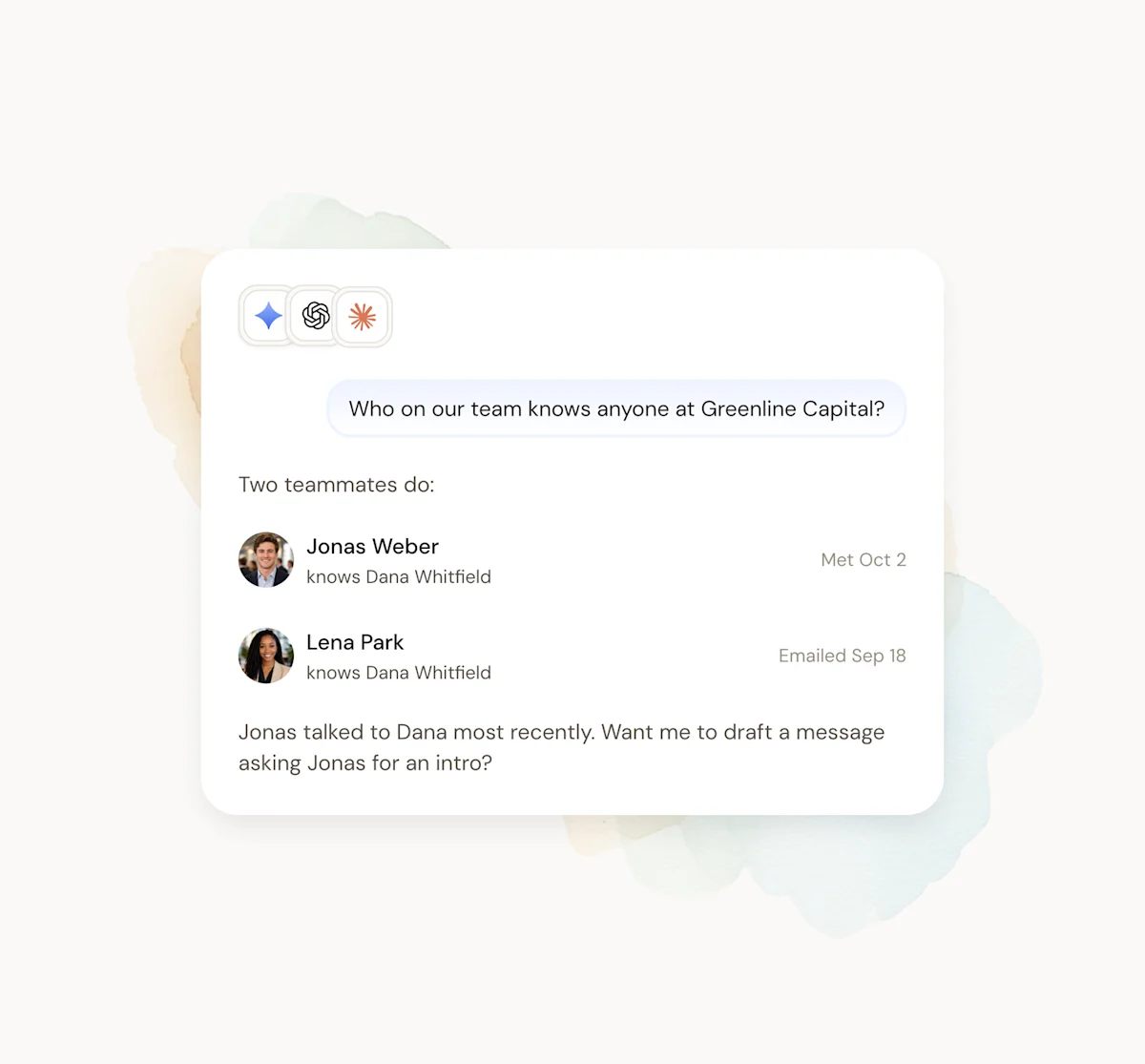
Dex for Teams doesn't track deals. It covers the relationship side: who knows whom, a shared history for each person, and keep-in-touch reminders for founders and LPs.
A fund of 1 to 3 people can start free on Attio, or run Dex on a personal plan.
What a VC CRM needs to do
A sales CRM tracks a rep closing a quota in a quarter. A venture capital CRM tracks relationships that run for a decade: a founder you passed on at seed who raises a Series B, an LP who re-ups across three funds, a co-investor who sends you two deals a year. The feature list follows from that.
Capability | Why a venture firm needs it | Who covers it best |
|---|---|---|
Automatic email and calendar capture | Partners won't log meetings by hand, so the CRM has to read them | Affinity, Attio, 4Degrees, Dex for Teams |
Who-knows-whom search | Find the warm path to a founder or LP before a cold email | Affinity, 4Degrees, Dex for Teams |
Deal pipeline | Move companies from sourcing to diligence, IC and close | Affinity, 4Degrees, Edda, DealCloud, Attio |
Data enrichment | Pull rounds, investors and headcount without research by hand | Affinity (PitchBook, Dealroom, Crunchbase), Attio |
Portfolio and LP tracking | Report on the fund and keep LPs warm between raises | Edda, DealCloud |
Privacy per person | Partners share some threads and keep others private | Affinity, Dex for Teams |
Few small firms need all six on day one. Most need capture and who-knows-whom first, and a pipeline later, once deal volume makes the spreadsheet painful. So when you compare venture capital CRM software, buy for the problem you have now and leave room for the next one.
VC CRM pricing for a 5-person fund
Here's what each VC CRM and piece of VC deal flow software on this list costs, with a year's price for five people on the plan a small fund would most likely start with.
Tool | Best for | Entry price | 5 users per year | Trial or free plan |
|---|---|---|---|---|
Dex for Teams | The relationship layer | $40 per user per month | $2,400 | 14-day trial, no card |
Affinity | Established funds | $2,000 per user per year | $10,000 | None listed |
Attio | Emerging managers who like to build | Free up to 3 users; Plus $40 + $35 per extra user per month | About $2,160 | Free plan |
4Degrees | Small funds that want Affinity's focus | Quote only | Quote only | Demo |
Edda | Deal flow plus portfolio management | Quote only | Quote only | Demo |
DealCloud | Large and multi-strategy firms | Quote only | Quote only | Demo |
folk | Lean funds on a budget | $24 per user per month | $1,440 | 14-day trial, no card |
Streak | Funds that live in Gmail | Pro $49 per user per month | $2,940 | 14-day trial on Pro+ |
HubSpot | Firms with a platform and marketing team | Free for 2 users; Professional $90 per seat per month | $5,400 + $1,500 onboarding | Free plan |
Prices are annual billing where offered, except Dex for Teams, which is billed monthly. Sources: Affinity pricing, Attio pricing, folk pricing, Streak pricing, the HubSpot pricing page, and the Dex for venture firms page.
How to choose a CRM for venture capital
Start with fund size and deal volume, not features. The best CRM for venture capital at a two-person seed fund is rarely the best one at a 40-person growth firm.
Your firm | What usually breaks first | Shortlist |
|---|---|---|
Solo GP, angel or scout | Remembering who you met and following up | Dex (personal plan), Attio free, Streak |
Emerging manager, 2 to 5 people | Partners don't know who the others know | Dex for Teams, Attio, folk, 4Degrees |
Established fund, 6 to 30 people | Pipeline, reporting and enrichment at volume | Affinity, 4Degrees, Edda, plus Dex for Teams for relationships |
Multi-strategy or 30+ people | Compliance, LP reporting, fund-level permissions | DealCloud, Affinity Enterprise |
Then check four things in any demo or trial:
Can each partner control what the firm sees from their inbox? Founders send sensitive things. A good VC CRM lets each person share some accounts and keep others out.
Does it work without data entry? If a partner has to log a coffee by hand, it won't get logged.
What happens when an associate leaves? The firm should keep what they shared, and their open follow-ups should go to someone else.
Can you try it without a sales call? Affinity, 4Degrees, Edda and DealCloud all start with a demo. Dex, Attio, folk, Streak and HubSpot let you start today.
1. Dex for Teams: best for the relationship layer
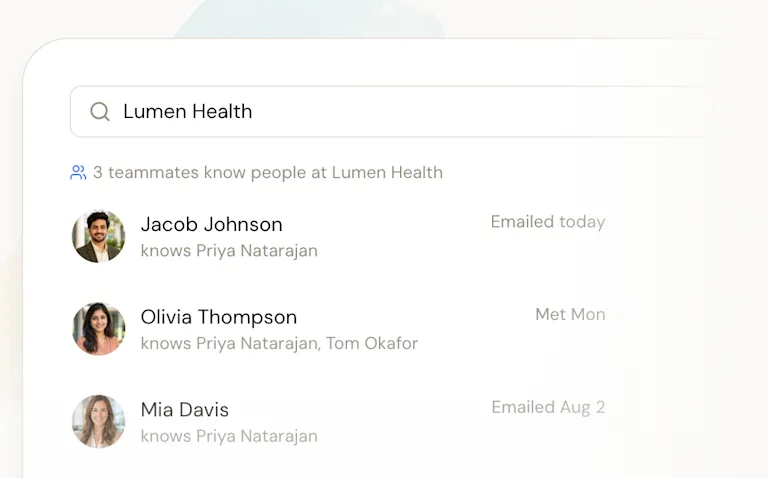
Dex started as a personal CRM and added a shared workspace for firms. It's not a deal flow CRM. It doesn't track stages, rounds or IC dates, and there's no pipeline to keep current. What it does is the part of a VC CRM partners actually open every day: search a founder, a co-investor, an LP or a company, and see which colleagues know them, when each last talked, and one shared timeline of emails, meetings and notes.

Privacy is set per person. Every partner keeps a private Dex, and the Dex for Teams workspace is a separate space they add to. For each connected account, each person picks whether the firm sees nothing, only subjects, participants and dates, or full content, and each note can be shared or kept private. When an associate leaves, their accounts stop feeding the workspace, what they shared stays with their name on it, and their open reminders go back to the team.
Keep-in-touch reminders work for the firm or just for you: a co-investor every 3 months, an LP every 6 months, a founder you passed on twice a year. The Dex MCP server lets you ask Claude or ChatGPT who at the firm knows someone. To see the setup step by step, read our Dex for venture firms guide.
Price: $40 per user per month, billed monthly, with CRM integrations, SAML SSO and 50 research credits. 14-day trial, no card.
Where others are better: deal pipelines, portfolio reporting, and PitchBook or Crunchbase data. Firms that need those run Dex next to Affinity, Attio or a spreadsheet pipeline.
Best for: emerging managers and small funds that mostly want to know who at the firm can make the intro. See Dex for venture firms.
2. Affinity: best for established funds
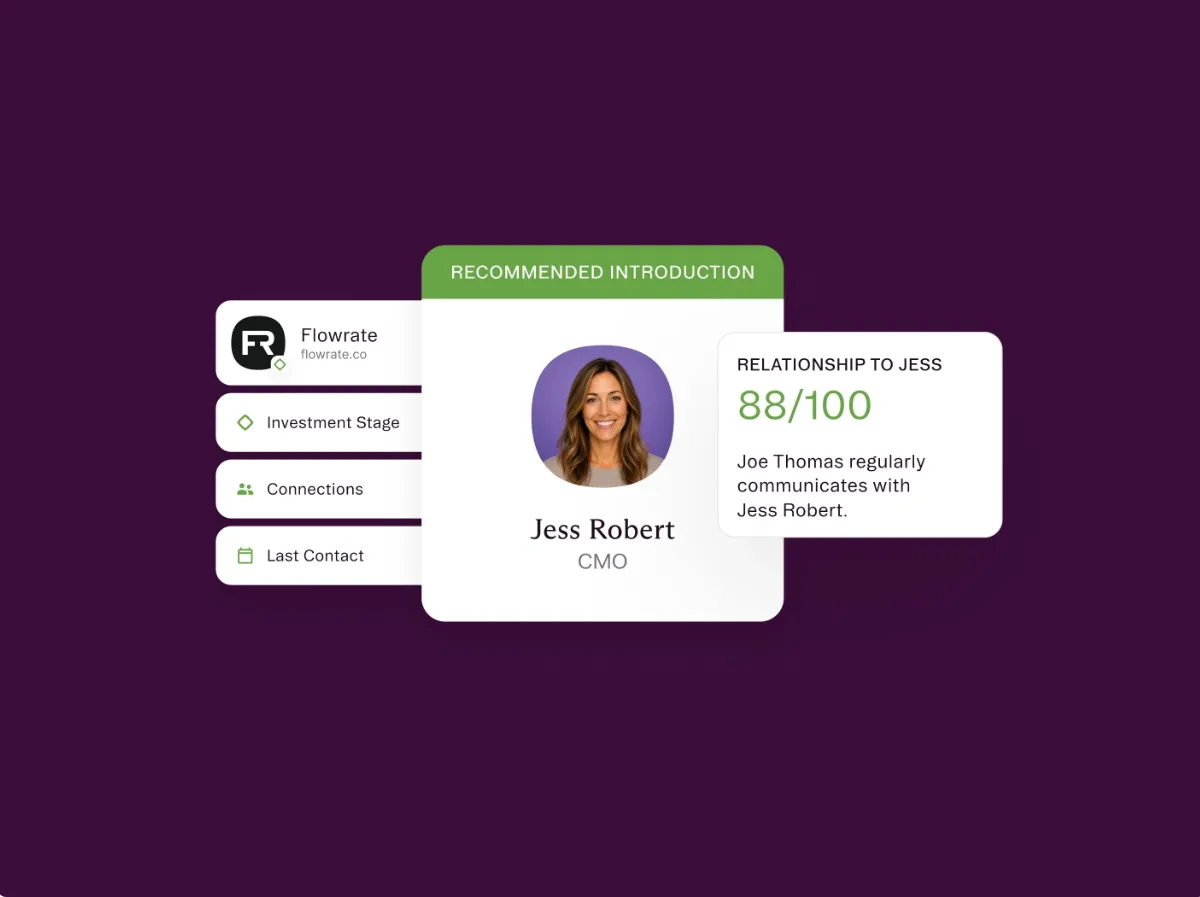
Affinity is the venture capital CRM most funds compare everything else against. It reads email and calendar across the firm, scores relationship strength, finds the warmest intro path to anyone, and runs the deal pipeline. On Advanced it adds PitchBook, Dealroom and Crunchbase enrichment, plus Slack and Salesforce integrations.
It's also priced for funds that have closed. Essential is $2,000 per user per year, Scale $2,300 and Advanced $2,700, all through sales, and the pricing page says every plan requires a contract minimum. The PitchBook integration also needs your own PitchBook subscription.
Price: $2,000 to $2,700 per user per year; Enterprise custom.
Best for: funds with 6 or more investment professionals and real deal volume. If Affinity's price is the blocker, our Affinity CRM alternatives guide prices seven cheaper options.
3. Attio: best for emerging managers who like to build
Attio is a general-purpose CRM that a lot of new funds now pick over Affinity. It syncs email and calendar, builds records on its own, enriches companies, and lets you design the data model: deals, founders, LPs, funds, whatever objects you want.
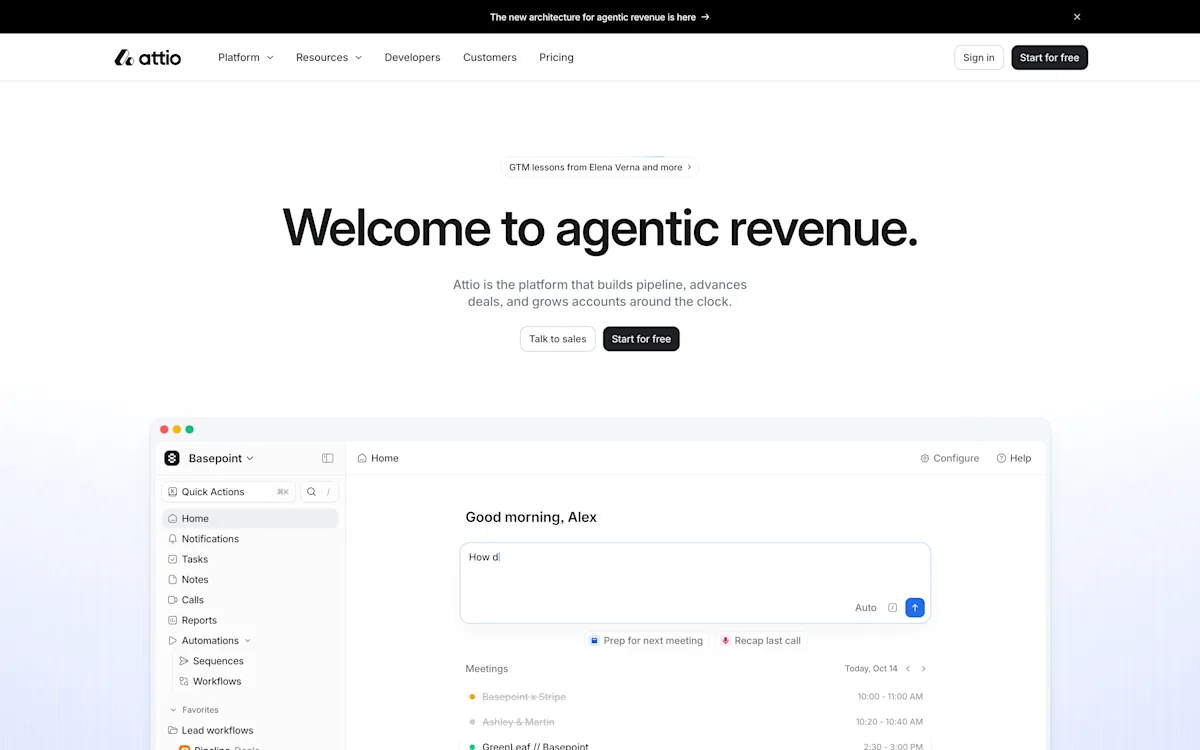
The trade-off is setup. Someone at the firm has to own the workspace and build the pipeline views. And custom objects are on Pro, not Plus.
Price: free up to 3 users; Plus $40 a month per workspace including one user, plus $35 per extra user; Pro $100 plus $79 per extra user (annual).
Best for: two- to five-person funds with one partner who enjoys building tools. See our Dex vs Attio comparison.
4. 4Degrees: best for small funds that want Affinity's focus
4Degrees is the closest match to Affinity in focus, built by former investors for venture capital, private equity, M&A and commercial real estate. It pairs relationship intelligence and warm intro search with a deal flow CRM and reporting, and it has a mobile app and a Salesforce option.
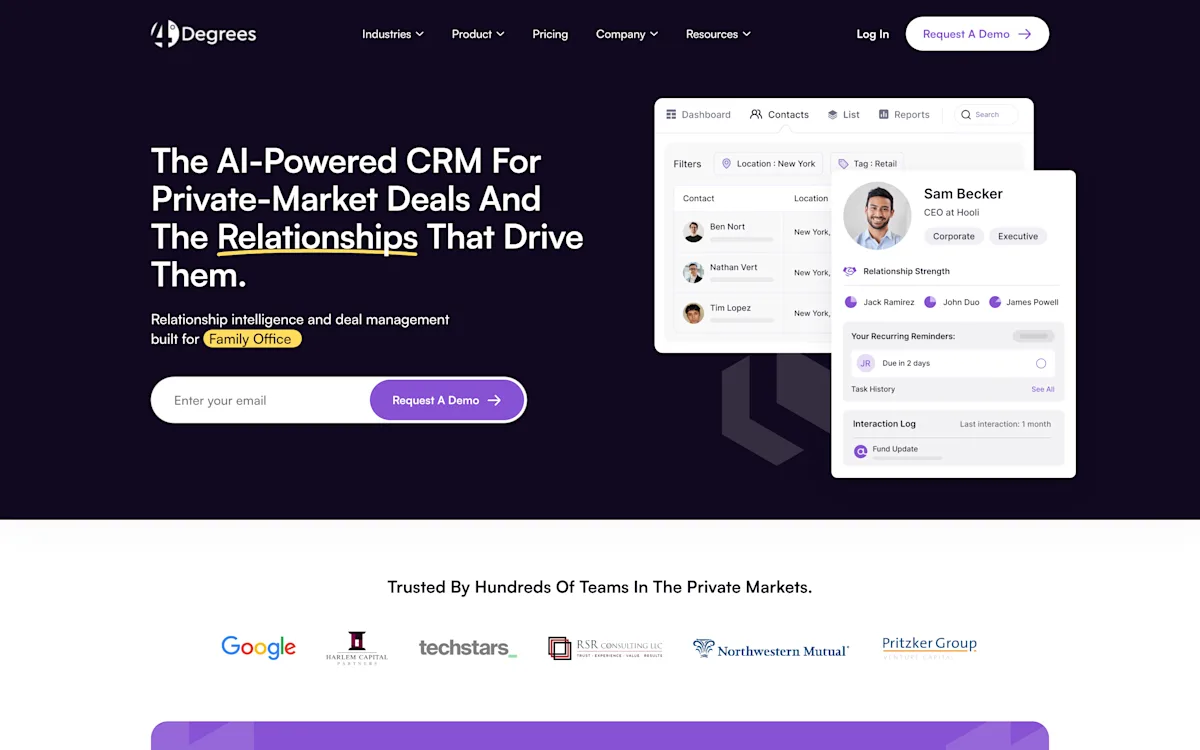
It doesn't publish prices. The 4Degrees pricing page says it charges per user per month and asks for a form. Customer quotes on the site call it more affordable than other deal flow tools.
Price: quote only, per user per month.
Best for: small funds that want a purpose-built VC CRM without Affinity's bill. Get a quote from both.
5. Edda: best for deal flow plus portfolio management
Edda is VC deal flow software with portfolio management, a contact CRM and an LP portal built in, with an AI layer that summarizes pitch decks and drafts pass emails. It covers more of the fund's work than anything else here, since the same tool tracks a company from sourcing all the way to TVPI.
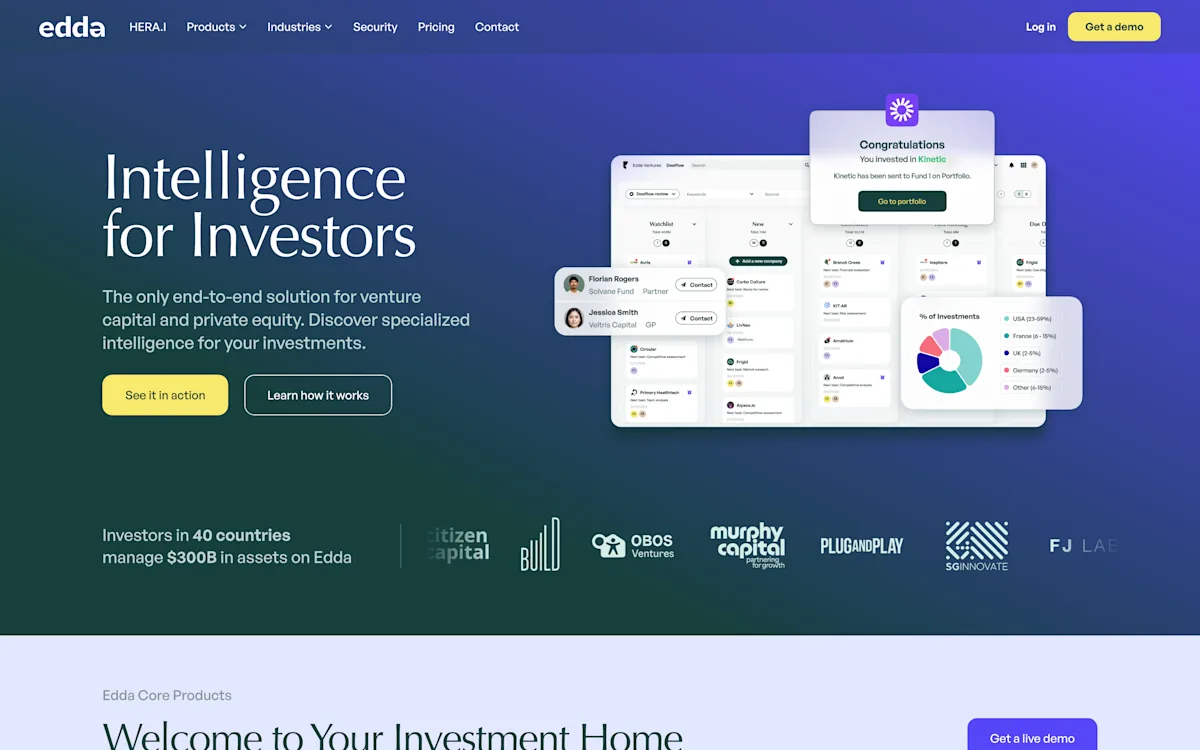
The Edda pricing page lists a First-Time GP plan for up to 3 users with 3 pipelines and 1 fund, and a Premium plan for up to 5 users, both priced on request.
Price: quote only.
Best for: first-time and emerging managers who want deal flow and fund reporting in one system.
6. DealCloud: best for large and multi-strategy firms
DealCloud, from Intapp, is the biggest system in VC deal flow software. It handles pipeline, fundraising, LP relationships, compliance and reporting for large private capital firms, and it's typically rolled out with an implementation project.
Price: quote only.
Best for: firms with 30 or more people, several strategies, or a compliance team. It's more than a small fund needs.
7. folk: best for lean funds on a budget
folk is a contact CRM with pipelines, email and calendar sync, LinkedIn capture through a Chrome extension, and email campaigns on its entry plan. It's the cheapest tool here with a real pipeline, and it works well for a fund that's also raising and sends a lot of LP outreach.
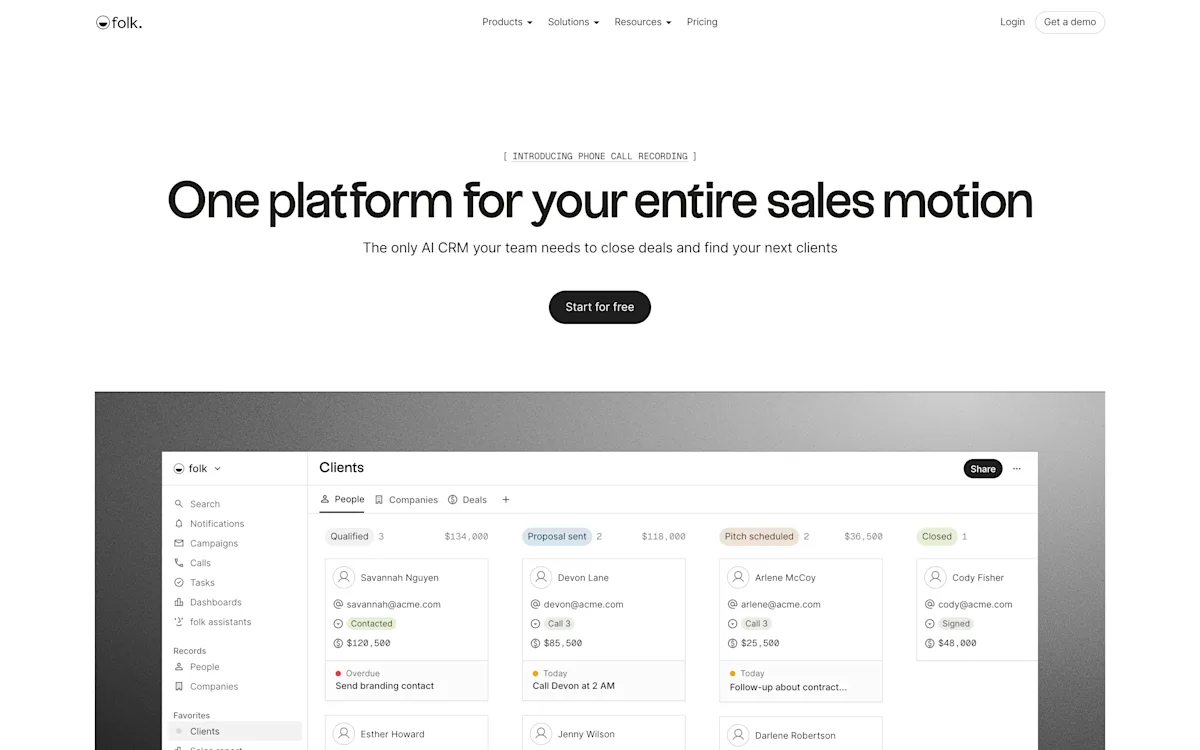
Watch the plan limits: custom objects, deals, workspace roles and the API are on Premium.
Price: Standard $24, Premium $48 per user per month (annual). 14-day trial, no card.
Best for: two- or three-person funds that want a pipeline for under $2,000 a year. Our folk alternatives guide covers when teams outgrow it.
8. Streak: best for funds that live in Gmail
Streak puts pipelines inside Gmail, so a deal is a row next to the email thread it came from. It publishes a venture capital setup for deal flow, LPs and portfolio companies. There's no Outlook version, and relationship intelligence is light compared with Affinity or Dex.
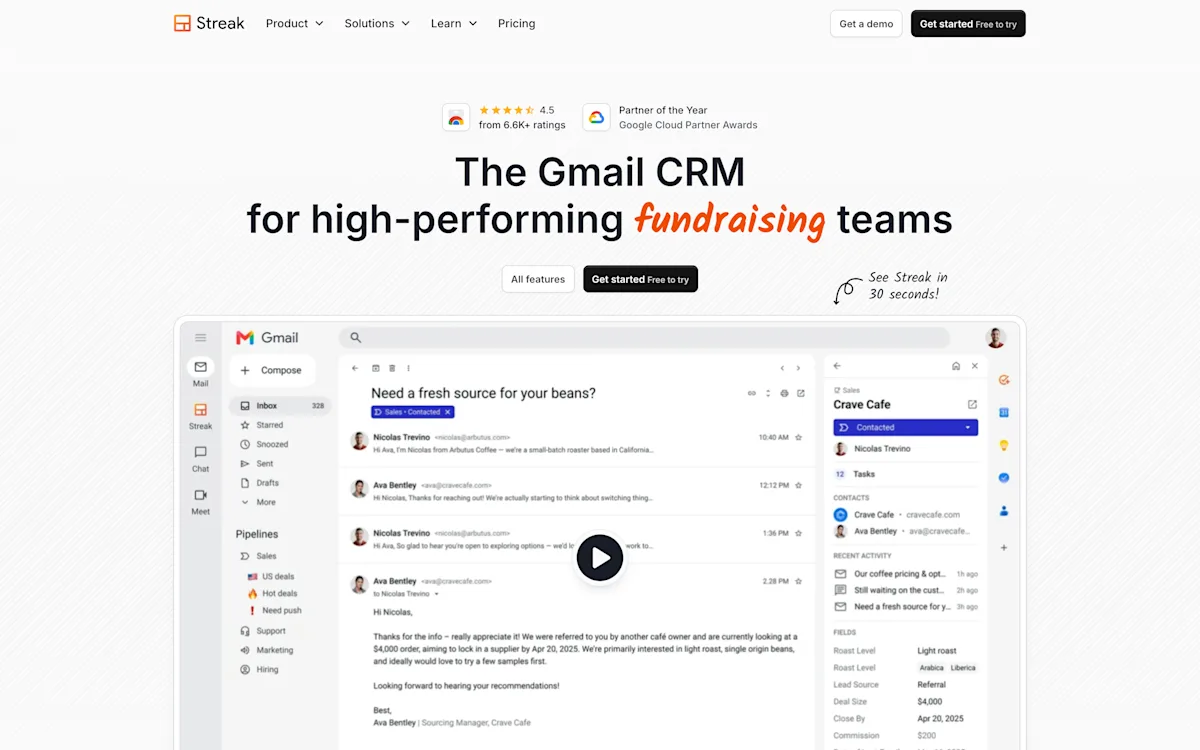
Price: Pro $49, Pro+ $69, Enterprise $129 per user per month (annual).
Best for: Google Workspace funds that want deal tracking without leaving the inbox.
9. HubSpot: best for firms with a platform team
HubSpot isn't built for venture, but plenty of funds end up on it, often because it's already what their portfolio companies use. It's strong at marketing, newsletters and events, which suits a fund with a platform team running founder programs.
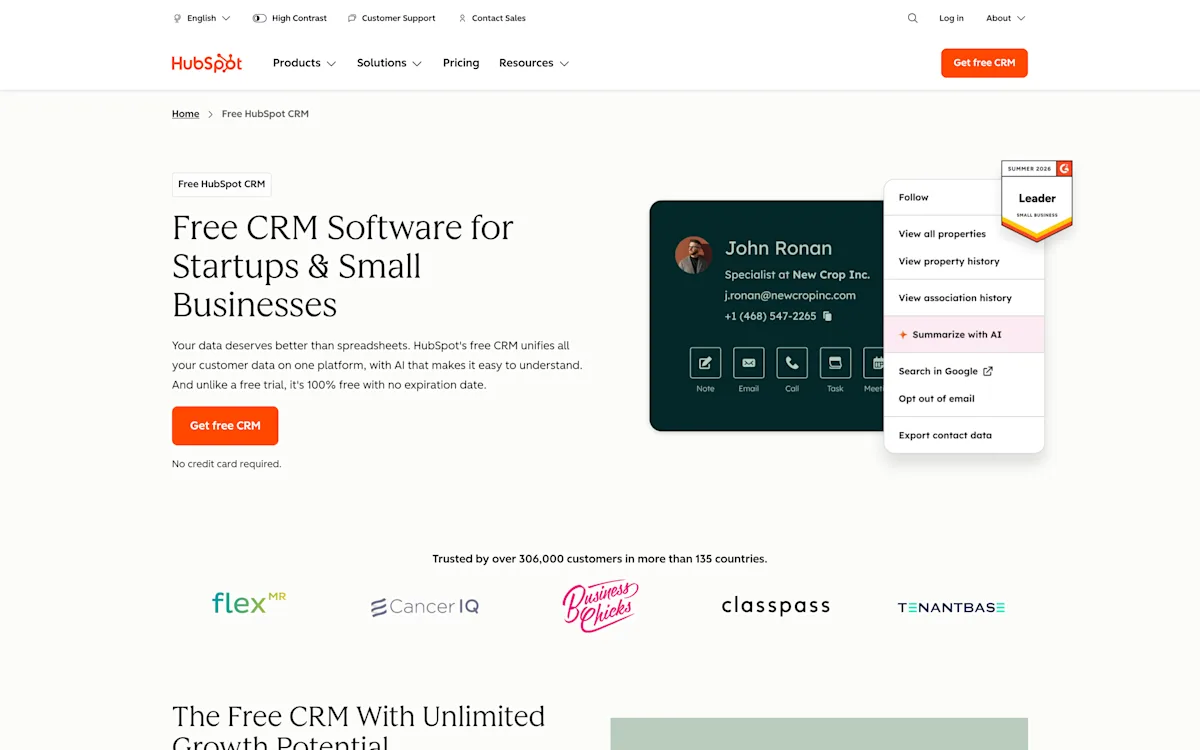
For investing work it's a lot of tool. There's no who-knows-whom search, and the paid tiers add up: Sales Hub Professional is $90 per seat per month plus $1,500 onboarding.
Price: free for 2 users; Starter from $20 per seat; Professional $90 per seat (annual) plus onboarding.
Best for: firms where marketing and community matter as much as deal flow.
Who this isn't for
If your firm already runs on Affinity or DealCloud, has the pipeline and reporting set up, and the partners use it, don't switch to a new venture capital CRM to save money. The cost of moving a fund's history and retraining a team is real. The same goes for firms that need fund-level permissions and audit trails for compliance; that's what the enterprise tools are for. And if you're a solo angel writing a few checks a year, you don't need a VC CRM at all. A personal CRM like Dex for investors covers the follow-up.
FAQ
What CRM do most VCs use?
Affinity is the most common VC CRM at established funds. Emerging managers increasingly use Attio, and many small firms still run on a spreadsheet plus their inboxes. DealCloud is common at large, multi-strategy firms.
What is the best CRM for venture capital?
For established funds, Affinity. For emerging managers that want a deal flow CRM, Attio, 4Degrees or Edda. For small firms that mainly need to know who at the firm knows a founder or an LP, Dex for Teams.
How much does a VC CRM cost?
From free (Attio for up to 3 users) to about $2,700 per user per year (Affinity Advanced). A 5-person fund pays roughly $1,440 to $3,000 a year on self-serve tools and $10,000 or more on Affinity.
What's the difference between a deal flow CRM and a relationship CRM?
A deal flow CRM, or VC deal flow software, tracks companies through stages, from sourcing to IC to close. A relationship CRM tracks people: who knows them, the shared history, and when to follow up. Many funds use one of each.
Can a VC firm use HubSpot or Salesforce?
Yes, and some do, especially through Salesforce add-ons like Navatar. They're built for sales teams, though, so funds usually spend time adapting them and still lack who-knows-whom search.
Can we move from a spreadsheet to a VC CRM?
Yes. Export the sheet as CSV and import it. Dex supports CSV import, then each partner connects email and calendar so history fills in.
The bottom line
There's no single best CRM for venture capital. The right VC CRM depends on what's actually breaking at your firm. If it's deal volume, reporting and enrichment, Affinity is still the benchmark, and 4Degrees, Edda and DealCloud are the purpose-built alternatives. If you want a flexible venture capital CRM you can shape, Attio is the emerging-manager favorite, and folk and Streak keep costs low.
If partners don't know who the others know, start with the relationship layer. Dex for Teams gives the firm a shared timeline for every founder, co-investor and LP, warm-intro search, and reminders, for $40 a user, and it runs alongside whatever pipeline you already have. At most small funds, that's the part of a VC CRM partners use first.
Start your free Dex trial and see who your firm already knows by the end of the day.
Related guides