The Best Relationship Intelligence Software for Small Teams in 2026
The best relationship intelligence software for small teams in 2026 is Dex for relationship-first teams, folk and Attio for teams that also need a pipeline, Cloze and Nimble for budget-minded sales teams, and Affinity or 4Degrees for dealmaking firms.


Relationship intelligence software used to be something only big firms bought. A law firm with 400 partners would spend six figures to learn which partner knew the general counsel at a target client. Small teams kept asking around on Slack.
That has changed. Several tools now bring automatic relationship tracking, warm-intro search, and shared contact history to teams of two to 20 people, at prices a small team can pay. This list compares seven of them, with each tool's price, the plan where team sharing actually works, and who it's best for. Prices were checked on vendor pricing pages in November 2026 unless noted.
Fast facts:
Good relationship intelligence software does four jobs: captures email and calendar activity automatically, merges everyone's contacts, rates connection strength, and shows the warmest path to any person.
Published prices for small teams range from about $21 to $79 per seat per month. Affinity starts at $2,000 per seat per year, and 4Degrees is quote-only.
Watch the plan details. On some tools, full shared interaction history only unlocks on a higher tier.
Five of the seven list a free trial. Dex, folk, and Cloze don't ask for a card to start one.
How we picked
We looked at tools that small teams really shortlist, not enterprise suites that need a six-month rollout. Each one had to capture email or calendar activity automatically, let a team share contacts, and be usable by a team of under 20 people. We read every vendor's pricing page, noted the plan where team sharing really works, and left out prices we couldn't confirm rather than guess. Dex is our own product, so we've tried to be specific about where it's the wrong fit.
Relationship intelligence software compared
Tool | Best for | Starting team price | Free trial | Pipeline? |
|---|---|---|---|---|
Dex for Teams | Relationship-first teams | $40/user/mo | 14 days, no card | No |
folk | Small teams that also do outreach | $24/member/mo (annual) | 14 days, no card | Yes |
Attio | Startups building a custom CRM | Free up to 3 seats | 14-day Pro trial | Yes |
Cloze | Service businesses on a budget | $21/user/mo (annual) | 14 days, no card | Yes |
Nimble | Small sales teams living in Microsoft 365 or Google | $24.90/seat/mo (annual) | Yes | Yes |
Affinity | Venture and private capital firms | $2,000/user/yr | None listed | Yes |
4Degrees | Small investment and advisory firms | Quote only | None listed | Yes |
How to choose relationship intelligence software
Before you start trials, answer these five questions. They'll cut the list in half.
Is your work about people or deals? If you track deal stages and forecasts, you need a tool with a pipeline. If you mostly need to know who knows whom, a relationship-first tool is simpler and cheaper.
Will everyone connect their inbox? The software only works if people sync their email and calendar. Pick a tool where each person controls what's shared, or adoption will stall.
Which plan shares full history? Some tools show only recent interactions on the entry plan. Check before you compare prices.
How much setup can you handle? Flexible tools like Attio need an owner. Others work the day you connect your accounts.
What does a year cost for your whole team? Multiply seats by 12. Then compare.
1. Dex for Teams: best for relationship-first teams
Dex started as a personal CRM and added Dex for Teams for groups whose work runs on relationships: venture firms, recruiting firms, foundations, agencies, and founder-led startups.
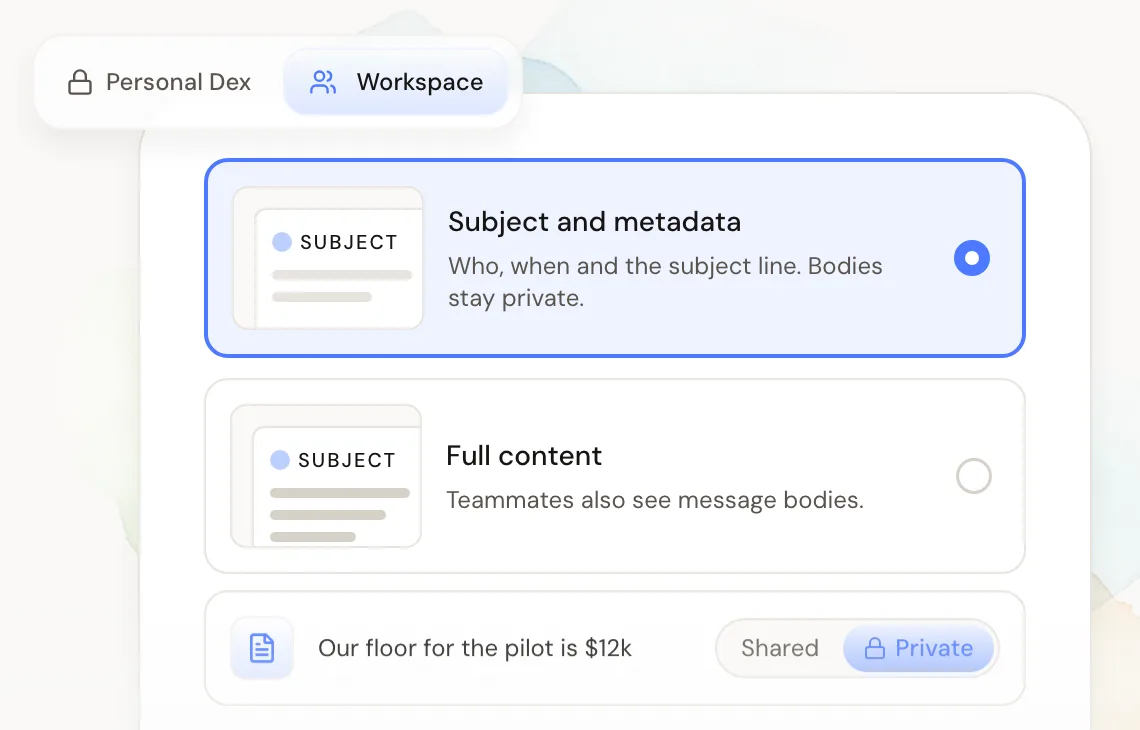
Each person keeps a private Dex and the team shares a workspace on top. Search a person or company and the workspace shows which teammates know them, when they last spoke, and a single timeline of emails, meetings, and notes. LinkedIn syncs per member about every two days. Each member chooses whether the workspace sees email subject lines and metadata only, or full content, and any note can stay private.
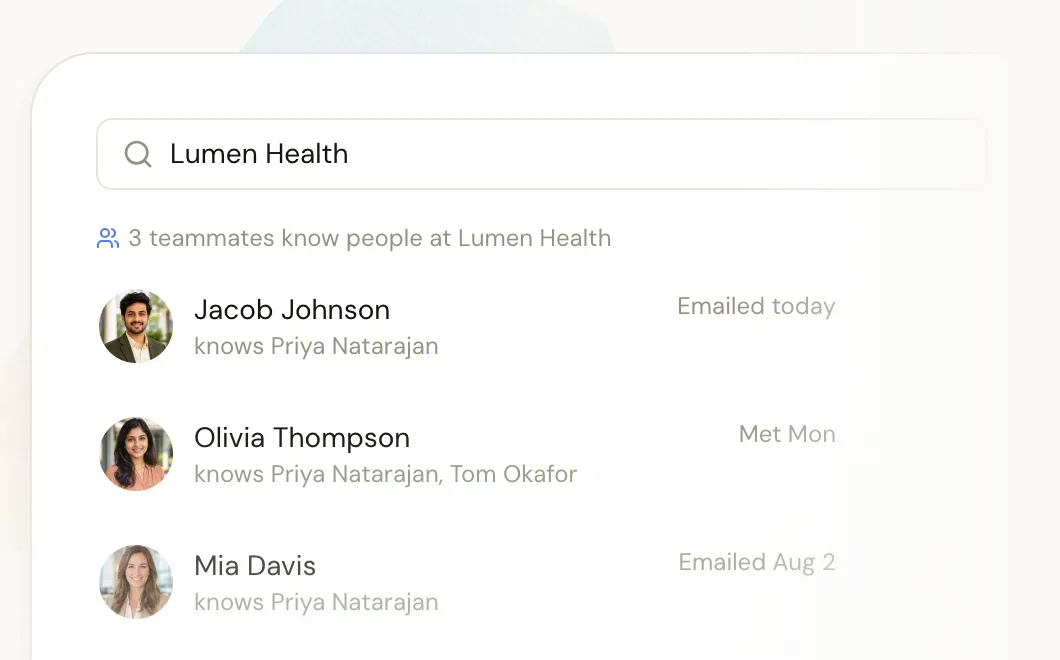
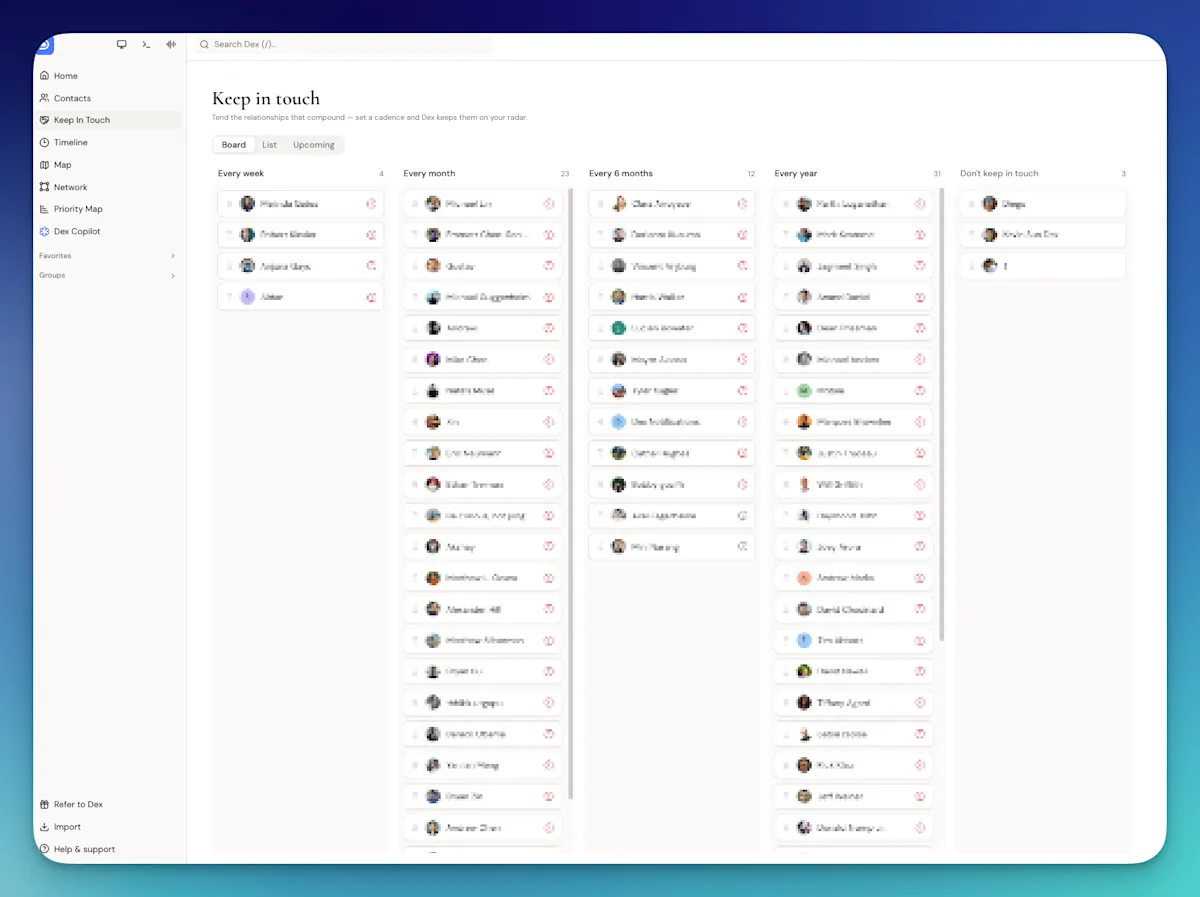
Dex also handles what comes after the intro. Keep-in-touch reminders can be shared or personal, and the Dex MCP server lets you ask an AI assistant about your team's network.
Price: $40 per user per month, billed monthly. Individual plans start at $12 per month on annual billing.
Best for: teams that need warm introductions and follow-up, not a sales pipeline.
2. folk: best for small teams that also do outreach
folk combines a clean contact database with pipelines, email campaigns, enrichment, and AI assistants. It syncs email, calendar, and WhatsApp, and lists relationship intelligence on every plan.
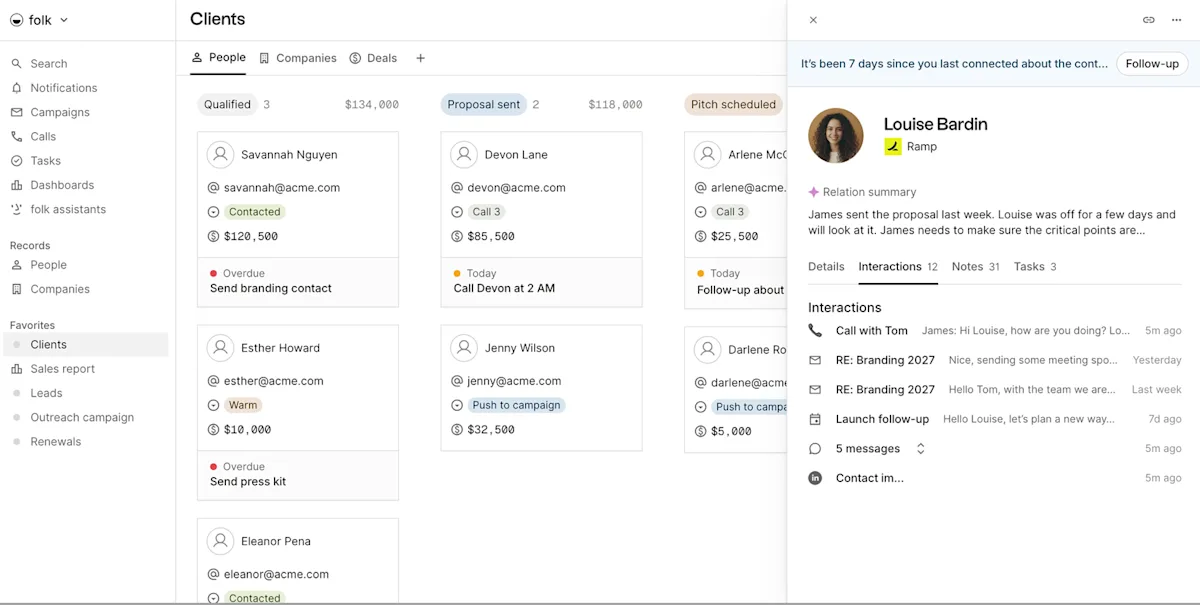
The catch for teams: Standard shares only the last 30 interactions per contact. Full shared history needs Premium.
Price: Standard $24 per member per month on annual billing ($30 monthly), Premium $48 ($60 monthly). 14-day trial, no card. More in our Dex vs folk comparison.
Best for: partnerships and small sales teams that want relationship context and outreach in one place.
3. Attio: best for startups building a custom CRM
Attio syncs email and calendar automatically, enriches contacts and companies, and shows connection strength. You define your own objects, so it can track investors, candidates, customers, or all three.
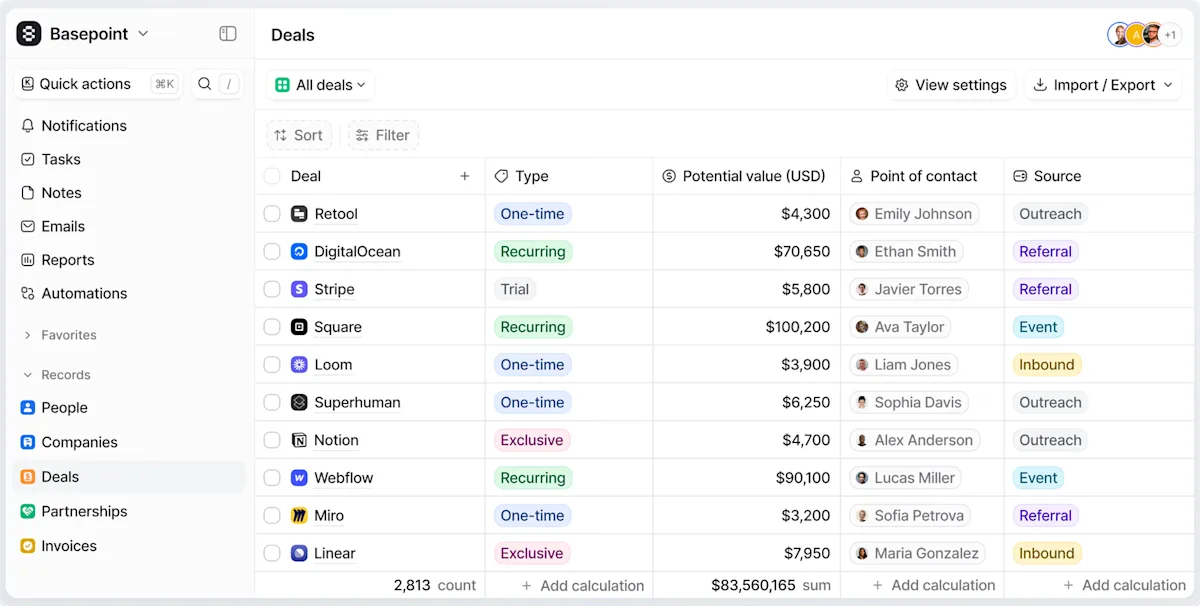
Price: Free for up to 3 seats, Plus $35 per seat per month on annual billing (up to 10 seats), Pro $79 per seat. 14-day trial of Pro. See our Dex vs Attio comparison.
Best for: technical teams that want one flexible system and have someone to set it up.
4. Cloze: best for service businesses on a budget
Cloze organizes email, calls, files, notes, and calendar by contact without manual entry, and its Smart AI reminds you to follow up. The Business tiers add a team-wide view of communication, contact assignment, and privacy controls that keep personal contacts private while sharing work activity.
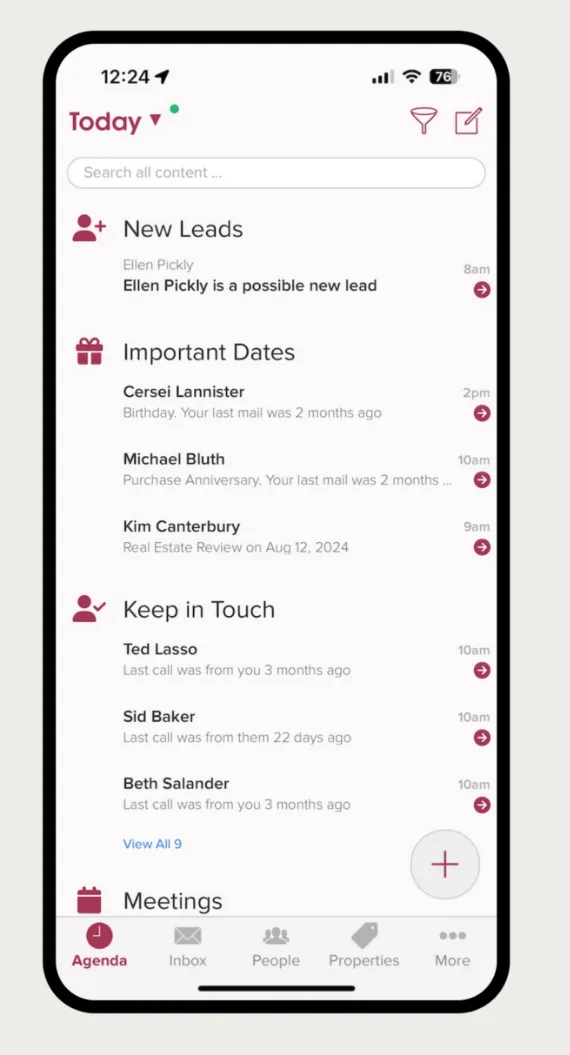
Price: Business Silver $21 per user per month on annual billing ($24.99 monthly), Gold $29, Platinum $42. 14-day trial, no card, and a free plan after it. Our Dex vs Cloze comparison has more.
Best for: real estate teams, financial advisors, and small agencies that want relationship tracking plus a light pipeline.
5. Nimble: best for small sales teams in Microsoft 365 or Google Workspace
Nimble pulls contacts from email, calendar, and social profiles into one record and works inside Gmail and Outlook through a browser extension. It leans toward sales, with pipelines and group email.
Price: Business plan at $24.90 per seat per month on annual billing ($29.90 monthly), as last checked in September 2026. Our Dex vs Nimble comparison covers the differences.
Best for: small sales teams that want social enrichment and a pipeline at a low price.
6. Affinity: best for venture and private capital firms
Affinity is the best-known relationship intelligence platform in private capital, and people searching for "Affinity CRM" usually work at a fund. Every tier captures email and calendar activity automatically and includes relationship scoring and the warmest path to any contact. Scale and above add a notetaker, AI agents, inferred connections, and an MCP server. Advanced adds PitchBook, Dealroom, and Crunchbase data.
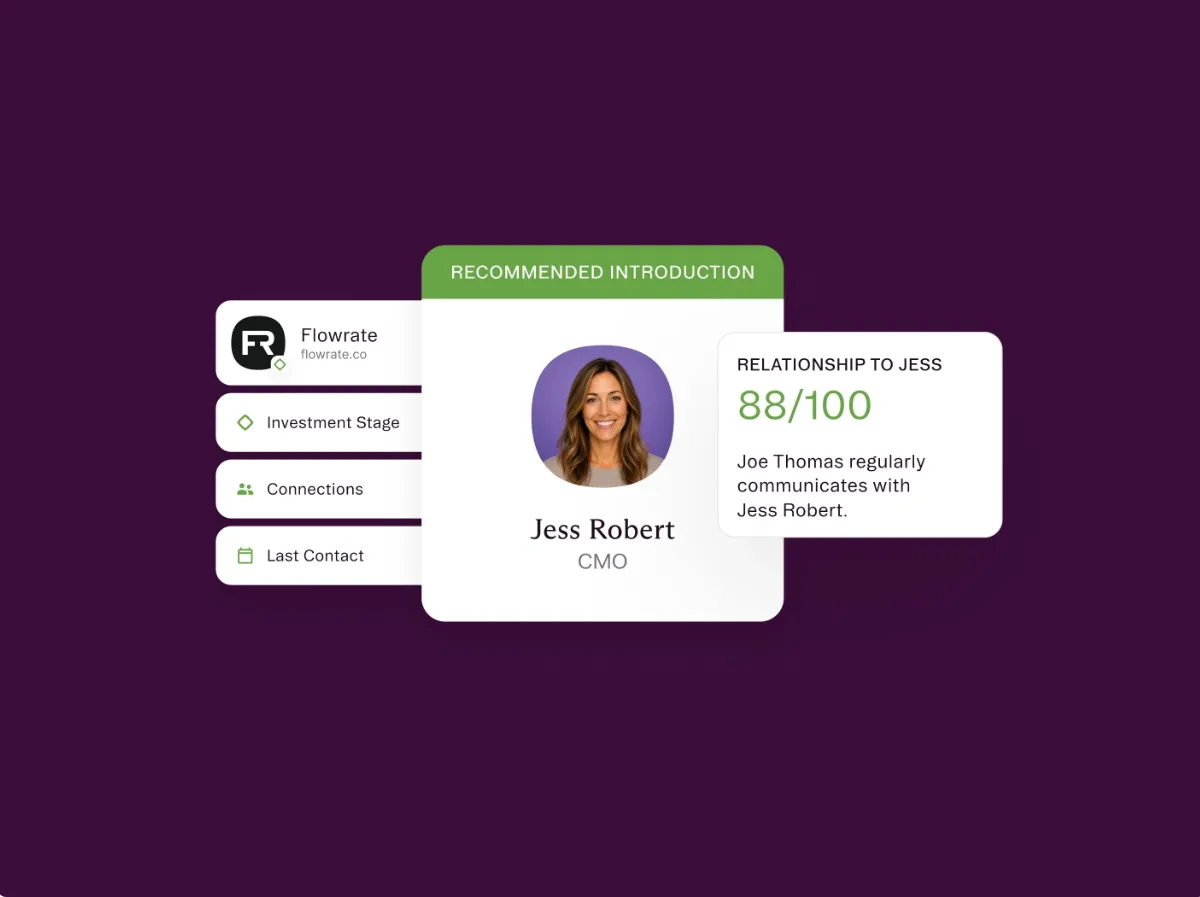
Price: Essential $2,000 per user per year, Scale $2,300, Advanced $2,700, Enterprise custom. No trial listed on the Affinity pricing page.
Best for: funds where deal flow tracking is the main job and the budget is there.
7. 4Degrees: best for small investment and advisory firms
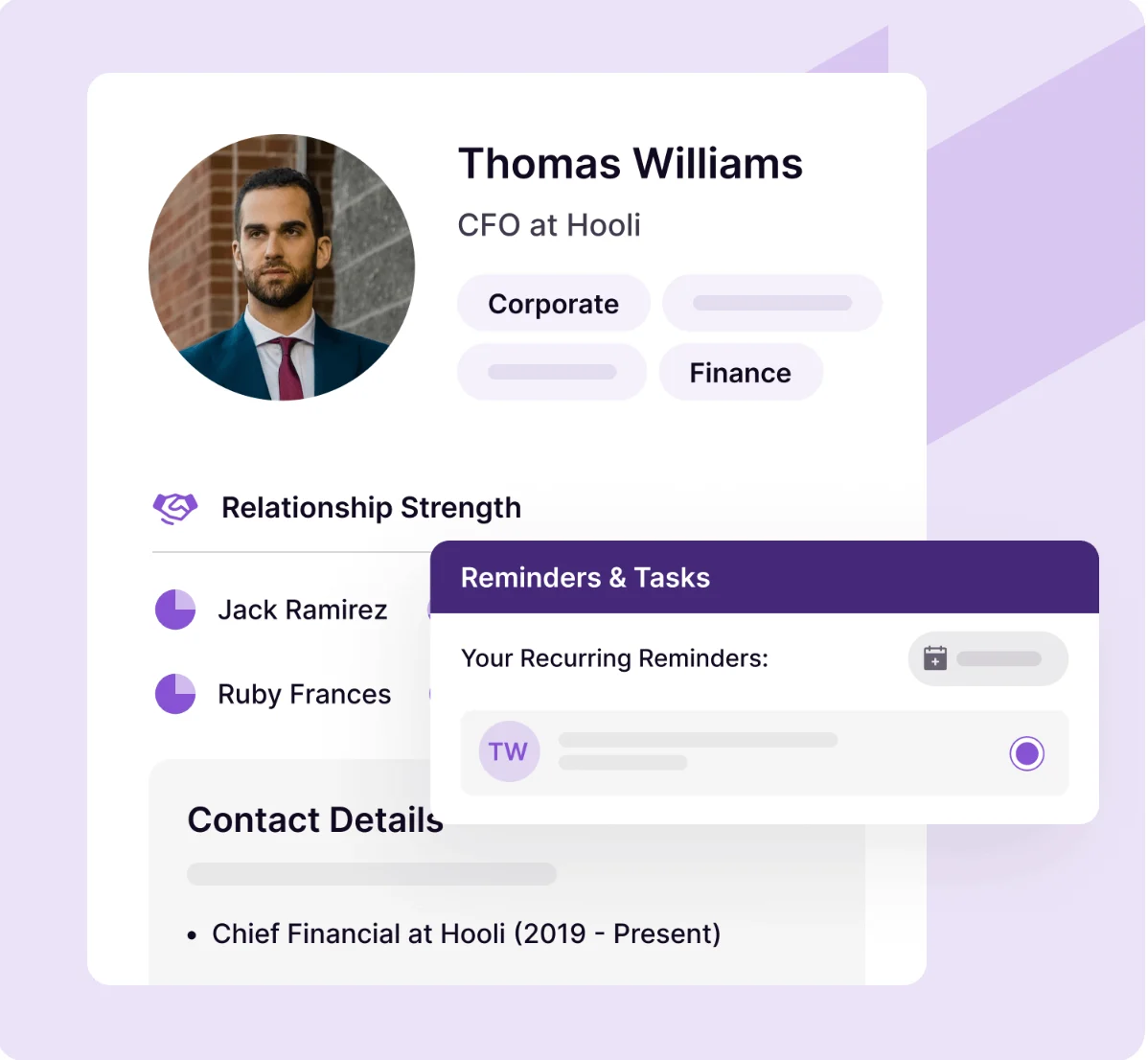
4Degrees serves venture capital, private equity, investment banking, corporate development, consulting, and commercial real estate. It focuses on warm introductions and deal tracking, and charges per user per month. You have to request a quote.
Best for: small dealmaking firms that want a vendor-guided rollout.
What about Introhive?
Introhive is a major relationship intelligence platform, but it's built for professional services firms (legal, accounting, consulting) and usually sits alongside a large CRM. Pricing isn't public. For most teams under 20 people, it's more than you need. We compare it with the enterprise options in our guide to relationship intelligence platforms.
Features to look for
Feature | Why it matters for a small team |
|---|---|
Automatic email and calendar capture | Nobody on a small team has time to log calls |
Who-knows-whom search | The core reason to buy: find warm introductions in seconds |
Per-person privacy controls | Decides whether people connect their inbox at all |
Full shared interaction history | So a new teammate can pick up a relationship without starting over |
Follow-up reminders | An intro is worthless if the relationship goes cold after |
LinkedIn sync | Catches job changes and second-degree paths |
AI and MCP access | Lets you ask about your network from the AI tools you already use |
Rolling it out without a fight
The most common way these tools fail has nothing to do with features. People don't connect their inboxes, so the shared map stays half empty. A few habits help:
Explain what's shared before anyone connects. Show the exact privacy setting. "Subject lines and dates only" gets a very different reaction than "we'll see your email."
Start with a real question. Pick a company you're trying to reach this month and run the search together. One warm intro found in week one does more for adoption than any training session.
Keep it small at first. Two or three people with overlapping networks show the value quickly. Add the rest of the team once the workflow is clear.
Give it a home in your week. A five-minute look at "who's going cold" in a Monday meeting turns the tool into a habit.
Who this isn't for
If you're a solo founder or consultant, team software is more than you need. A personal CRM does the same work for one network. Our list of personal CRMs is a better starting point. And if you run high-volume outbound to people you've never met, relationship intelligence tools won't replace a sales engagement platform.
FAQ
What is relationship intelligence software?
It's software that connects to your team's email, calendar, and contacts, works out who knows whom and how well, and shows the best path to any person or company. Our guide to what relationship intelligence is explains it in more detail.
What's the best relationship intelligence software for a small team?
It depends on the job. Dex for Teams is best if your work is about people and warm introductions. folk and Attio suit teams that also need a pipeline. Affinity is the standard for venture firms with a bigger budget.
Are there free relationship intelligence tools?
Attio has a free plan for up to 3 seats, and Cloze drops you to a free plan after its trial. Most other tools offer a 14-day trial instead.
How much does Affinity CRM cost?
Affinity lists Essential at $2,000 per user per year, Scale at $2,300, and Advanced at $2,700. Enterprise pricing is custom.
Do relationship intelligence tools read my emails?
Most read email metadata (who, when, subject) to map connections. Some can share full content with your team. Look for tools where each person decides what's shared.
Can relationship intelligence software replace my CRM?
For teams whose work runs on relationships rather than deal stages, yes. Sales teams that need forecasts usually run it next to a CRM. See relationship intelligence CRM vs traditional CRM.
The bottom line
The best relationship intelligence software for a small team is the one your team will connect their inboxes to. For relationship-first work like fundraising, recruiting, partnerships, and grant-making, Dex for Teams gives you who-knows-whom search, shared timelines, and per-person privacy for $40 a seat. folk and Attio are strong if you also want a pipeline, Cloze and Nimble are the budget sales picks, and Affinity and 4Degrees fit dealmaking firms. Run a 14-day trial with two or three teammates before rolling it out to everyone.
Ready to find the warm intros hiding in your team's inboxes? Start your free Dex trial and invite your team.
Related guides