Your Real Estate Database: How to Sort It Into A, B, C and D
Sort your real estate database into four tiers by how likely each person is to send you business: A (has referred you or clearly would), B (likes you but hasn't referred yet), C (knows you, relationship is thin) and D (won't work with you). Then give each tier a contact rhythm, roughly monthly for A, quarterly for B and twice a year for C, and archive the D's.



Most agents' databases are one long list. The college roommate, the buyer from 2019, the lender you met once at a mixer and the plumber all sit in the same column, with the same weight.
That's why the list never gets worked. When everyone is equally important, nobody gets called.
The fix most of the industry teaches is a letter grade. A Chicago brokerage leader put it simply on a call with us: "When we talk about relationships, we call things A, B, Cs and Ds."
This guide covers what each letter means, how often to reach each tier, and how to keep the grades current so the list stays useful. If you still need to pull everything into one place first, start with our guide to organizing your real estate contacts.
Fast facts:
The tiers measure one thing: how likely a person is to send you business. Not how much you like them, not how much they spent.
A small A list matters more than a big one. You can't call 300 people a month.
D isn't a nurture tier. It's people who won't work with you, and they can be archived.
Re-grade after events (a referral, a move, a long silence), not on a schedule.
Tags and groups handle the rest: past client, lender, neighbor, investor. The letter only answers "how often?"
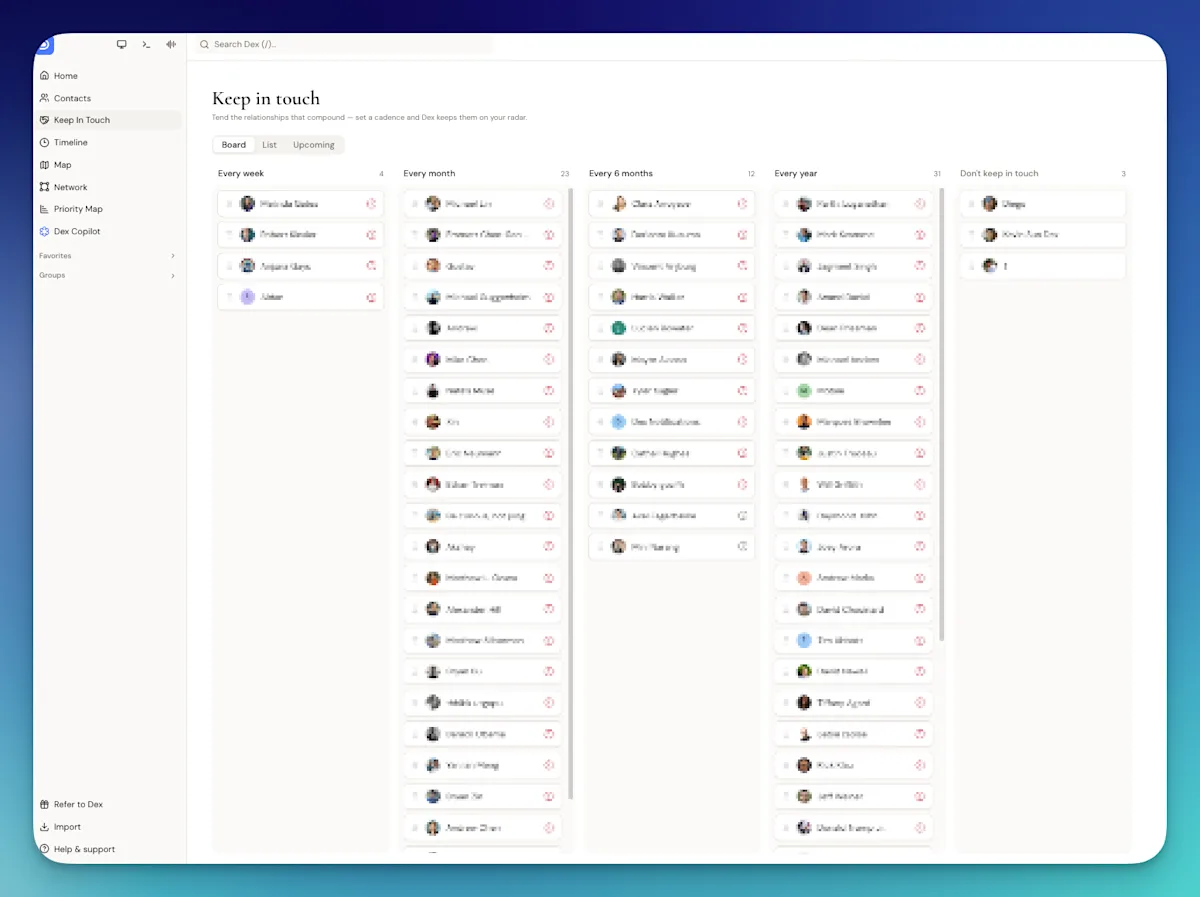
Image: A keep-in-touch board that shows who's due for a call this week
What A, B, C and D mean
The definitions vary a little between trainers. Buffini & Company's Referral Maker CRM, for example, uses A+ through D and tells agents to delete the D's. The version below is the one we'd use if we were starting a database today.
Tier | Who's in it | How you know |
|---|---|---|
A | People who have referred you, or would without being asked | They've sent you someone, or they bring you up when real estate comes up |
B | People who like and trust you but haven't referred yet | Happy past clients, friends who know what you do, partners you've worked with once |
C | People who know you, but the relationship is thin | You'd recognize each other, but they might not remember you're an agent |
D | People who won't work with you or refer you | Their sibling is an agent, they've said no, or you'd never actually reach out |
Two common mistakes. The first is grading by transaction size: a $1.2 million buyer who never answers your texts is a C, and the barista who has sent you three friends is an A. The second is grading on hope. If you have to talk yourself into an A, it's a B.
How often to reach each tier
The letter only matters if it changes what you do. Here's a cadence that works for most solo agents.
Tier | How often | What a touch looks like |
|---|---|---|
A | About monthly, with a real conversation each quarter | A call, coffee, a handwritten note, an invite to a client event |
B | About quarterly | A personal text, a home-anniversary note, a useful article sent to one person |
C | Two or three times a year | A holiday card, a market update, a birthday message |
D | Not at all | Archive them so they stop cluttering your lists |
Now do the math before you fill the A list. Say a monthly touch takes ten minutes and a quarterly coffee takes an hour. Fifty A's is about eight hours of short touches a month plus roughly 17 coffees. That's a real part-time job on top of selling houses. It's also why trainers put a number on the A list instead of letting it grow.
Start smaller than you think. Twenty-five true A's who hear from you every month beat a hundred you mean to call.
How to grade your database in an afternoon
You don't need to grade everyone perfectly on day one. Do it in passes.
Pull the obvious A's. Anyone who has referred you, ever. Then anyone who'd pick up if you called right now. Stop when you have 20 to 40.
Pull the D's. Other agents' relatives, people who told you no, and names you can't place. Archive them. Don't delete anyone you might need for a tax or transaction record.
Mark past clients B by default. They've already trusted you with the biggest purchase of their lives. They move to A when they refer, or to C if they go quiet for a year.
Everyone left is a C. That's fine. C is where most of any database lives.
Put the letter in a field you can filter by, not in the contact's name. "Sarah Kim A" breaks every email merge you'll ever send.
Letters answer "how often." Tags answer "who."
A grade can't tell you that someone is a lender, a neighbor in the subdivision you farm, or a landlord thinking about selling a fourplex. That's what tags and groups are for.
Use a tier for | Use a tag or group for |
|---|---|
How often you reach out | Role: past client, lender, inspector, attorney |
Who gets your best time | Where they live or which neighborhood you farm |
Who goes on the event invite list | Life stage: renting, growing family, empty nesters |
| How you met: open house, church, kid's soccer team |
When a market shift hits a neighborhood, you filter by the tag. When you sit down Monday morning to make calls, you filter by the letter.
When to re-grade someone
Grades go stale. A schedule ("re-grade everyone every January") sounds tidy and never happens. Re-grade when something happens instead:
When someone refers you, move them up to A and thank them within a day.
A move, a new baby, a divorce or a job change doesn't change the grade by itself, but it should move their next touch up.
After a full year with no reply, drop them one letter.
If they tell you a friend or relative who's an agent is handling it, that's a D.
Keeping the tiers in Dex
Full disclosure: Dex is our product. It's a personal CRM, and here's how the ABCD system fits it.
Put each person in an A, B, C or D group, and keep roles like "lender" or "past client" as tags. Then give each tier a keep-in-touch frequency: 30 days for A, 90 for B, 180 for C. Dex reminds you when someone is due, and the reminder resets on its own when you email or text them, as long as that channel is connected.
Your contacts come in from your phone, Google or Outlook, and a CSV from whatever you used before. Notes on each person (the kids' names, the dog, what they said about the kitchen) sit on the contact, so you remember them before the call, not after.
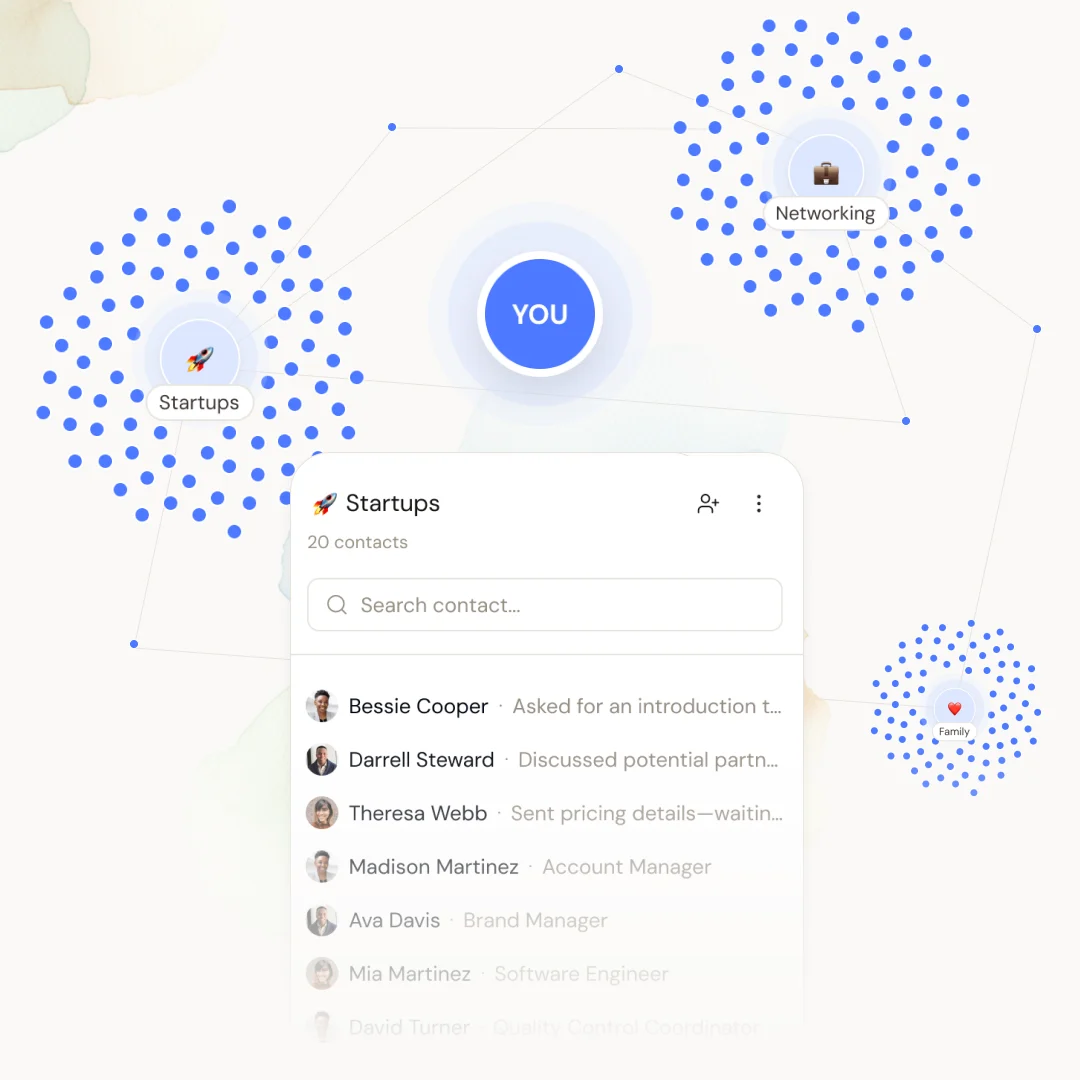
Image: Dex's network map shows which group each contact belongs to
What Dex won't do: score your contacts for you or decide who's an A. That's your judgment, and it's the part that matters. More on how agents set up Dex is on our real estate page.
Who this isn't for
If you buy most of your leads online, a strict ABCD system won't map well onto a pipeline of strangers. A lead-focused CRM with routing and speed-to-lead tools fits that business better, and you can keep the ABCD grades for your sphere only.
And if your database is under 100 people, you may not need the letters at all. Just call everyone a few times a year.
FAQ
What is an ABCD database in real estate?
It's a way to rank your contacts by how likely they are to send you business. A's have referred you or clearly would, B's like you but haven't referred yet, C's know you only a little, and D's won't work with you.
How many A contacts should a real estate agent have?
As many as you can actually reach every month. For most solo agents that's somewhere between 20 and 50. Trainers often attach a target number to the A and B lists, so a coach may give you a specific one.
How often should I contact my real estate database?
Roughly monthly for A's, quarterly for B's, and two or three times a year for C's. D's don't need contact. Mix the channel: calls and coffee for A's, personal texts and notes for B's, cards and market updates for C's.
Should I delete D contacts?
Archive them rather than delete, so you keep any history you might need later. The point is to get them out of your daily lists.
Are past clients A or B?
Start them at B. Move them to A once they refer you, and down to C if they don't respond for a year.
What's the difference between a database tier and a tag?
A tier tells you how often to reach someone. A tag tells you who they are: lender, neighbor, investor, past client. Most agents need both.
The bottom line
A real estate database earns its keep when it tells you who to call today. Sort it into A, B, C and D by how likely each person is to send you business, give each letter a rhythm, and re-grade when life happens. Keep the A list small enough that you actually work it.
If you want reminders that follow the letters for you, get started with Dex.
Related guides