
How to Ask Past Clients for Referrals Without Being Awkward
Ask past clients for referrals at moments when they're already happy with you: right after a win in the deal, at the 90-day check-in, or when they reply warmly to an anniversary text. Keep it to one line, name the kind of person you help, and always tell them how the referral went.



Most agents who say they don't get enough referrals have simply never asked for one in a way a client could act on.
In NAR's 2025 Profile of Home Buyers and Sellers, 43% of buyers found their agent through a referral and 66% of sellers used an agent they'd worked with before or one they were referred to. More than nine in ten buyers said they'd use their agent again. So your past clients like you, and their friends are listening to them. What's usually missing is a clear, comfortable moment where you say you'd like the introduction.
This guide covers when to ask, exactly what to say, what you're allowed to give as a thank-you, and what to do after a name comes in. If you're still building the habit of staying in touch at all, start with the 12-month past-client plan. The ask works much better on top of it.
Fast facts:
43% of buyers used an agent they found through a referral, per NAR's 2025 profile. Another 18% used an agent they'd worked with before.
For first-time buyers the referral share is 49%. They ask their friends because they don't know anyone else to ask.
The best time to ask is right after the client feels a win, not at a random point in your calendar.
Gift rules for referrals vary by state. Texas allows a merchandise gift card up to $50; a Visa or cash isn't allowed.
The step most agents skip is closing the loop: telling the referrer you took care of their friend.
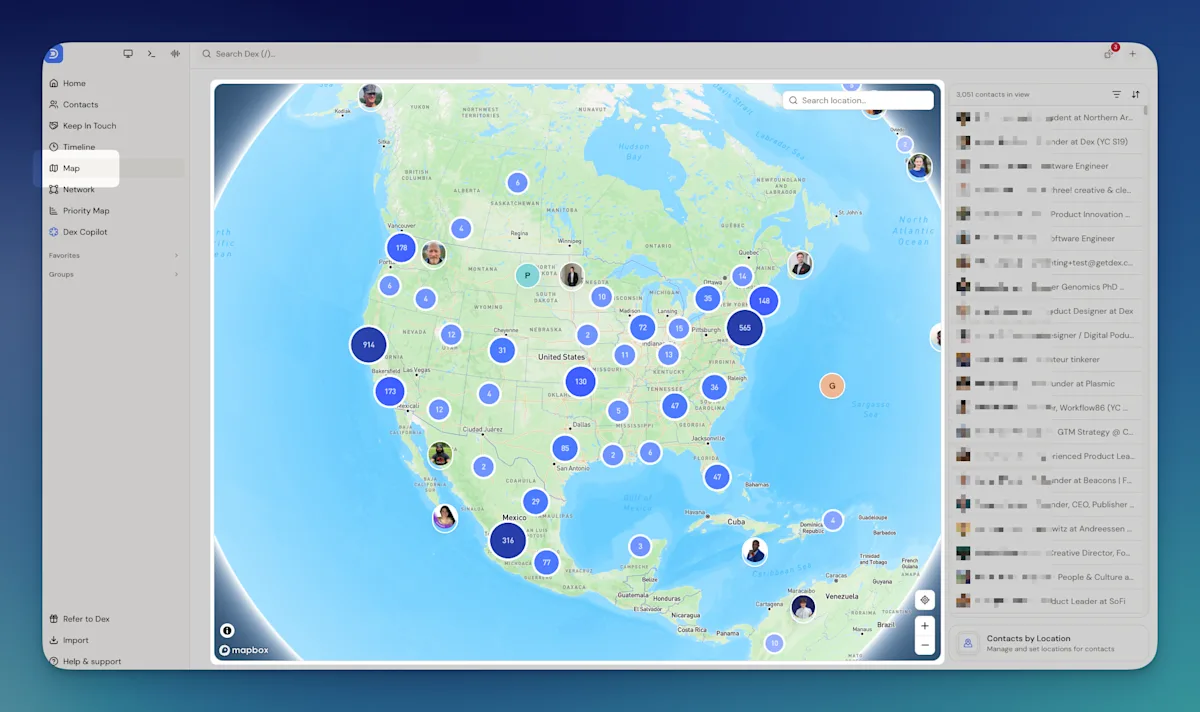
Image: Seeing where your past clients live on the Dex map view
Why asking feels awkward (and why it doesn't have to)
Asking for a referral feels like asking for a favor. You did a job, you got paid, and now you want more. That's the voice in your head, and it's why so many agents either never ask or bury the request in the footer of a newsletter.
Your clients see it differently. A good agent is something people actually want to recommend. When a coworker says "we're thinking about selling," your client would like to have a name ready. Most of them just don't know you want referrals, or they assume you're too busy to take more work.
Think of the ask as information instead: "I take referrals, and here's the kind of person I can help." Said once, at the right moment, that's useful to them.
When to ask: the five best moments
Timing does most of the work. Ask when the client is feeling good about you, and the words barely matter. Ask cold, and nothing you say will sound right.
Moment | What the client is feeling | How direct to be |
|---|---|---|
Right after a win in the deal (offer accepted, appraisal came in, repair credit secured) | Relief and gratitude toward you specifically | Light. Plant the idea, don't push. |
At closing or move-in | Excited, a little emotional | Clear, warm, one sentence |
The 90-day check-in | Settled, and they remember how it went | Direct. Pair it with a review request. |
When they reply warmly to an anniversary or birthday text | Pleased you remembered | Direct, because they've just reopened the conversation |
When they mention someone else's move ("my sister's thinking about selling") | Helpful | Very direct. Offer to help the specific person. |
Notice what's not on the list: a mass email in January, the first message after two years of silence, or the end of every text. If you ask in every message, clients stop reading your messages.
A good rhythm for most past clients is one clear ask a year, plus the moments when they bring someone up themselves.
The scripts
Keep every ask to one or two sentences. Name the type of person you help, because "anyone you know" is too vague to act on. And never make them feel they owe you.
Right after a win in the deal:
"I'm so glad that appraisal came in. This is the part of the job I love. If you ever have friends going through this, I'd be happy to help them the same way."
At closing:
"Thank you for trusting me with this. Most of my business comes from clients like you introducing me to people they care about, so if anyone you know starts thinking about buying or selling, I'd love to help."
At the 90-day check-in (with a review):
"Three months in! If you were happy with how things went, two things would mean a lot: a quick review here [link], and keeping me in mind if a friend or coworker starts looking. I'll take good care of them."
After a warm reply to an anniversary text:
"So glad you're still loving it. By the way, if anyone you know is thinking about a move this year, I'd be happy to talk to them, even just to help them think it through."
When they mention someone:
"Oh, I'd love to help her. Would you be okay sending her my number, or giving me hers? I'll keep it low pressure, just a conversation about timing."
In person, at a client event:
"It's really good to see you. People like you are how I stay in business. If anyone in your world needs an agent, send them my way."
When you get a compliment:
"That means a lot, thank you. The best compliment I can get is an introduction to a friend who needs help, so keep me in mind."
Download all referral scripts as a spreadsheet (CSV)
These work because they're tied to a moment and they give the client an easy next step ("send her my number"). If your ask could be pasted into any message on any day, it's too generic.
What not to say
Instead of | Say | Why |
|---|---|---|
"Do you know anyone who wants to buy or sell?" | "If anyone you know starts thinking about a move, I'd love to help." | The first puts them on the spot to name someone now. The second asks them to remember you later. |
"I'm never too busy for your referrals!" | "Most of my business comes from introductions like yours." | The slogan sounds rehearsed. The second is a reason, and it's true. |
"Just checking in. Know anyone looking?" | (Don't send this) | A referral ask with no reason to talk reads like a cold call. |
"Refer a friend and get a $100 Visa card!" | A thank-you after the fact, if your state allows it | A cash-like reward for a referral is illegal in many states. See below. |
What you can give as a thank-you
This is where agents get into real trouble, because the rules aren't the same everywhere and most script posts skip it.
The general principle: a payment for a referral to someone without a real estate license is a referral fee, and most states don't let you pay one. Where states differ is whether a small gift counts as payment.
Texas and Pennsylvania show how far apart the rules can be.
The Texas Real Estate Commission says gifts of merchandise worth $50 or less aren't "valuable consideration," so a $50 gift card to a restaurant or store is allowed as a referral thank-you. A Visa or American Express gift card, which works like cash, is not. Neither is cash or a rent credit.
In Pennsylvania, the state's Association of REALTORS® says a payment for a referral is a referral fee that can't go to an unlicensed person, with no minimum amount, whether it's cash, a gift card or a fruit basket.
What's generally safer is appreciation that isn't tied to a specific referral: a client party everyone is invited to, a holiday card, a pie in November for every past client. The difference is whether the gift exists because of the referral or because they're your client.
Before you send anything that thanks someone for a specific referral, ask your broker how your state treats it. That takes five minutes and avoids a complaint to your commission.
Close the loop
Most agents get the name, call the person, and forget to tell the client who sent them.
The referrer wants to know. They stuck their neck out for you. Report back twice:
Within a day:
"Thank you for connecting me with [Name]! We talked this morning and I'm going to help her get a sense of prices in [area]. I'll take good care of her."
When it closes (or when it doesn't):
"[Name] closed on her place today! Thank you again for thinking of me. That one meant a lot."
If it didn't go anywhere:
"Just a quick note: [Name] decided to hold off for now, but we had a great conversation, and I'll be there when she's ready. Thanks again for the intro."
Don't share private details of the friend's deal. Price, money and reasons for moving belong to the friend. "She closed" is enough.
A client who hears that their referral was handled well tends to send another one. A client who never hears anything starts to wonder whether you called at all.
Track who referred whom
After a few years, the most useful thing you can know is which clients send you people. You'll want to give them more attention, invite them to everything, and remember to thank them properly.
On the new client's record, note who referred them. On the referrer's record, note who they've sent you and when, plus what you told them afterward, so you don't thank someone twice or forget to report back.
A spreadsheet can do this. It gets painful once you have a few hundred people and the referral chains run two or three deep.
Setting this up in Dex
Full disclosure: Dex is our product. It's a personal CRM, and here's how it handles the asking and the tracking.
For referral chains, type @ in a contact's description to tag the person who referred them, and Dex links the two as related contacts. Add a custom field like "Referral source" and you can sort your whole sphere by it, or lay it out as a board with a column per source. The client who's sent you four people shows up at a glance.
For timing, set a yearly reminder on each close date. When the anniversary text gets a warm reply, that's your moment for the ask. Put your top referrers in their own group with a tighter keep-in-touch frequency, say every 60 days, so they never go quiet. Texts and emails sync in on their own (iMessage sync runs through the Mac desktop app), so the clock resets whenever you actually talk.
After any conversation, drop a quick note on the contact: "Referred her sister Jen, told her it closed 6/14." Next year, that's the detail that makes your thank-you sound personal.
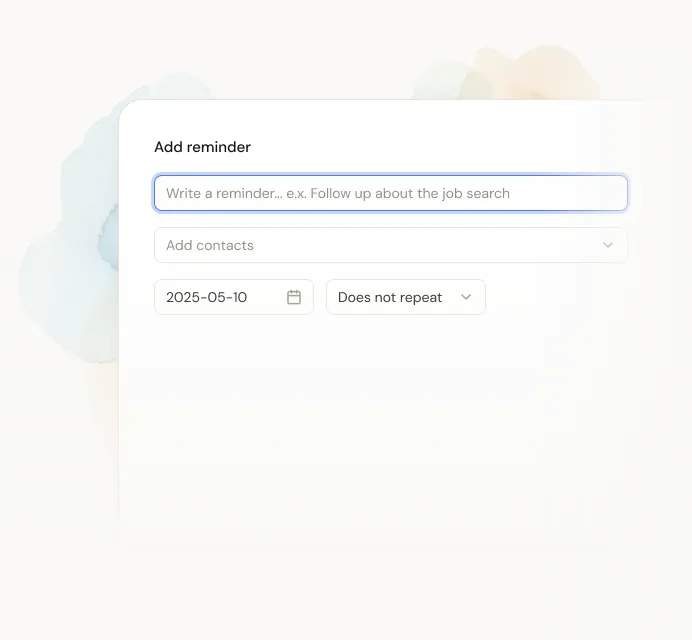
Image: Adding a reminder in Dex. A yearly reminder on the close date sets up your anniversary text, and often the referral ask with it.
What Dex won't do: send the asks for you, run a referral reward program or track commissions. You still write every message. That's what makes the ask sound like you.
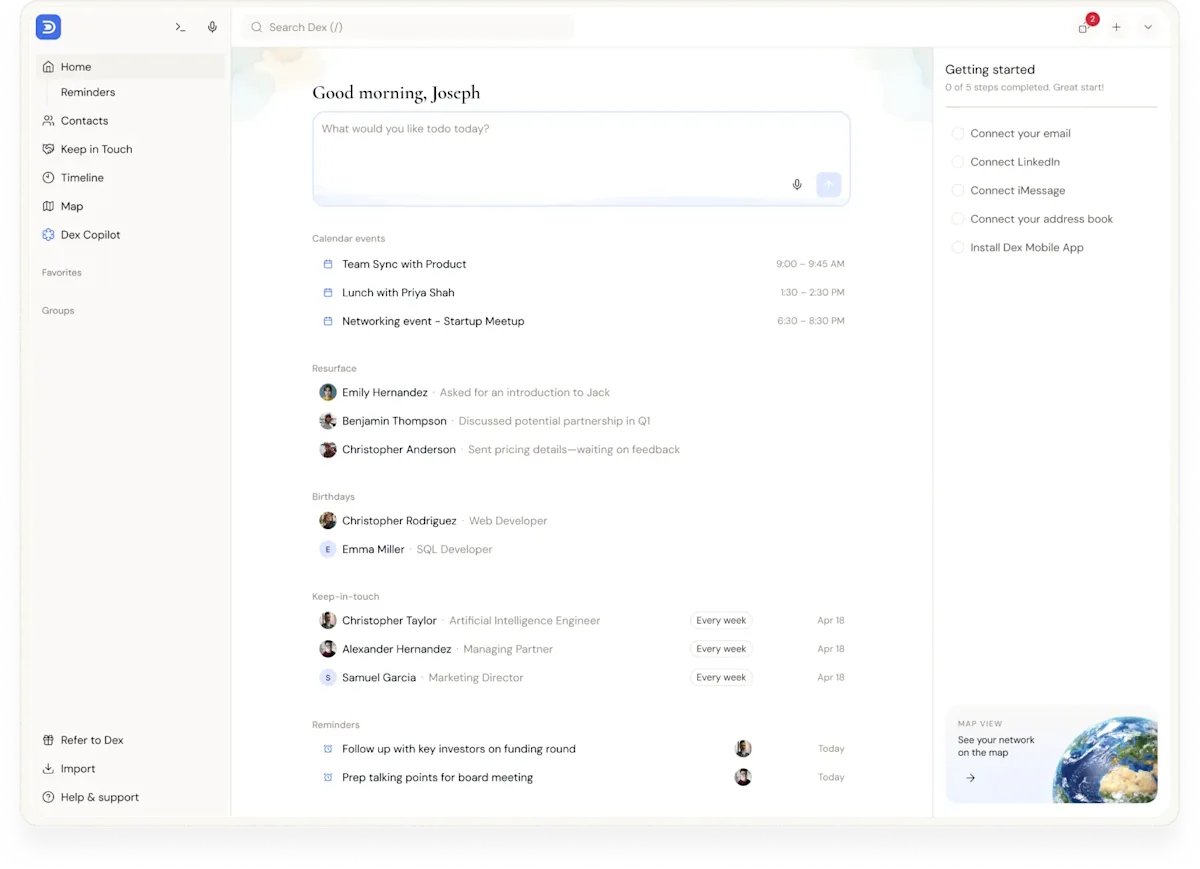
Image: The Dex home screen shows today's reminders, birthdays and keep-in-touch contacts in one list
Who this isn't for
If you're mostly working with investors, a polite once-a-year ask isn't how that world works. Investors refer each other on deal flow, so bring them good deals and the referrals follow.
And some past clients will never refer, however well you ask. They're private, or they don't talk about money with friends, or they just don't know anyone moving. That's fine. Keep them on your plan for repeat business and spend your asking energy on the people who light up when they hear from you.
FAQ
When is the best time to ask a client for a referral?
Right after they feel a win: an accepted offer, a good appraisal, closing day, or a warm reply to an anniversary text. The 90-day check-in is also good, because they're settled and still remember how it went.
How often should I ask past clients for referrals?
One clear ask a year is enough for most past clients, plus any time they mention someone who's thinking about moving. Asking in every message makes clients stop reading your messages.
What do you say when asking for a referral?
One or two sentences that name the kind of person you help and give an easy next step. For example: "If anyone you know starts thinking about buying or selling, I'd love to help. I'll take good care of them."
Can I give a gift card for a real estate referral?
It depends on your state. Texas allows a merchandise gift card worth up to $50 but not a cash-like Visa or Amex card. Other states, including Pennsylvania according to its REALTOR association, treat any gift for a referral as an illegal fee to an unlicensed person. Ask your broker first.
Should I thank a client for a referral that didn't close?
Yes. Thank them within a day of the introduction, and tell them briefly how it went either way. Leave out the private details of their friend's situation.
How do I keep track of who referred whom?
Note the referral source on the new client's record and the referral on the referrer's record, with dates. A personal CRM like Dex can link the two contacts and let you sort your sphere by who sends you business.
The bottom line
Your past clients already want to recommend you. Make it easy: ask once, at a good moment, in one sentence, and tell them how it went afterward. Do that every year and the people who sent you one client will send you the next.
If you want the dates, notes and referral links in one place, start a 7-day Dex trial.
Related guides