
Career Pivots
The relationship playbook for changing industries, roles, or cities. Mapping who you know, who you need to know, and how to bridge the gap.
You've spent years building expertise in your field. You've climbed the ladder, mastered the playbook, and achieved recognition. But something's changed. The industry isn't exciting anymore. The role feels limiting. The mission doesn't align with your values. Or you've simply realized there's a different version of yourself you want to become.
So you're thinking about a career pivot.

A career pivot is about recognizing how your skills, experience, and insights can create value in new contexts. It’s the ability to see connections and opportunities that others might overlook. For instance, a software engineer might step into product management, a corporate lawyer could launch a nonprofit, a marketing executive might enter venture capital, and a management consultant could transition into social impact. Each example shows how transferable strengths can open doors in entirely different fields.
You need your network more than ever (to validate the transition, open doors, and smooth the path), yet you're about to enter an industry or role where most people won't know you yet. You have credibility in your old world and zero in your new one.
The good thing is career pivots aren't starting from scratch. You have something that fresh college graduates don't: pattern recognition from years of experience, relationships that have compounded in value, and proven ability to learn and execute.
The key is having the right relationship strategy before you make the move.
This guide will show you how to map your network for a pivot, identify the bridges you need to build, and execute a transition that transforms what looks like a liability (being new to an industry) into an asset (bringing fresh perspective and diverse experience).
Why This Guide?
A Note from the Team at Dex
Our mission is to help people build and manage meaningful relationships. Over the past seven years, we’ve worked with professionals navigating major career transitions and have noticed a clear pattern: those who pivot successfully aren’t always the most qualified or the smartest, but they consistently have a deliberate approach to building and leveraging their network.
Professionals who struggle often do so for one reason: they enter a new industry without enough trusted relationships to navigate unwritten rules, validate assumptions, or get real feedback on their next steps.
This guide provides the strategies, frameworks, and tactical steps to avoid that trap. It’s designed for anyone seriously considering a career pivot, whether you’re exploring, actively planning, or already in motion.
TIP: This guide complements, not replaces, other resources like career coaches, recruiters, or mentors in your target industry. Think of it as the relationship infrastructure layer. Without it, even the best coaches and mentors can’t help as much.
Why Career Pivots Require a Different Networking Approach
Career pivots are fundamentally different from traditional networking. You're not optimizing your existing network for the next logical step. You're leveraging it to enter a new ecosystem where you're a stranger.
The Three Pillars of a Successful Career Pivot
1. Validation Your network needs to believe your pivot is legitimate. This isn't about enthusiasm or encouragement (though that helps). It's about people in your target industry vouching for your credibility, your transferable skills, and your seriousness about the transition. Without validation from respected insiders, you'll be filtered out before you even get a chance to prove yourself.
2. Navigation New industries have unwritten rules, tribal knowledge, and gatekeepers. Your existing network can't navigate this for you, they didn't come from there either. But your network can connect you to people who did. These bridge connections become your guides through the labyrinth of the new ecosystem.
3. Opportunity Access The best opportunities in your new industry won't be posted on job boards or advertised to outsiders. They'll be known within circles of trusted professionals. Your network needs to think of you for these opportunities, which means they need to understand what you're looking for and believe you're positioned to deliver value.
Why Traditional Job Search Strategies Fall Short
If you're pivoting industries or roles, relying on job boards, recruiters, or standard interviews will be painfully slow and competitive. You'll be competing against people with 10 years of experience in the new field. Your resume won't have the keywords, the "relevant" experience, or the social proof that algorithms and hiring managers screen for. Your network is the only tool that can provide all three.
The Pivot Timeline
Career pivots rarely happen overnight. Most successful transitions follow this arc:
Months 1-3: Exploration - You're testing the idea, gathering information, and building initial relationships in your target industry. No commitment yet. You're still in your current role.
Months 3-6: Positioning - You're actively deepening relationships, getting advice, and potentially starting to position yourself as someone serious about the transition. You may take on side projects or volunteer work in the new industry.
Months 6-12: Transition - You're either actively looking for your first role in the new industry or preparing to make an entrepreneurial jump. Your network is actively helping with introductions and opportunities.
Year 2+: Integration - You're in your new role or business, building credibility, and establishing yourself as an insider. Your relationship strategy shifts from building bridges to building depth.
The professionals who navigate this timeline smoothly are those who've built their relationship infrastructure early. Those who wait until they're actively job searching? They're always playing catch-up.
Map Your Current Network and Identify Your Pivot Landscape
Before you start building new relationships, you need to understand what you have and what you're missing. This requires two simultaneous maps: your current network and your target industry landscape.
Step 1: Audit Your Current Network for Hidden Bridges
You likely have more connections to your target industry than you realize. But they're buried.
Pull together a comprehensive list of your network and categorize each person by:
Direct Connections - People already working in your target industry, function, or adjacent spaces. These are your fastest bridges. Even if you lost touch years ago, they're your entry points.
Adjacent Connections - People in related industries, functions, or geographies who understand your target ecosystem even if they don't work in it directly. A venture capitalist investing in health tech isn't in healthcare, but they understand the industry. A recruiter specializing in your target sector isn't in the sector, but they know the players.
Credible Connectors - People in your current network who are well-connected, respected in professional communities, and likely to know people in your target industry. These are your most valuable bridges because they come with social capital. An introduction from them carries weight.
Domain Experts Within Your Field - People who deeply understand the principles, skills, or problems you'll be bringing to your new industry. A finance professional pivoting to healthcare tech still has people in their network who understand complex problem-solving, large-scale operations, or financial thinking. These become your credibility anchors.
Mentors and Advocates - People who believe in you, understand your capabilities well, and would be willing to vouch for your transition. They're not necessarily in your target industry, but they understand who you are and what you're capable of.
Create a simple system with these categories. You'll be surprised how many bridges already exist.
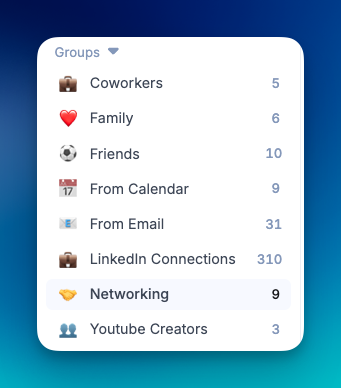
Image: Group view in Dex
Tip: Use tags or groups to categorize your network by relevance to your pivot. Filter your contact database to see these segments clearly. With Dex, you can also add notes about how each person is relevant to your transition. This becomes your pivot network map.
Step 2: Map Your Target Industry Landscape
Now you need to understand who matters in your target industry or role.
Research and identify:
Key Players & Decision-Makers - The people who hire for the roles you're targeting. VPs of engineering, founders, division heads, etc. You don't need to contact all of them immediately, but you need to know who they are.
Influential Voices - People writing, speaking, or building reputation in your target space. They're often more accessible than executives and can help validate your understanding of the industry.
Gatekeepers & Connectors - Recruiters, investors, operators who know everyone and actively help people navigate the industry. These are the well-connected people who can make introductions.
Peer Group - People one or two levels above where you are now, in roles you might be targeting. They're close enough to be relatable but far enough to be aspirational.
Community Builders - People running slack communities, forums, meetups, or conferences in your target space. They're connectors by nature and often generous with their time.
You can find this information through: LinkedIn searches (with filters for industry, role, geography), industry reports, podcasts, online communities, conferences, and people in your existing network.
Create a second map: your target landscape. This shows you where the gaps are, which key players or communities you have no connection to.
Tip: Create a separate list or tag for target industry contacts. As you make new connections, they automatically populate this list, giving you real-time visibility into your bridge-building progress.
Step 3: Identify Your Gaps
Compare the two maps.
Ask yourself:
Which key players have I not yet met?
Which gatekeepers or connectors am I missing?
Are there entire communities or circles I have no visibility into?
Which existing relationships am I closest to leveraging?
Where are my credibility gaps?
These gaps are your action list. You need to be strategic about which ones matter most for your specific pivot.
Build Your Pivot Relationship Strategy
Not every relationship matters equally for your pivot. You need to be ruthlessly strategic about where you invest your time.
Define Your Pivot Archetype
Career pivots fall into a few patterns. Identifying yours will shape your relationship strategy.
The Lateral Shift - You're moving to a similar role in a different industry or geography (e.g., marketing director in tech → marketing director in healthcare). You're keeping your function but changing context. Your existing peers are transferable; you need domain expertise and insider knowledge.
The Functional Leap - You're moving into a different function or role, often leveraging skills that were secondary in your current role (e.g., engineer → product manager, lawyer → entrepreneur). Your credibility comes from your existing domain, but you need advocates who can vouch for your capability in the new function.
The Industry Jump - You're staying in roughly the same function but moving to a completely different industry (e.g., strategy consultant in finance → strategy consultant in climate tech). You need deep industry knowledge and networks in your new space.
The Upstream Leap - You're moving up in scope or seniority (e.g., individual contributor → founder, manager → partner). You need mentors who've made this leap and peers who are operating at this level.
The Entrepreneurial Escape - You're leaving traditional employment to build something of your own (company, practice, venture). You need advisors, potential customers/partners, and fellow founders navigating similar journeys.
Knowing your archetype shapes everything. Which one are you? This changes your bridge-building strategy.
The Relationship Tiers for a Successful Pivot
You can't and shouldn't build relationships with everyone in your target industry. Instead, build in tiers:
Tier 1: Core Transition Team (3-7 people) These are your closest advisors in or around your target industry. They understand your background, believe in your pivot, and are actively helping you navigate the transition. They're giving you honest feedback, making introductions, and holding you accountable. These might include:
A mentor already established in your target industry
A peer who's made a similar pivot
A gatekeeper or connector who believes in you
An expert who deeply understands both your old domain and your new one
Relationship Cadence: Keep in touch with key contacts on a weekly or bi-weekly basis. Consistent, thoughtful check-ins show you’re invested in their success and help build stronger, lasting relationships. Dex makes this easy by letting you schedule and track these touchpoints, so no connection falls through the cracks.
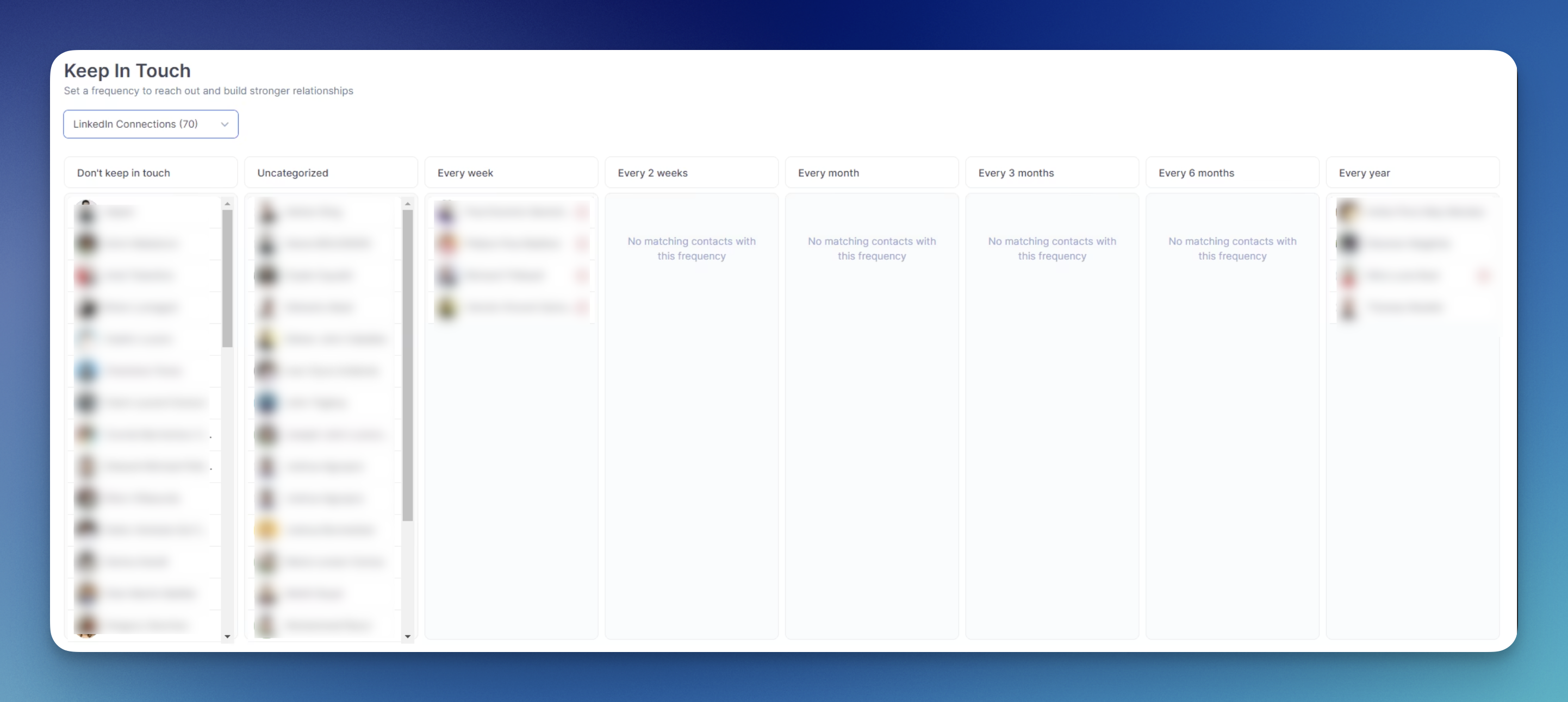
Image: Setting KIT frequencies using a kanban-style board on Dex
Tier 2: Active Explorers (15-25 people) These are people in your target industry or adjacent spaces who you're actively engaging with. You're learning from them, asking for their perspective, and building relationship equity. Some may become Tier 1 over time. These might include:
Industry experts you've connected with
Potential peers or collaborators
People in roles you might be targeting
Well-connected community builders
Relationship cadence: Monthly touchpoints. Informational conversations, asking for advice, genuine curiosity about their work and perspective.
Tier 3: Warm Prospects (30-50 people) These are people you've identified in your target industry but haven't yet connected with deeply. You're researching them, engaging with their content, and looking for natural introduction points. Some of these will move to Tier 2 when you connect more meaningfully.
Relationship cadence: Occasional engagement. You're on their radar but not requesting anything yet. You might engage with their content, share relevant articles, or look for natural connection points.
Tier 4: Ecosystem Awareness (100+ people) These are people in your target industry you're aware of but not actively engaging with. You're tracking them, you know what they do, and you'd recognize an opportunity to connect if it arose organically.
Relationship cadence: Minimal. You're just building awareness through content, community participation, or passive observation.
Trying to be Tier 1 with everyone is a mistake. You simply can't. You also can't move everyone from Tier 3 to Tier 2 immediately. Movement happens organically as you engage, ask for advice, and build relationship equity.
Execute Your Bridge-Building Strategy
Now that you've mapped your network and identified your target landscape, it's time to systematically build bridges. This is where intention becomes action.
The Opening: How to Initiate Connection Without Being Awkward
When you're pivoting, you're asking something of people you may not know well: their time, their insights, their introductions. You need to approach this thoughtfully.
The Honest, Curious Approach (Best for Exploratory Phase)
You're genuinely exploring, you're not trying to get something immediately, and you want to learn from people doing interesting work.
Example: "Hi Sarah, I've been following your work in climate tech for a while, your podcast on decarbonization was really eye-opening. I'm in the early stages of exploring a potential pivot from corporate strategy into climate-focused ventures, and I'd love to understand the landscape better. Would you be open to a 20-minute call? I have about three questions but mostly I just want to pick your brain about how you think about the industry."
Why this works: You're specific about why you reached out (you know their work), honest about where you are (early exploration), and transparent about what you want (her perspective). There's no hidden agenda, which makes people more likely to say yes.
Tip: Dex’s AI Assist makes this effortless: generate personalized conversation starters from your notes, the contact’s background, and your calendar or email history. Pair this with regular check-ins in Dex, and you’ll maintain meaningful relationships without missing a beat.
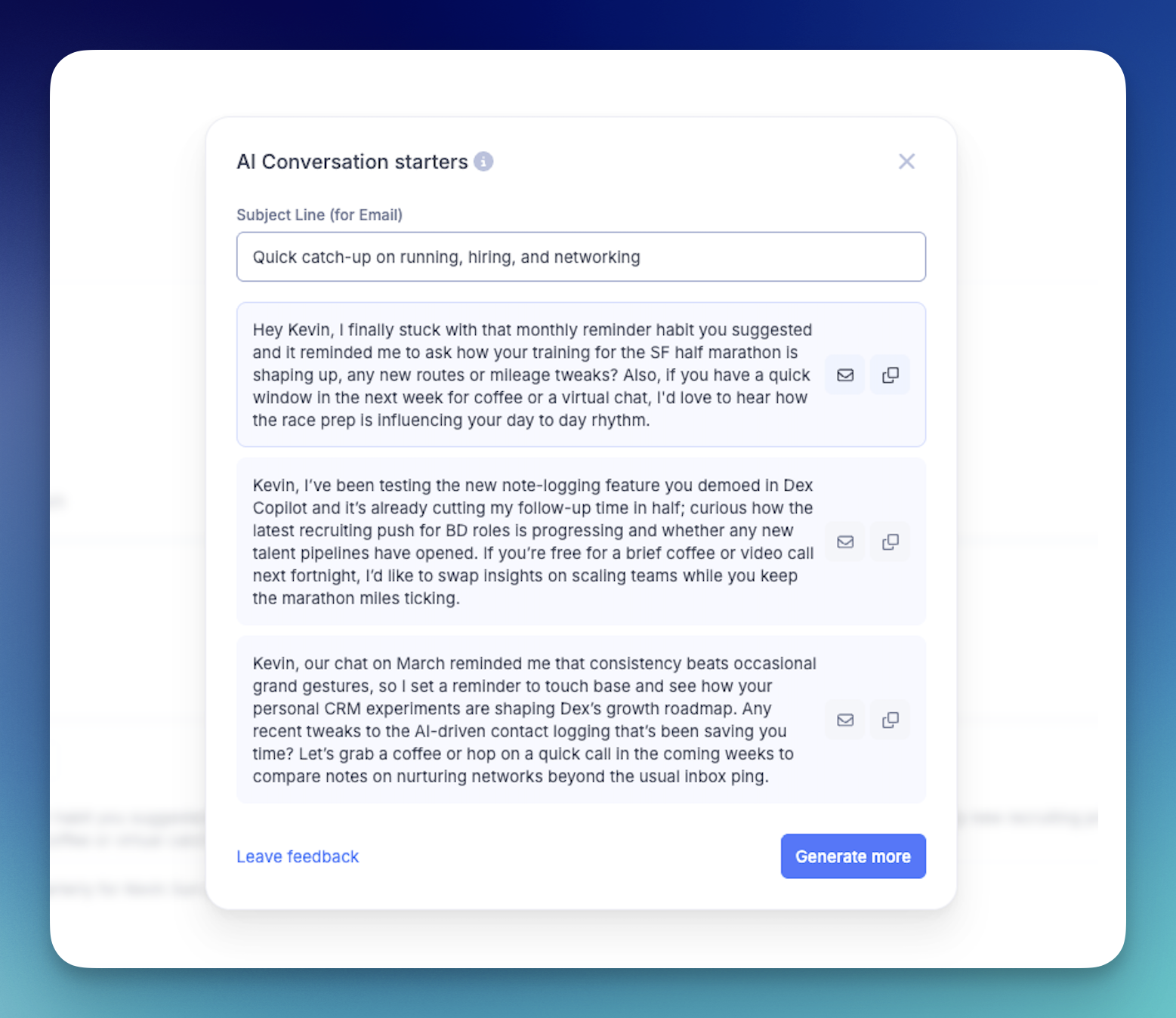
Image: Using AI Conversation Starters with context saved in Dex
The Validation Request Approach (Best for Active Transition Phase)
You've done your homework. You're seriously considering the pivot. You want input from someone credible to sense-check your thinking and help you understand if this makes sense.
Example: "Hi Marcus, I'm considering a pivot from operations in finance to operations in biotech, specifically around scaling and efficiency. I've been looking at your background because you made a similar jump about seven years ago. I'd love a 30-minute conversation to talk through: 1) what I might be underestimating about the transition, 2) how you'd evaluate someone like me coming from the outside, and 3) what one thing would give me the biggest advantage in your industry. Open to your honest feedback, I'm trying to make a good decision."
Why this works: You've done research (you know their history), you're not assuming they'll help (you're asking respectfully), and you're framing it as you wanting their honest input, not validation. People respect this.
The Mutual Benefit Approach (Best for Later-Stage Connections)
You've moved past pure exploration. You're positioning yourself as someone who might be genuinely useful to people in your target industry, even as a newcomer.
Example: "Hi Jennifer, I'm making a deliberate pivot from healthcare operations into healthtech, focusing on regulatory compliance and scaling. I noticed you're building out the operations function at MedTech Startup XYZ, and I think there might be something interesting here. I've spent 12 years thinking about operational scaling in regulated environments, and I suspect there are patterns from healthcare that could accelerate what you're building. Would you be open to a call where I share some thoughts on that, and also learn from you about what you're seeing on the ground?"
Why this works: You're positioning yourself as a potential resource (not just asking for help), you're specific about the value you might offer, and you're genuine about wanting to learn from them too. This is how relationships shift from one-way to mutual.
The Deepening: From First Call to Real Relationship
A single 20-minute call doesn't build relationship equity. The deepening is what matters.
After the initial conversation:
Send a thoughtful follow-up within 24 hours. Reference something specific they said. Don't ask for anything. Just acknowledge the value of the conversation.
Find a way to be useful. Did they mention a problem you have insight on? Send an article or introduction that might help. Did they mention a company they're interested in? Research it and send a thoughtful note with perspective.
Check in naturally over time. Don't disappear for six months. Light touch points, sharing relevant articles, engaging with their content on LinkedIn, mentioning them in conversation with others, keep you on their radar without being intrusive.
Move toward reciprocal benefit. As you settle into your new role, find ways to help them. Make introductions. Share knowledge. Provide perspective. Relationships deepen when both parties are giving.
The Introduction Architecture: Getting Introduced
The most powerful bridge to your target industry comes through warm introductions. This is where your existing network becomes valuable.
Map your existing relationships against your target industry. Who in your current network knows people in your target space? Create a list of potential introduction paths.
When you ask for an introduction:
Bad: "Hey, do you know anyone in healthcare tech I could talk to?"
Good: "Hey, I'm exploring a pivot into healthcare tech, specifically focusing on operations and scaling. I noticed you're connected to Jennifer Chen at MedTech Startup XYZ on LinkedIn. I've been researching their operations model and I think their approach to compliance is innovative. Would you feel comfortable introducing me? I'd love to learn from her perspective on scaling in a regulated environment."
The specificity matters. You're not asking your contact to do work for you (finding someone in an entire industry). You're asking them to open a door to someone specific you've researched. That's much easier to say yes to.
The Community Entry Strategy
Not all relationships come from one-on-one connections. Some of your most valuable relationships will come from being visible in communities in your target industry.
Join communities relevant to your target space:
Industry slack groups or online forums
Professional associations or affinity groups
Conferences or meetups (both in-person and virtual)
Online courses or cohort-based programs
Mastermind groups or cohorts specifically for people pivoting
Don't join with the goal of networking. Join with the goal of learning and contributing.
How to be valuable in communities:
Answer questions where you have genuine expertise (from your old domain)
Share relevant articles or insights
Help people with problems you've solved before
Ask thoughtful questions that help the community think deeper
Show up consistently (not just when you need something)
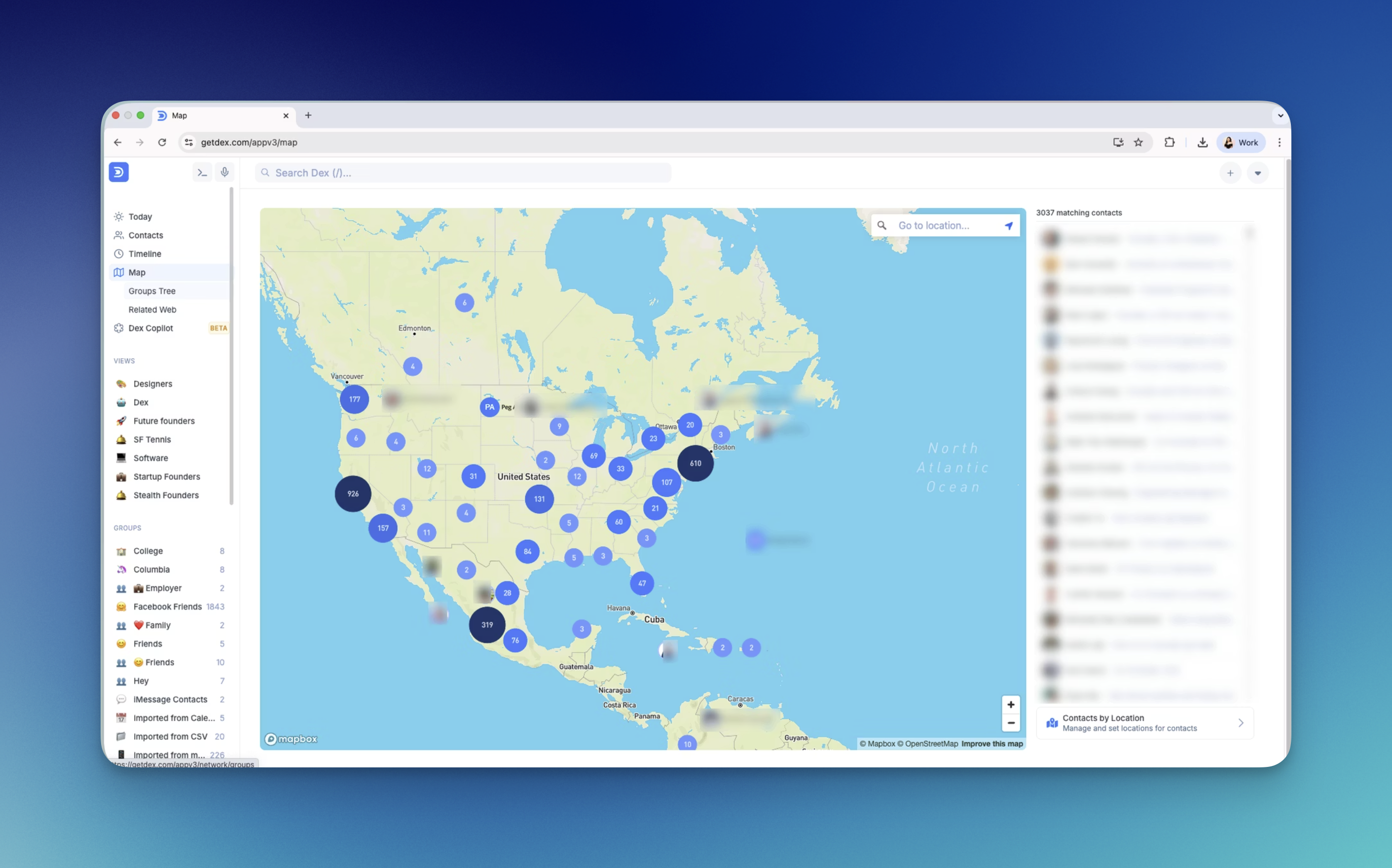
Image: Dex Map View on desktop. Also available on the mobile app.
Tip: Dex’s Map View makes this easier by visualizing your network within these communities, helping you track connections, identify key contributors, and plan where to engage next. Combine this with regular check-ins in Dex, and you’ll build visibility and meaningful relationships organically.
Navigate the Difficult Conversations of a Pivot
Career pivots involve some awkward conversations. Here's how to navigate them:
The "Why Are You Leaving?" Conversation
When you're still employed but planning a pivot, you face a dilemma: how much to tell?
If you're early in exploration: Keep it quiet. Don't broadcast your pivot until you're serious. Explore conversations privately with trusted mentors, but not with your current employer, colleagues, or manager.
If you're actively planning: You don't need to tell your current employer immediately, but you should tell trusted colleagues and mentors who might help you. Frame it as "exploring" or "curious about" rather than "committed to." This signals seriousness without creating drama.
Example: "I've been thinking about a potential pivot into [industry]. I'm still exploring and figuring out if it makes sense, but I'd value your perspective. You've navigated transitions before, how would you think about testing this before making a jump?"
If you're at the offer stage: Now you need to have the conversation with your employer. But by then, you've already built relationships in your new industry, you've validated the decision, and you know what you're walking into.
The "I'm New to This Industry" Conversation
You'll need to acknowledge that you're new to your target space. But how you frame it matters enormously.
Don't: "I'm completely new to this industry and don't know anything."
Do: "I'm new to the industry but I'm bringing [specific expertise] from [domain]. I'm genuinely curious and learning quickly. I'm less interested in being an expert immediately and more interested in understanding how problems that matter in [old domain] show up differently here."
This frames your newness as an advantage (fresh perspective, pattern recognition across domains) rather than a liability.
The "Can You Help Me Navigate This?" Conversation
People generally want to help. But you need to ask in a way that respects their time and makes it easy to say yes.
Don't: "I'm considering pivoting. Can we grab coffee?" (Too vague, too open-ended)
Do: "I'm seriously exploring a pivot into [industry]. I have three specific questions about [X] that I suspect you have insight on. Would you have 20 minutes in the next two weeks for a call? I'd really value your perspective."
Specificity makes people more likely to say yes. They know what they're committing to.
TIP: Log every advice conversation in Dex with specific notes about what you learned, what advice was given, and what follow-up actions you're taking. This accomplishes two things: 1) It ensures you actually implement the advice (not just listen and forget), and 2) It creates a record you can reference when following up, which shows you took the advice seriously.
Activate Your Network to Create Opportunity
Once you've built relationships and established yourself as serious about the pivot, your network can actively help create opportunities.
The Informational Interview That Leads Somewhere
Early conversations are exploratory. But as you move forward, some conversations shift to become more strategic.
Early stage (exploratory): "I'm exploring a pivot into climate tech. I'm curious about how you think about the industry and what you'd advise for someone making this transition."
Later stage (strategic): "I'm pretty committed to making this pivot into climate tech operations. I'm looking for either a role where I can lead scaling and efficiency, or an advisory/part-time position where I can contribute right away while learning the domain. What would you advise for how I position myself? And is there anyone I should talk to?"
The second conversation is asking your network to actively help you find opportunities, not just give you perspective.
The "Keep Me in Mind" Strategy
You don't want to be transactional, but you also want your network to know what you're looking for.
Send an update to your Tier 1 and Tier 2 contacts:
"Hi Sarah, I wanted to give you an update on my pivot. I'm now officially exploring operations roles in climate tech, preferably with companies that are Series A-C and have complex scaling challenges. I'm genuinely excited about this transition and I'm looking for something that starts in the next [timeframe]. If you think of anyone I should talk to or opportunities that come up, I'd love to hear about them. I'll also keep you posted as this develops."
It's simply informing your network of your intention so they can think of you when opportunities arise.
The "Trial Project" Strategy
Sometimes the best way to bridge into a new industry is through a short-term project, not a full-time role.
Use your network to identify trial opportunities:
Consulting projects
Advisory roles
Volunteer leadership positions
Board of advisors roles
Fractional executive work
These serve two purposes: 1) They give you real experience in the new domain, and 2) They give potential employers proof that you can deliver value.
Example conversation: "I'm making a pivot into climate tech, but I want to get some real domain experience before I make a full jump. Would you know of any interesting projects where I could contribute immediately while learning? I'm flexible on the format as long as it's genuinely useful."
Your network is much more likely to think of these opportunities than they are to think of full-time roles.
Tip: Create a separate list called "Pivot Opportunities" and log any potential projects, roles, introductions, or conversations that might lead somewhere. Set reminders to follow up on these. Update your Tier 1 advisors on progress.
Common Pitfalls to Avoid in Your Pivot
Even with a solid strategy, people make predictable mistakes. Here's how to avoid them:
Burning Bridges in Your Current Industry
Yes, you're leaving. But you're burning bridges by being silent or dismissive about your current role while you're still in it.
The trap: You're already mentally checked out, so you're not engaging with colleagues, you're deflecting or downplaying your current work, and you're making it clear you're gone.
The better approach: Continue to do your job well. Continue to engage authentically with colleagues. When the time comes to tell people about your pivot, do it with grace and gratitude. People in your current industry may become part of your network for life, don't burn that.
Pivoting Into a Vacuum
Some people identify a target industry but don't actually build relationships in it before they make the jump. They hope to figure it out once they're "in."
The trap: You land a job or launch a venture in a new industry with zero relationships. You're isolated, you lack mentors, you don't understand the culture, and you're exhausted trying to figure it out alone.
The better approach: Build relationships 6-12 months before you're ready to make the full jump. When you transition, you already have people who've given you guidance, who understand your background, and who can help you navigate the new ecosystem.
Being Too Transactional Early
You reach out to people in your target industry purely to extract information or ask for introductions. You're not interested in building real relationships.
The trap: People sense transactionality. They help you once, maybe, but they don't become invested in your success. When you need them again, they're gone.
The better approach: Build genuine curiosity and interest in people's work. Ask questions that show you've done your homework. Look for ways to be useful to them. Treat relationship-building as a long-term investment, not a short-term transaction.
Overselling the Pivot
You're trying to convince everyone that your pivot makes perfect sense. You're over-explaining your transferable skills and trying to prove you belong.
The trap: You come across as defensive or uncertain. You're asking for validation instead of confidently explaining your decision.
The better approach: Be confident and clear about your pivot without over-explaining. "I'm making a move into healthcare tech because [reason]. I'm bringing [specific capability] from my background. I'm genuinely excited about learning the domain." That's it. You don't need to justify it to everyone.
Expecting Instant Credibility
You've been successful in your old industry. You expect people in your new industry to recognize that immediately.
The trap: You're frustrated that you're starting from zero, that you're not getting meetings with senior people, that you're having to prove yourself.
The better approach: Expect to start from zero. Embrace it. Your track record in another field is interesting, but it doesn't automatically translate. You need to earn credibility in your new domain.
Losing Touch With Your Old Network
In your excitement about the pivot, you disappear from your old industry. Five years later, you have no relationships there.
The trap: Your old network becomes irrelevant, when in fact it could have been valuable for collaboration, referrals, or even a return pivot.
The better approach: Maintain a few key relationships in your old industry. Not everyone, but your Tier 1 people. Send a check-in every year or so. These relationships compound in value over time.
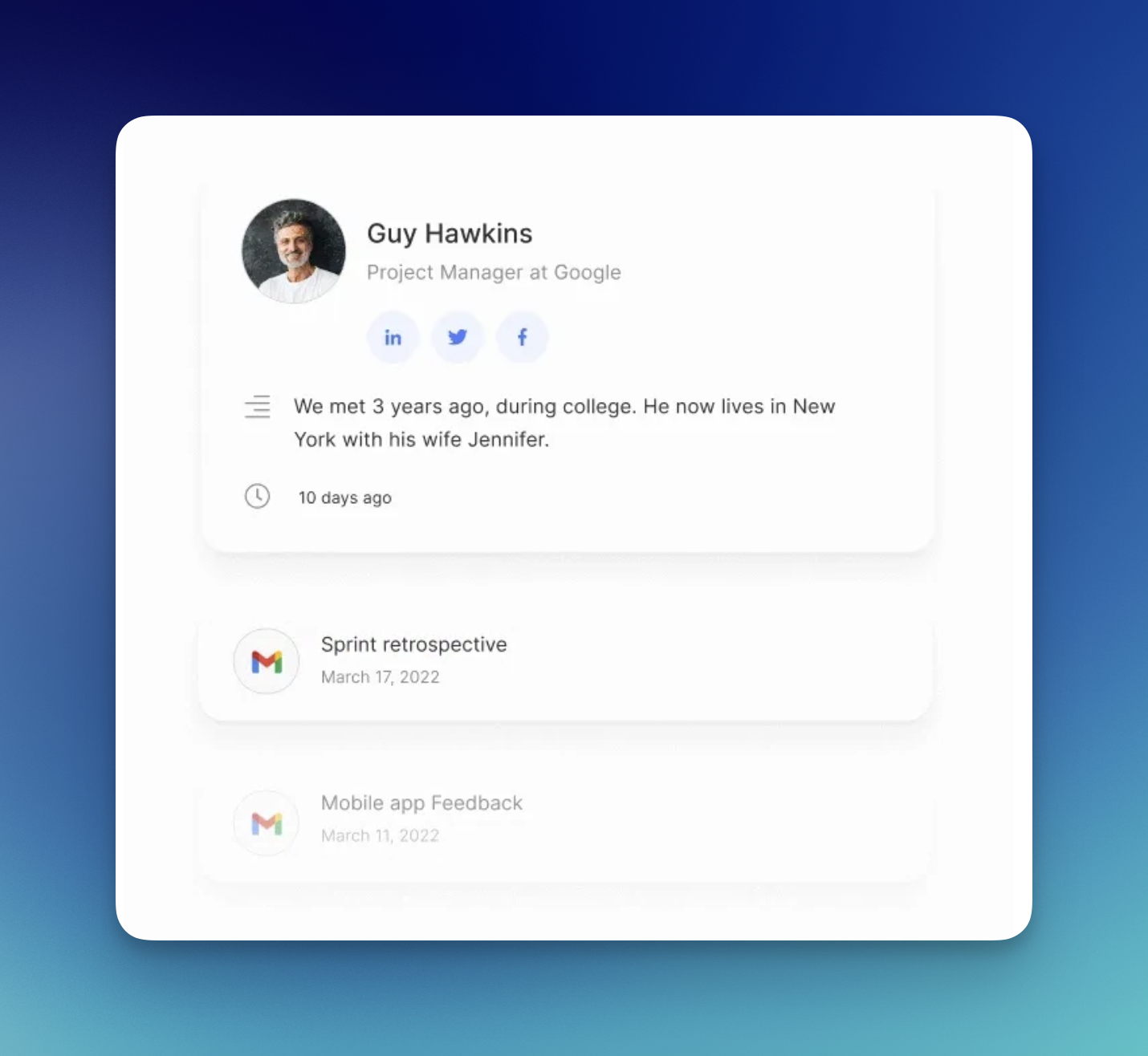
Image: See details and your past interactions with contacts in Dex, no matter how long ago.
TIP: Use Dex to track your old contacts and schedule reminders for annual check-ins, so staying connected becomes effortless and consistent.
Timeline and Expectations
How long does a career pivot actually take?
Most successful pivots follow a pattern:
Months 1-3: Exploration Phase You're testing the idea, having exploratory conversations, and building initial relationships. You're still primarily committed to your current role. Your goal is to gain clarity on whether the pivot makes sense.
Months 3-6: Positioning Phase You're now committed to the pivot. You're deepening relationships, getting serious advice, and potentially taking on side projects or volunteer work in your target domain. You're building credibility and validating your assumptions.
Months 6-12: Transition Phase You're actively working toward your entry point,, whether that's a job search, launching a venture, or making a formal move. Your network is actively helping you identify opportunities.
Year 2+: Integration Phase You're in your new role or business. You're building relationships within your new industry naturally. You're moving from "person making a pivot" to "person in this industry."
What if it takes longer?
Some pivots take 18-24 months. Career changes that require certifications, dramatic industry shifts, or geographic moves often take longer. This is normal. The professionals who succeed are those who stay committed to the relationship strategy throughout, not those who pivot once and hope it works.
Building a Reputation as a Strategic Pivoter
The professionals who become known as people who "move successfully across industries" gain something valuable: optionality. They're recruited because they've proven they can learn new domains quickly.
How do you build this reputation?
Execute your pivot successfully (deliver value in your new role)
Be generous with people who are considering pivots themselves
Articulate clearly how you translate skills across domains
Stay visibly engaged with both your old and new networks
Share what you learned about the pivot process itself
Within 3-5 years, you'll have become someone people think of when they're considering their own transition. That's valuable social capital.
Conclusion
Career pivots are simultaneously easier and harder than they used to be. Easier because there are more paths forward, more industries open to people with diverse backgrounds, more companies built by people who've worn multiple hats. Harder because there's more choice, more uncertainty, and more pressure to make the "right" decision.
But the professionals who navigate pivots successfully understand something fundamental: The transition itself is secondary to the relationships that support it.
You don't pivot because you have a resume that fits a new industry. You pivot because you have people who believe in you, who understand what you're bringing to the table, and who help you navigate the unwritten rules of your new world.
The relationships are the infrastructure. Everything else is details.
What This Means for You
If you're considering a career pivot, you don't need permission. You don't need to be perfectly qualified. You need three things:
Clarity on why you're making the move and what you hope to build in your next chapter
Strategy for how you'll use your existing network to bridge into your new industry
Consistency in relationship-building over months, not weeks. Pivots require patience.
Start today:
Identify one or two people in your target industry you can reach out to this week. Make them exploratory conversations, not asks.
Map your existing network for hidden bridges. You likely have more connections than you realize.
Join one community in your target industry. Show up. Be helpful. Learn.
Find a mentor who's made a similar pivot and ask them for perspective.
Block time each week for pivot-related relationship building. Treat it as non-negotiable.
The career you'll have five years from now is being built by the relationships you cultivate today.
Further Reading
Books
Transitions: Making Sense of Life's Changes by William Bridges (1980). The foundational book on understanding transitions as psychological journeys, not just practical changes. Essential reading for understanding the emotional dimensions of career pivots.
The Lean Startup by Eric Ries (2011). While written for entrepreneurs, the core principle of testing hypotheses quickly applies perfectly to career pivots. Treat your pivot like an experiment.
Designing Your Life by Bill Burnett & Dave Evans (2016). A practical guide to exploring career options through prototyping and experimentation. Excellent framework for testing pivots before committing.
Range: Why Generalists Triumph in a Specialized World by David Epstein (2019). Makes the case for why your diverse background is an asset, not a liability, when pivoting. Helps you think about your transferable skills.
The Start-Up of You by Reid Hoffman & Ben Casnocha (2012). Frames your career as an ongoing startup with relationship-building as core infrastructure. Highly relevant for pivots.
Never Eat Alone by Keith Ferrazzi (2014). The definitive guide on building relationships that actually matter. Essential for the relationship-building component of pivots.
Tools & Resources
Dex: Built specifically for managing relationships at scale. Use it to organize your pivot network, track conversations, and maintain consistency in outreach. The most valuable tool for a structured pivot strategy.
LinkedIn: Your research and discovery tool. Use advanced search to find people in your target industry, research companies, and identify connection paths.
Industry Forums & Communities: Slack communities, Reddit forums, specialized networks in your target industry. Join these for learning and visibility.
Career Coaches & Transition Specialists: Consider hiring someone who specializes in career pivots. They provide structure and accountability that self-directed pivots often lack.
Alumni Networks: If you have an MBA, undergraduate degree, or other institutional affiliation, tap into alumni networks in your target industry. These are often underutilized resources.
Final Thought
The career you'll have, the opportunities you'll encounter, and the impact you'll make will largely be determined by the relationships you build now, especially those you cultivate during transitions.
Career pivots are how you become the person you want to be. But they're also how you build a network that will support you for the rest of your professional life.
Start today. Reach out to one person, have one exploratory conversation, and trust yourself to reach your full potential.
Try Dex free for 7 days and start building your pivot network today.