
Networking After 40
The intentional playbook for rebuilding, deepening, and leveraging your network when you're mid-career, time-poor, and allergic to small talk.
Introduction
After years of building a career, pursuing personal goals, or juggling multiple responsibilities, you’ve likely accumulated experience, hard-earned lessons, and a contact list that’s a mix of outdated connections, forgotten business cards, and people you meant to follow up with long ago but just never got around to it.
After 40, the game changes completely. You're not trying to meet everyone or break into industries from scratch. You have something more valuable: credibility, experience, and established relationships that just need reactivation.

The mid-career networking paradox is real. You need connections more than ever (for board positions, consulting opportunities, career pivots, or entrepreneurial ventures), yet you have less time and patience for traditional networking than ever before. You're juggling a lot, but the reality is that your energy isn't infinite. The thought of attending another industry mixer makes you want to cancel and order takeout instead.
But worry not, because professionals over 40 actually have significant networking advantages. Your ability to cut through superficiality, your pattern recognition from years of experience, and your established reputation mean that when you network, it's far more effective. One strategic connection at this stage often yields more value than twenty random introductions in your twenties.
Now, you're no longer networking to get somewhere. You’re networking to create opportunities, give back, and surround yourself with people who energize rather than drain you.
This guide will show you how to build a sustainable mid-career networking practice that respects your constraints while maximizing your impact. The key is having the right systems and mindset in place.
Why This Guide?
A Note from the Team at Dex
We're a small team on a mission to help people build and manage meaningful relationships. Over the past seven years, we've developed and improved Dex, a personal CRM that streamlines how individuals organize and strengthen their networks, without the overhead of traditional CRM systems or the chaos of scattered contacts across multiple platforms.
In working with thousands of professionals, we've noticed something interesting: our most engaged users are often in their 40s, 50s, and beyond. They're senior executives, consultants, entrepreneurs, and career pivoters who've realized that their network is simultaneously their most valuable asset and their most neglected one.
These professionals shared common frustrations: the guilt of knowing they should stay in touch but lacking a system to do it well. They told us they needed a different approach, one built around quality over quantity, intentionality over volume, and genuine connection over transactional exchanges.
This guide dives into practical strategies you can implement immediately. Whether you're exploring a board position, launching a consulting practice, considering a career pivot, or simply maintaining relationships that matter, this reference will help you turn intention into action.
Tip: We don't claim to replace executive coaches or the invaluable mentorship of senior colleagues. Think of this guide as a complement to those resources, or a pragmatic, experience-based toolkit you can return to throughout your mid-career and beyond.
Why Networking Matters After 40
'Your network is your net worth.'
- Porter Gale
At 40-plus, networking isn't about career advancement in the traditional sense. You're likely past the scramble of early-career job hunting. Instead, networking becomes about three things: opportunity creation, knowledge exchange, and legacy building.
The Mid-Career Opportunity Landscape
The most valuable opportunities at this stage rarely come through job boards or recruiters. They come through trusted networks:
Board positions and advisory roles: Almost exclusively filled through personal connections and recommendations
Consulting and fractional executive work: Clients prefer working with known quantities or strong referrals
Partnership opportunities: Joint ventures, co-investments, and strategic partnerships require deep trust
Executive positions: Senior roles are increasingly filled through executive search firms who tap their networks
Career pivots: Transitioning industries or functions requires champions who'll vouch for your transferable skills
At this career stage, who you know doesn't just matter. It's often the primary currency.
The Compounding Returns of Long-Term Relationships
Age becomes an advantage in networking. The people you worked with 15 years ago are now in positions of influence. Your college roommate is a partner at a VC firm. Your first manager is now a C-suite executive. That peer from your MBA program? They're running a division at a Fortune 500 company.
These relationships have compounded in value. You have shared history, mutual trust, and deep context about each other's capabilities. A single reconnection can unlock opportunities that would take years to build from scratch with new contacts.
The challenge? Many of these relationships have gone dormant. Life got busy. People changed companies, moved cities, or shifted careers. The connections exist but need reactivation, and that's exactly what this guide will help you do.
The Giving Advantage
At this stage, you have something invaluable: the ability to help others. You can make introductions, provide advice, open doors, offer mentorship, and validate opportunities. This shifts the networking dynamic entirely.
Bottom Line: Your network is your professional infrastructure. It determines which opportunities find you, who'll back your next venture, and whether your career pivot succeeds or stalls. The difference between thriving and merely surviving in your 40s, 50s, and beyond often comes down to whether you've maintained and leveraged your relationships.
Build a Networking Operating System
'Systems beat goals.'
- James Clear
If you're over 40 and don't have a system for managing relationships, you're hemorrhaging opportunities. Good intentions don't scale. Memory doesn't scale. Scattered contacts across multiple platforms, email, your phone, and dusty business cards definitely don't scale.
You need an operating system. A repeatable, low-friction way to track, maintain, and leverage your network. Not because you're becoming more calculating, but because you're becoming more intentional. As David Rockefeller understood, powerful networks aren't built by chance, they're built through systematic effort.
You don't need Rockefeller's 200,000-card Rolodex. You need something simpler, digital, and designed for how busy professionals actually work. Here's how to build it.
Step 1: Consolidate Your Network
Right now, your network is fragmented. LinkedIn has your professional contacts. Your phone has personal ones. Gmail has old work colleagues. Your social media is a mixture of bots and friends that haven’t updated since 2009. That desk drawer has business cards from conferences. Your old Outlook from three jobs ago? Still has contacts you can't access.
This fragmentation is killing you. You can't reconnect with people if you can't find them. You can't nurture relationships if you don't remember the last conversation. You can't be strategic if you don't have visibility into your entire network.
Here's the consolidation process:
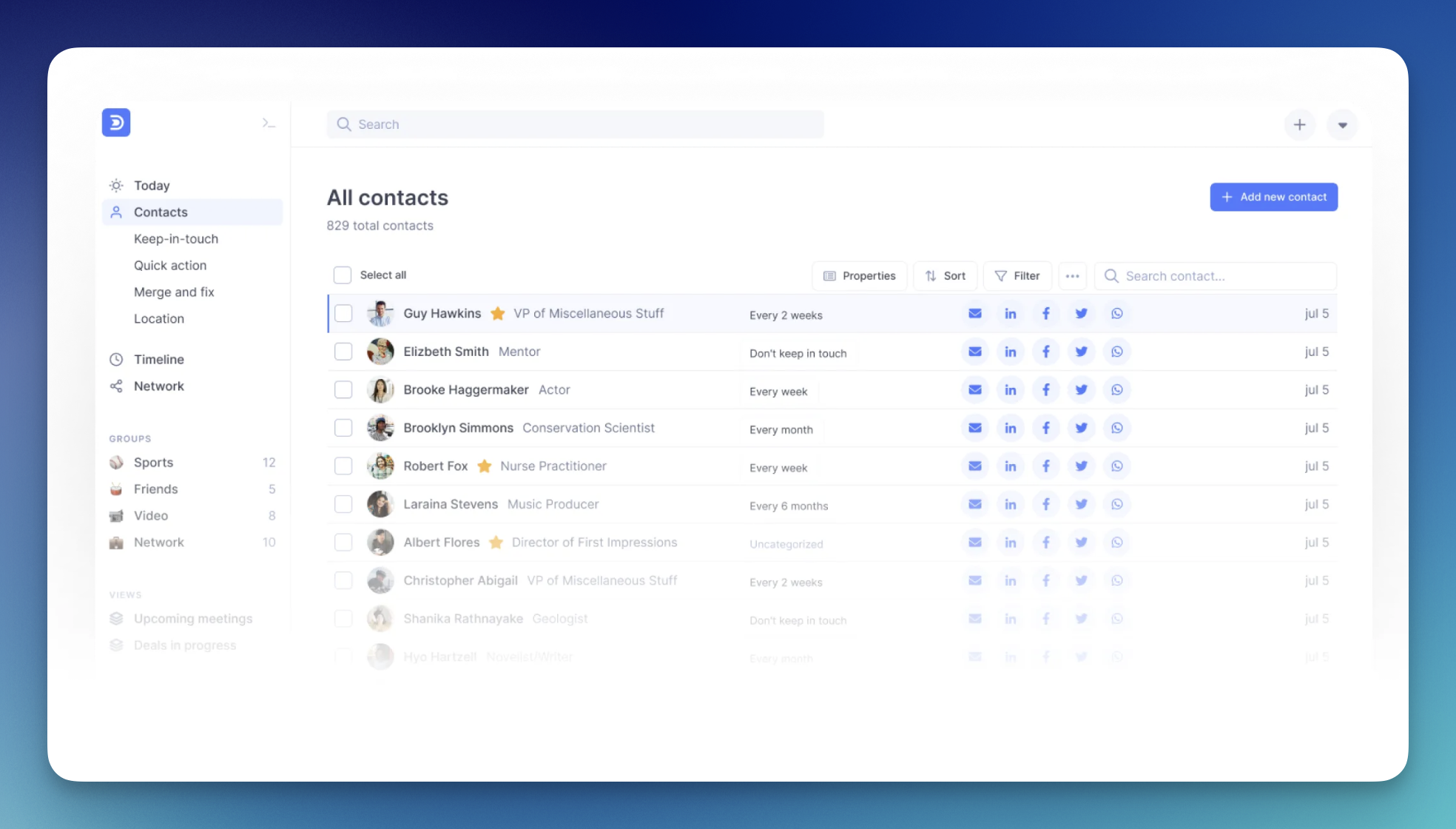
Choose Your Hub: Select a personal relationship manager (we recommend Dex, a personal CRM, but Airtable, Notion, or even a well-structured spreadsheet can work). It must support importing from multiple sources and make it easy to add context to each contact.
Import Everything: Pull in contacts from LinkedIn, email accounts (current and old), phone, and any other platforms where professional relationships live. Yes, this will be messy. Get it all in one place first.
Merge and Clean: You'll have duplicates. Lots of them. Merge them. You'll have outdated information. Update what you can, flag what you can't. This cleanup phase is tedious but essential, it's like organizing your garage. Painful now, liberating forever.
Set Up Auto-Sync: Configure your system to automatically pull in new LinkedIn connections, email contacts, and interactions. This ensures your system stays current without manual effort.
Time investment: 3-5 hours upfront. Payoff: years of clarity and efficiency. Do it this weekend.
TIP: All of this is fully doable in Dex. From importing and syncing contacts to merging duplicates, adding context, and maintaining an up-to-date relationship system, everything is integrated in one place.
Step 2: Add Context (Memory Over Raw Contacts)
A contact without context is nearly useless. You need to know:
How you know this person
What you last discussed
Their current focus and challenges
Personal details that matter (kids, hobbies, recent life changes)
How you might help them (or they might help you)
This is where your system becomes powerful. Every meaningful interaction should be captured with a quick note.
Example: 'Coffee 2/15/25. Discussed her pivot to consulting. Looking for healthcare clients. Daughter starting college in fall. Mentioned interest in board work. Follow up in Q2.'
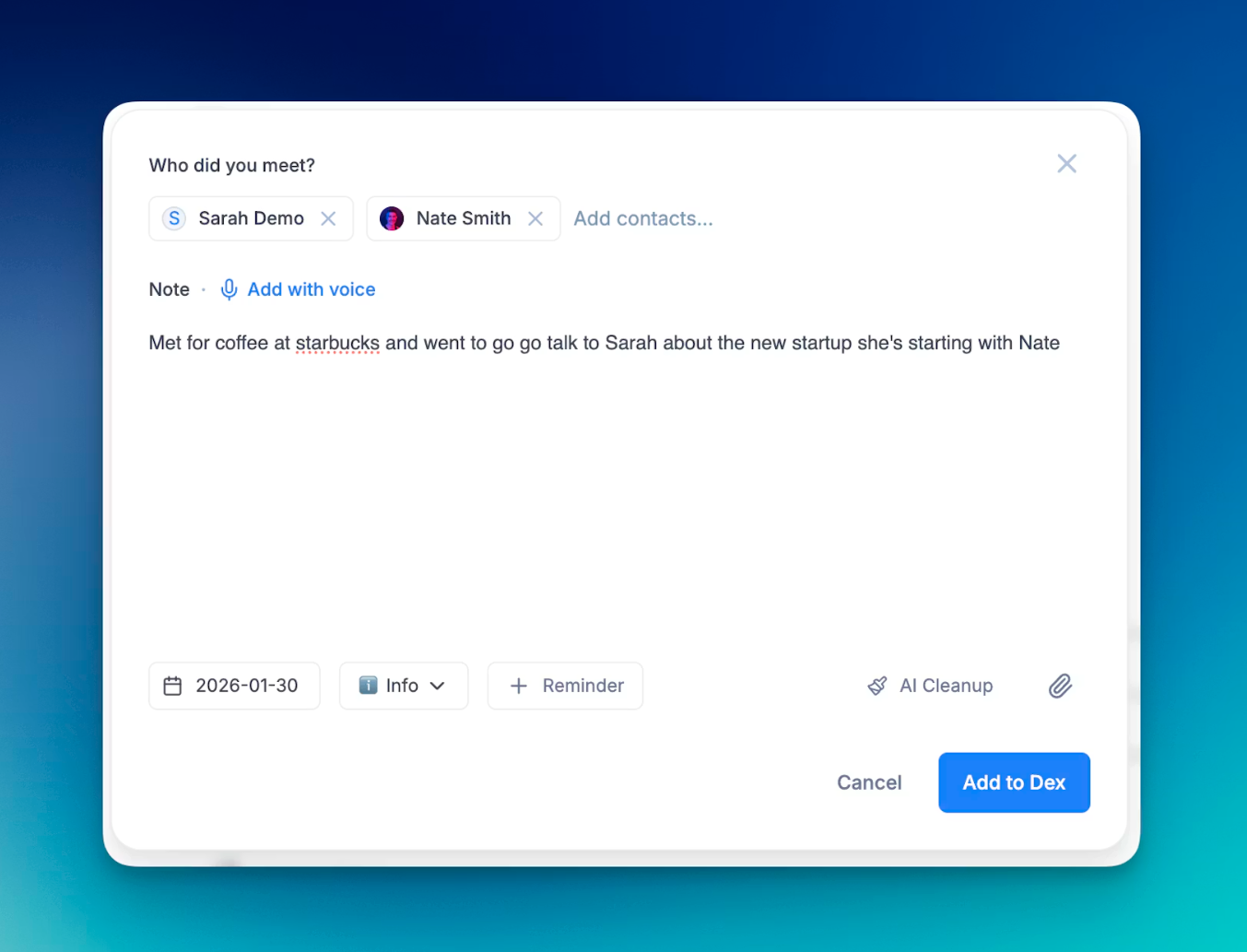
Image: Note Creation (with voice + AI cleanup) in Dex. Also available on mobile.
That's it. 30 seconds after the meeting. But six months later, when you see a perfect opportunity for her, you'll remember the specifics, and your outreach will be relevant, not generic.
Step 3: Categorize Strategically (Not Everyone Gets Equal Time)
Not all relationships deserve equal investment. Your time is your scarcest resource. Treat it accordingly.
Create these strategic groups:
Inner Circle (10-20 people): Your closest professional relationships. People who'll take your call at midnight. Mentors, key clients, long-term collaborators. Touch base monthly, even if just a quick text.
Active Network (50-100 people): Current colleagues, active clients, recent strong connections. People in your regular orbit. Check in quarterly, either through direct outreach or by engaging with their content.
Reactivation Targets (50-150 people): Former colleagues, old clients, people you once knew well but haven't connected with in years. These are your dormant relationships with high potential value. Create a systematic plan to reactivate them.
Potential/New Connections (unlimited): People you're meeting for the first time or exploring relationships with. Be selective here, as your new connections should be high-signal, not volume-based.
Archive (everyone else): Keep them in your system, but don't actively maintain these relationships. They're there if you need to search for someone or if they resurface organically.
The truth is you can't maintain 500 active relationships without sacrificing emotional depth. But you can maintain 20 deeply, 100 meaningfully, and keep the rest warm enough that reconnection is natural when needed.
With Dex, you can segment contacts using tags or lists, and use features like Keep-in-Touch reminders to stay on top of outreach based on the level of importance you’ve assigned. This turns a static list into a dynamic system that nudges you to invest your time where it matters most.
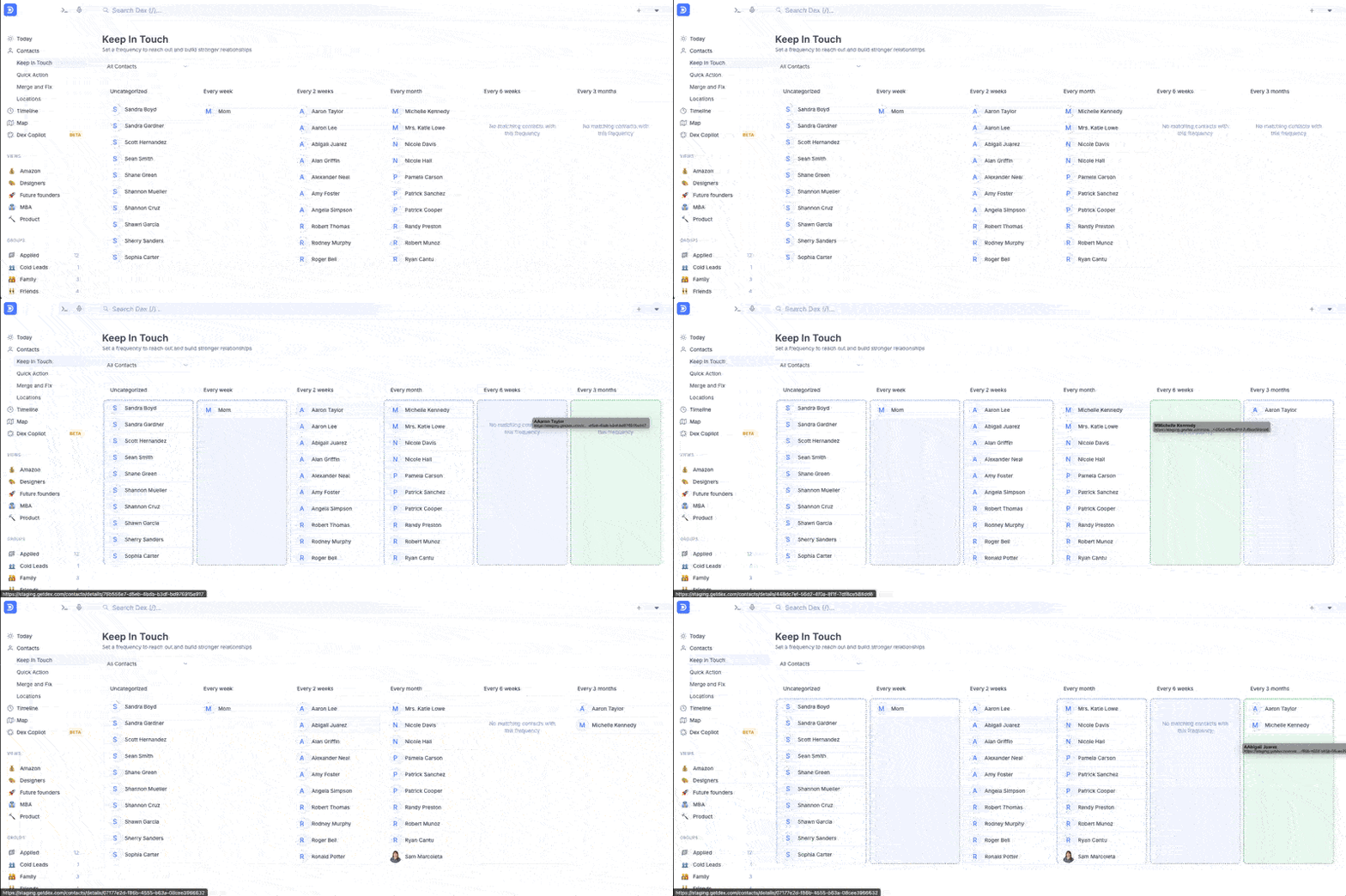
Image: Setting KIT frequencies using a kanban-style board on Dex
Step 4: Automate Reminders (Because You'll Forget)
Here’s what won’t work: trusting yourself to remember to follow up. You’re busy, and if you don’t have a system, two weeks can easily turn into two months.
Set up these reminder cadences:
Inner Circle: Monthly check-ins (some automatic, some manual)
Active Network: Quarterly touchpoints
Reactivation Targets: Annual reconnection
One-off reminders: For specific follow-ups tied to events, introductions made, or favors requested
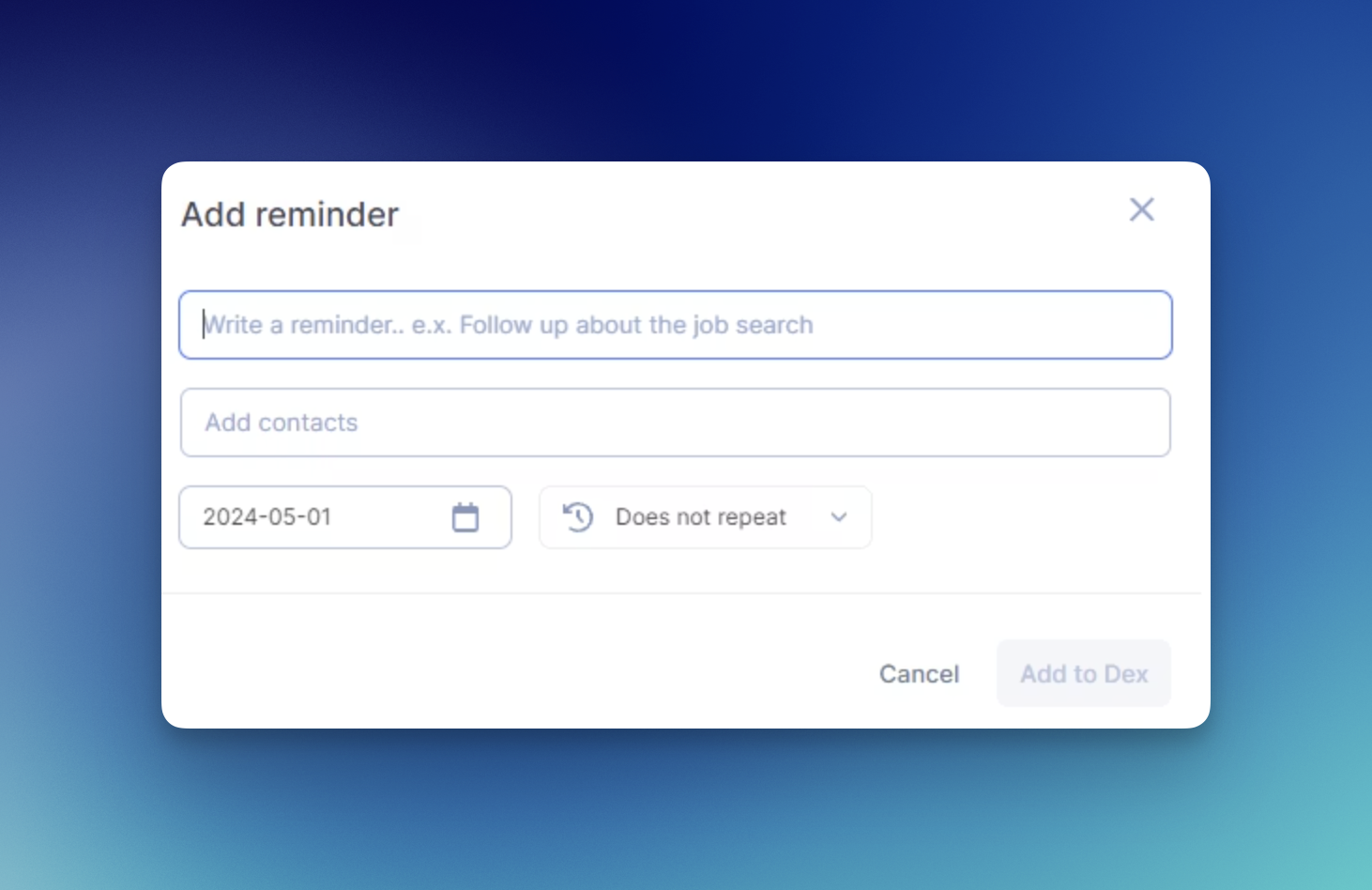
Image: Setting up reminders from Dex (also available on mobile)
Tools like Dex handle this automatically. When you log an interaction, it resets the clock. When someone is due for outreach, you get a reminder. It's simple, but it's the difference between intention and action.
Step 5: Make It Effortless and Reduce Friction to Zero
Your system only works if using it is easier than not using it. This is where Dex excels. Dex is designed specifically for busy professionals who need zero-friction relationship management:
Mobile Access: Log notes immediately after calls or meetings using Dex's mobile app. Whether you're in a taxi between meetings or waiting for your coffee, capture context while it's fresh—in under 30 seconds.
Browser Extension: Add people from LinkedIn, Twitter, and other platforms in one click using the Dex browser extension. No more copying and pasting contact information or switching between tabs.
Automatic Sync: Dex's sync features automatically pull in contacts and interactions from LinkedIn, Gmail, iCloud, and more. Your system stays current without manual data entry.
Email Integration: Track interactions without manual logging. Dex automatically detects when you've emailed someone and updates your last contact date. No extra work required.
AI-Powered Assistance: Use Dex Copilot to draft reconnection messages, introduction emails, or follow-ups based on your conversation history and notes. What used to take 10 minutes now takes 30 seconds.
The goal is to make relationship maintenance a natural part of your workflow, not an additional burden. When adding a contact takes one click, logging a note takes 30 seconds, and drafting follow-ups is AI-assisted, you'll actually do it. That's the difference between a system that works and one that collects dust.
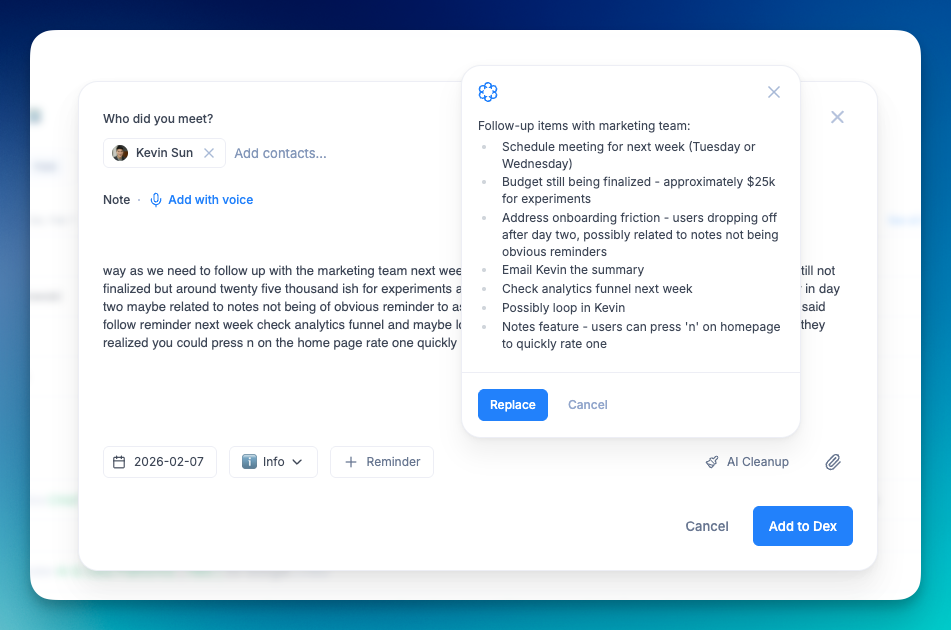
Image: Note Creation workflow in Dex (also available on mobile)
With this operating system in place, you've eliminated the chaos. You know who's in your network, and you have context on each relationship. You've categorized strategically, automated reminders, and removed friction.
You're operating from a position of clarity and control, and that changes everything.
How to Network Effectively After 40
'The richest people in the world look for and build networks; everyone else looks for work.'
- Robert Kiyosaki
The Reactivation Playbook
You already have the most valuable network you'll ever build,, it's just dormant. The people you worked with 10-20 years ago are now in positions of significant influence. They remember you when you were both grinding it out. That shared history is irreplaceable.
Here's how to reactivate without being awkward:
The 'Saw Your News' Approach
This is the gold standard for reconnection. When someone in your network makes news, reach out immediately. Your message should be genuine and specific:
'Hey Sarah, Just saw you were named CMO at TechCo. Congrats! I remember when we worked on that impossible product launch at StartupX back in 2012. You were the person who figured out how to position something that probably shouldn't have worked. Clearly been putting that skill to good use. Would love to catch up sometime if you have a free 15 minutes.'
Why this works: It's timely (responding to their news), specific (references shared history), genuine (no immediate ask), and low-pressure (15 minutes, not coffee or lunch).
2. The 'Been Too Long' Direct Approach
Sometimes there's no news hook. That's fine. Just acknowledge the gap directly:
'Michael, It's been way too long since we connected—I think our last conversation was at the Chicago conference in 2019? I was cleaning up my LinkedIn and your profile reminded me of all the great work we did together at Acme Corp. I'd love to hear what you're up to these days. Any chance you have 20 minutes for a call next week?'
Why this works: You're honest about the gap (removes awkwardness), nostalgic (reminds them why they liked you), and curious (shows genuine interest in their current work).
3. The 'I Can Help You' Value-First Approach
This is the most powerful reactivation method. If you can lead with value, do it:
'Lisa, I know it's been years since we worked together at GlobalCorp, but I just connected two dots: You moved into the fintech space, and I'm on the board of a startup that desperately needs someone with your regulatory expertise for an advisory role. Paid position, quarterly meetings. Interested? Would love to catch up regardless.'
Why this works: You're solving a problem for them (or connecting them to an opportunity) before asking for anything. This is how you rebuild relationships quickly.
TIP: Reactivate 2-3 relationships per week. Make it a habit. Set aside Monday mornings or Friday afternoons. Your system will tell you who to reach out to, you just need to actually do it.
4. The Selective Expansion Strategy
At this stage, adding to your network should be strategic, not opportunistic.
When to expand your network:
• You're pivoting industries or functions
• You're exploring board opportunities
• You're starting something new
• Someone exceptional enters your orbit
• You genuinely enjoy someone
When NOT to expand your network:
• Someone wants to 'pick your brain' with nothing to offer
• Networking events that feel obligatory rather than interesting
• LinkedIn requests from strangers with generic pitches
• Any situation where you're collecting contacts rather than building relationships.
5. The Generous Giver Approach
At 40-plus, you can finally be the person you wished you'd known in your 20s and 30s. You can:
• Make powerful introductions
• Provide honest, experienced advice
• Open doors that would otherwise remain closed
• Validate ideas and opportunities
• Mentor people earlier in their careers
People remember who helped them. That junior person you mentored might run a division in 10 years. That entrepreneur you advised might exit for $100M and become an angel investor. That person you introduced to their dream job will take your call for life.
It’s also important to note that your reputation compounds. People talk. Being known as someone who helps others is the most valuable professional brand you can build.
When you're a giver, people bring you opportunities. They think of you first. They want you involved in their projects. This is how board seats, advisory roles, and partnerships materialize.
How to be a generous networker:
Make at least one introduction per week: Connect people who should know each other. Use your system to identify potential synergies.
Share opportunities you're not pursuing: Got a consulting lead you can't take? Pass it to someone in your network. Board opportunity not right for you? Recommend someone else.
Write recommendations and endorsements: LinkedIn recommendations from senior people carry weight. Write them generously.
Take mentorship calls: Say yes to a few 'pick your brain' requests per month, especially from people early in their careers or making transitions you've successfully navigated.
Share knowledge publicly: Write, speak, post thoughtful content. This scales your giving beyond one-on-one interactions.
Focus your generosity where it will have the most impact and where you genuinely enjoy helping.
What are Networking Mistakes to Avoid?
Even with a system and the best intentions, mid-career professionals make predictable networking mistakes. Here's how to avoid them:
Being “Too Busy”: Claiming you’re too busy to network is common, but your network is infrastructure. Neglecting it is like skipping car maintenance because you drive it a lot. Block 30–60 minutes each week for relationship maintenance. Treat it as non-negotiable, like a board meeting.
Only Reaching Out When You Need Something: Transactional networking is obvious. Surfacing only when you need a favor, introduction, or job will burn relationships. Follow the 5:1 rule: for every ask, provide five touchpoints of value like introductions, articles, congratulations, or genuine check-ins. Build credit before you spend it.
Failing to Follow Up: Without a system, great intentions often fade. Three months become six, then two years. Immediately log any promised follow-up in your system with a reminder.
Collecting Contacts Instead of Building Relationships: Real networking requires trust, mutual knowledge, and willingness to help.Focus on depth, not breadth. It’s better to have 50 people who’ll actually take your call than 500 who don’t remember you.
Making Thoughtless Introductions: Introducing people without a clear reason wastes time and can reflect poorly on you. Only connect people when there’s real synergy or mutual benefit. Think through how the introduction creates value for both parties.
Conclusion
'Don't wait until you need a network to build one.'
- Unknown
Networking after 40 is both harder and easier than it was in your 20s and 30s.
Harder because you're time-poor, energy-conscious, and selective about who gets access to you. You can't attend every event, meet everyone, or maintain hundreds of relationships. The casual, high-volume approach that might have worked earlier doesn't scale to this stage of life.
Easier because you've finally accumulated the advantages that make networking truly effective: credibility from years of experience, relationships that have compounded in value, the ability to genuinely help others, and the wisdom to be strategic rather than scattered.
The professionals who thrive in their 40s, 50s, and beyond aren't the ones with the biggest networks. They're the ones with the most intentional networks, relationships that are thoughtfully maintained, strategically leveraged, and generously cultivated.
What This Means for You
You don't need to become a different person or transform into an extroverted networker. You need three things:
1. A system that captures, organizes, and reminds you to maintain relationships. Without this, good intentions evaporate into guilt and missed opportunities.
2. A strategy that sets clear priorities about who matters most, what you're trying to achieve, and how networking fits your life stage and goals.
3. Consistency of small, regular investments in relationships compound dramatically over time. An hour a week maintained consistently beats occasional networking binges.
The Next 10-20 Years
The next decade or two will likely include your most significant career achievements, highest earnings, and greatest impact. Your network will be the infrastructure that enables all of it.
The board seats, consulting clients, partnership opportunities, career pivots, and entrepreneurial ventures that define this stage? They'll come through relationships you maintain now. Not relationships you'll build later when you need them. Relationships you're nurturing today.
Consolidate your contacts. Set up your system. Reactivate three dormant relationships. Make one generous introduction. Block an hour next week for network maintenance.
Your 60-year-old self will look back at this moment and be grateful you did.
Further Reading
Below are resources that complement the strategies covered in this guide:
Books
Never Eat Alone by Keith Ferrazzi (2014). The definitive guide on building and maintaining professional relationships. Emphasizes generosity and consistent follow-up.
Give and Take by Adam Grant (2013). Explores how givers build the strongest networks over time, essential reading for mid-career professionals who can finally give meaningfully.
The Start-Up of You by Reid Hoffman (2012). Treats your career as a startup, with networking as essential infrastructure. Particularly relevant for career pivots.
How to Win Friends and Influence People by Dale Carnegie (1936). Still relevant. The principles of genuine interest, listening, and remembering details are timeless.
Atomic Habits by James Clear (2018). Not specifically about networking, but the system-building principles apply perfectly to relationship maintenance.
Tools & Systems
Dex: Built specifically for busy professionals who need to manage relationships without overhead. Syncs with LinkedIn, email, and more.
Airtable: For those who want to build custom relationship tracking systems with more control.
Clay: Another personal CRM option with strong automation features.
Remember, the tool matters less than the system. Choose something that fits your workflow and actually use it consistently.
With the framework from this guide and resources above, you're equipped to build and maintain a network that will serve you through your peak professional years and beyond. The relationships you nurture today become the opportunities of tomorrow.
Try Dex free for 7 days and start tapping into your professional capital to grow your network.