
Personal Relations: Meaning, Types, and Examples Explained
What "personal relations" actually means, the main types, real examples, and how personal relations differ from professional or public relations.



One of the best things you can do to grow both professionally and personally is to create and maintain personal relationships with those around you.
The term covers a wide range of human interactions, from the relationships we have with colleagues, business partners, and friends, to the connections we share with family.
Knowing how to navigate and strengthen these relationships can improve workflow, foster a positive work environment, and benefit you mentally and physically. In 2026, technology and AI tools make it easier than ever to stay connected, remember key details, and maintain meaningful interactions.
In this article, we’ll explore what personal relationships are, why they are important in both professional and social contexts, and practical ways to nurture them.
The short answer: a personal relationship is an ongoing connection between people who know each other as individuals, kept alive by regular contact and by remembering what matters to the other person. The main types are family, friends, and business relationships, which include clients, coworkers, mentors, and peers in your field.

What is Personal Relationship
There is a big difference between just having a relationship with someone and having a personal relationship with them. According to the Oxford dictionary, “a relationship is the way in which two or more people or groups behave toward each other.” This includes even simple interactions, such as the ones you have with your barista or server.
A personal relationship is deeper than this. It is an ongoing relationship between two or more individuals, which requires commitment from both parties in order for the relationship to be maintained. Depending on how close they are, this commitment includes frequent communication, time dedicated to each other, and remembering important life events like birthdays and anniversaries.
There are three major categories that the personal relationship occurs within.
Families- One of the most obvious sources of a personal relationship is that which one has with their family members. Most often this refers to blood relatives, but it can also refer to those adopted into the family.
Friends- friends are another great source of personal relationships. For some, these relationships can be stronger than familial ones.
Business relationships- in terms of networking and growing as a worker, business relationships are vital as they can greatly benefit one’s career.
Although all these are important, let’s pay special attention to business relationships and break them up into further categories. Most people already have a good handle and understanding of having a relationships with friends, and family. Business relationships for some though may be difficult to navigate since they have that added layer of one’s career attached to them.
The Different Types of Business Relationships
No matter who you are or what you do, whether you are the founder of a startup, a student hoping to land a dream job, or an experienced employee looking to further your career, understanding these relationships and their nuances can help you, your business, and career.
A personal relationship in business can be a bit different than the casual ones you have with friends and family. These types of relationships can be a bit stricter, in the sense that you need to maintain a certain level of professionalism within them, for them to succeed. Even work relationships that veer into friendships have a level of seriousness attached to them depending on the field you are in.
Below, we will have a quick overview of the different business relationships that you may encounter.
Relationships with Your Clients
If you are a business owner or work in a customer-focused position such as a salesperson, this one will be one of the most important for you. Even if you work on the back end though, knowing how to work with customers is still important.
For most businesses, the personal relationship with clients should be paramount as they are the ones investing in the business. Because of this, it is important to make sure you positively represent yourself and your company when you interact with them. A positive relationship with them can create trust and loyalty to your company. They may even refer you to others. Thus, keeping a strong positive network with clients is vital.
Make sure you also keep up with your clients. Especially if you are filling large orders, stay up to date with them and their needs. If it is appropriate, treat them to dinners or events to further your relationship.
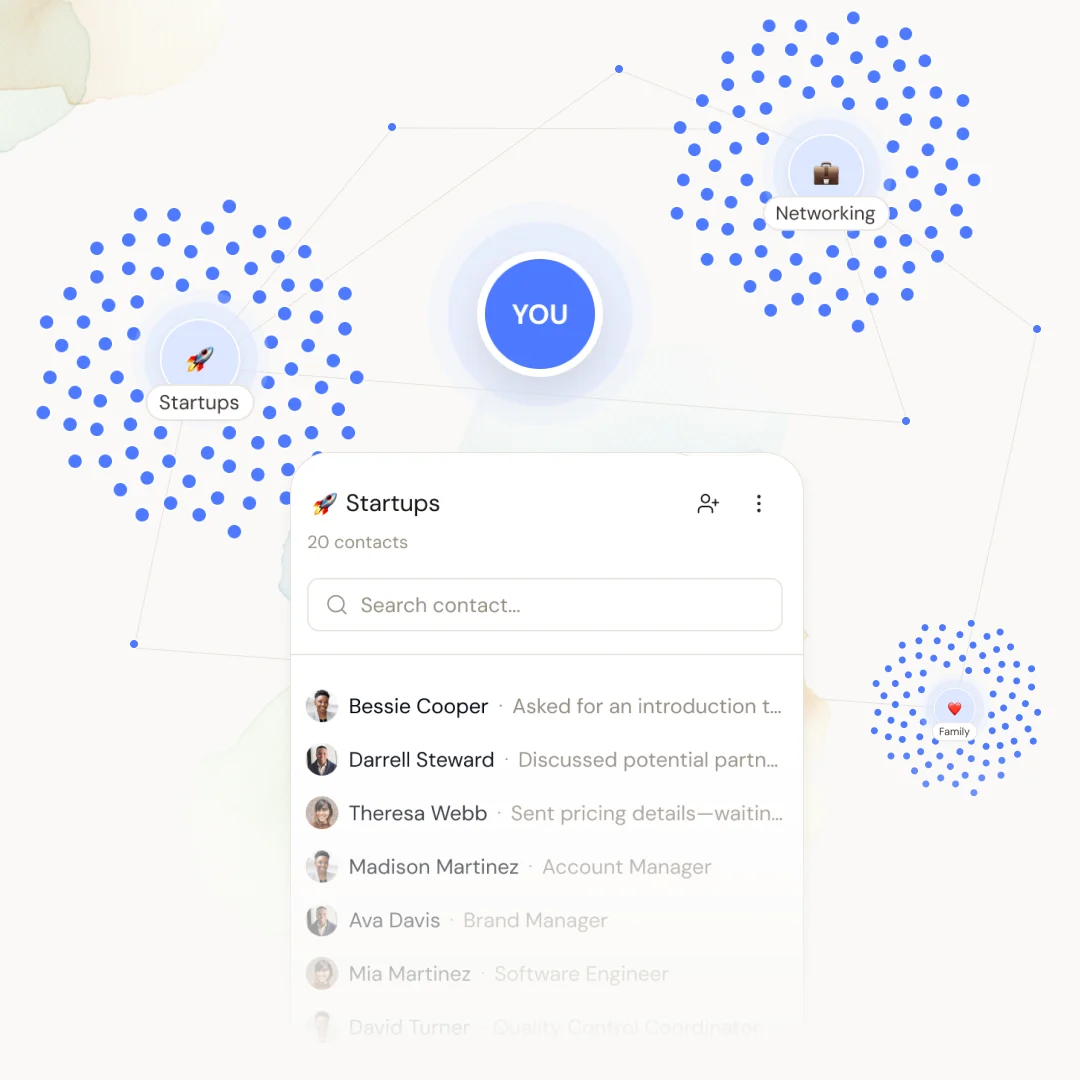
A personal CRM like Dex makes this easier to keep up. Put each client on a Keep in Touch cadence, say every 30 days, and Dex tells you when a check-in is due. Your emails, meetings, and notes with that client sit on one timeline, so you can see where you left off before you pick up the phone. If you record calls in Granola, Granola sync (added in September 2026 on the Professional plan) saves each meeting summary on every attendee's contact without you copying anything over.
Coworkers and Team Members
Coworkers and team members are your peers. Usually, coworkers are more circumstantial and acquaintance-type relationships, whereas team members are those with whom one works more closely and thus has a stronger connection.
With both team members and coworkers, it is important to maintain cordial relationships or even friendships with them. Conflict should be dealt with and resolved as soon as possible. A team that is in conflict will not be able to work as efficiently as one that has a good bond.
Some ways to avoid conflict or bad feelings are to avoid gossiping about coworkers and not pass the blame onto others unless it is warranted.
It also helps to remember the small things: a coworker's kids' names, the project they were proud of, the week they're moving house. Keep a note on their contact. Since August 2026 you can type @ in a contact's description in Dex to tag someone else, and the two get linked as related contacts, which is handy for remembering who introduced you or who works with whom.
The Mentor and Mentee Relationship
Another common relationship found both inside and outside of the office, is that of the mentor and mentee. For a college student, this may be the relationship between them and a professor they are close with.
Having a mentor is great, especially when you are beginning to transfer from school into your career. Having someone that can guide you through skills such as resume maximization and interview preparation can be invaluable to a young person leaving college. Once in a job, a new mentor can help you with questions about the position, confusion on work assignments, and much more.
Even when deep into your career, a mentor can also be a source of guidance. If you are at a crossroads in your job or are facing a moral dilemma, having someone you can talk to is useful in making the best decision for you. Bonus points if they have been in a similar situation.
As a mentor, you can learn a lot too. Most important for this piece, it can help to improve your relationship skills. It can also reinforce the knowledge you are imparting to your mentee and expand your network. Tools like Dex make it easy to keep track of mentors, note what you discussed, and set reminders to check in so the relationship stays active, not just a LinkedIn connection collecting dust. Dex also picks up job changes through LinkedIn sync, so when a former mentor moves to a new company you'll hear about it, and you have an easy reason to send a congratulations note.
Maintain Relationships with Others in Your Field
Another great thing to do is build and maintain relationships with others in your field. One place to do this is in college. There you can join a major-related fraternity or sorority or be involved in a club related to your major.
Along with making friends, you will have connections that you can use in your professional life. For example, if you are looking for a job, maybe a fraternity brother who graduated before you can get you a connection at his company.
Just make sure to stay in contact with these people, even after graduation. A personal CRM like Dex can help you track who you met, where, and when to follow up so those connections don't fade after you toss your cap.
Two features help when you meet people in person. The business card scanner in the Dex mobile app was rebuilt in July 2026: scan a card and the contact appears almost right away, with a photo of the card saved on it. And when you find someone on LinkedIn, Instagram, or X, tap Share and pick Dex to save them without leaving that app.

Why are Relationships Important: Professional Relationships
Now that we have discussed these relationships overall, you are probably asking: why are relationships important? Well, that is our next topic to cover. Maintaining good relationships with those around you not only creates a positive impact on your social needs, but they can positively impact your health also. Now, using technology and AI, you can automate reminders for follow-ups, track investor or client interactions, and strengthen workplace connections without losing the human element.
First, let’s look at how maintaining positive work relationships help you. After that, we will look at how your casual ones with friends and family create a positive life impact.
You Will Build Trust Among Those Who Support Your Company
As we mentioned, building trust in your customers by creating and maintaining a relationship will instill trust within them. A customer base that trusts you, and your services and products, is essential to the success of any business. If they like what you offer, it will not only keep them coming back but others will come too.
In the same vein, especially if your company is just starting, also make sure to build trust with your investors. Without the help of investors, company growth will be stunted and business opportunities will be missed.
It Makes Work More Enjoyable
Having a great personal relationship with those that you work with makes your job overall much more enjoyable. When you are working alongside those you see as friends, it will make what you do fun as you will be able to view what you are doing as contributing to a greater cause.
It Will Improve Your Work and the Work of Those Around You
Being happy within your workplace does not only increase your happiness, but it also increases your productivity. It has been seen that “people who enjoy working with their coworkers tend to consciously and unconsciously work harder, as they enjoy their current situation and want their company to do well in the future.”
In addition to this, collaboration among teams improves too. Having a good personal relationship with your team leads to members motivating each other, great communication that increases efficiency, and effectively causes everyone to work to the best of their abilities.
It Improves New Team Member Integration and Increases Employee Retention Rates
If you have a team that is already on edge with each other, and you give them a new team member, chances are that person will feel isolated from the group, and it will take a while for them to integrate into the team and get the ball rolling on their work.
On the other hand, a team that loves spending time with each other will be able to break the ice easier and accept the new member. As a result, they will be more productive, and they will likely produce better results. The stronger the personal relationship, the more willing they will be to collaborate and get stuff done.
Employee retention rates will also be higher. This goes back to our point of how having a great personal relationship with team members and coworkers make an employee happier and more efficient. If the employee is happy with where they are, chances are, they will do all they can to stay within the company.
If they are unhappy and feel as though they have no strong connections at work, or worst of all if they feel the work environment is toxic, they will likely take an opportunity to leave if they can. For managers and owners, this creates a headache of paperwork, having to deal with the employee that left, and spending time and resources on onboarding a new team member.
It Keeps You Healthy
Social isolation can bring on a host of health issues. Staying connected, both at work and outside of work will fill that need you have to socialize. As a result, you can minimize the risk of health issues such as depression that isolation can bring on.
Personal Relationship Benefits: Friends and Family
Although creating strong social relationships within work is important, do not neglect the relationships that you have with friends and family. These relationships are just as important. Letting them slide could end up hurting your performance at work. Social apps, video calls, and AI-assisted planning tools make it easier than ever to nurture friendships and family bonds, even across distances.
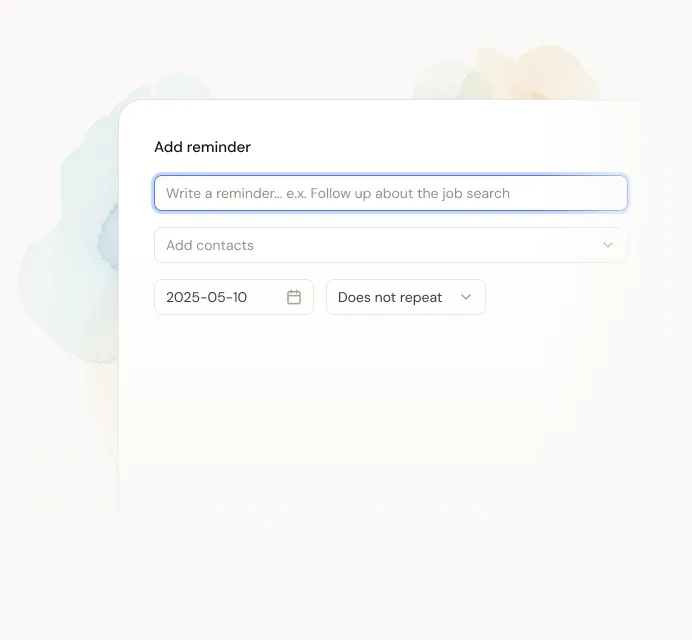
This is where most people drop the ball, because nobody sends you a calendar invite for your cousin's birthday. Add birthdays to the people you care about in Dex and they show up in your Daily Digest email that morning. Recurring reminders cover the rest: an anniversary, a friend's due date, the yearly call to your college roommate.
Relationships Get You through Hard Times
Sometimes, the network you have built may fail, or things may just not be going your way in your job no matter how hard you try. Having a strong support network around you, consisting of friends and family, can help you get over these obstacles that life lays down.
Although your work life may be hard due to situations out of your hands, the support you get from these people will help you to make it through.
They Help Us Relate to Others
Having strong friendships helps you to learn how to interact with others. Through friends and family, we learn important lessons such as how to overcome conflict. These are lessons you can take into your workplace, ensuring that you can build a strong personal relationships with your coworkers.
Relationships Keep Us Healthy
Great friends and family will want us to be the best person we can be. As a result, they will encourage us to keep up a healthy lifestyle, so that they can enjoy many decades with us. This healthy lifestyle can lead to mental sharpness and physical fortitude that will help you no matter where you work.
Tips on Building and Maintaining Strong Relationships
Now that we answered the question of ‘why are personal relationships important,’ let’s look at how you can build and maintain them. Building and maintaining a personal relationship does take dedication, but the work you put in will be well worth it, benefiting you in many areas of your life.
Stay in Contact With your Contacts
One of the most important things that you can do, whether these relationships are among friends, family, or people from your professional life, keeping in contact is one of the best ways to build and maintain a relationship with them.
This can be hard in today’s day and age though. Despite all the technology to keep us connected, we can get so bogged down in it that we let relationships slide.
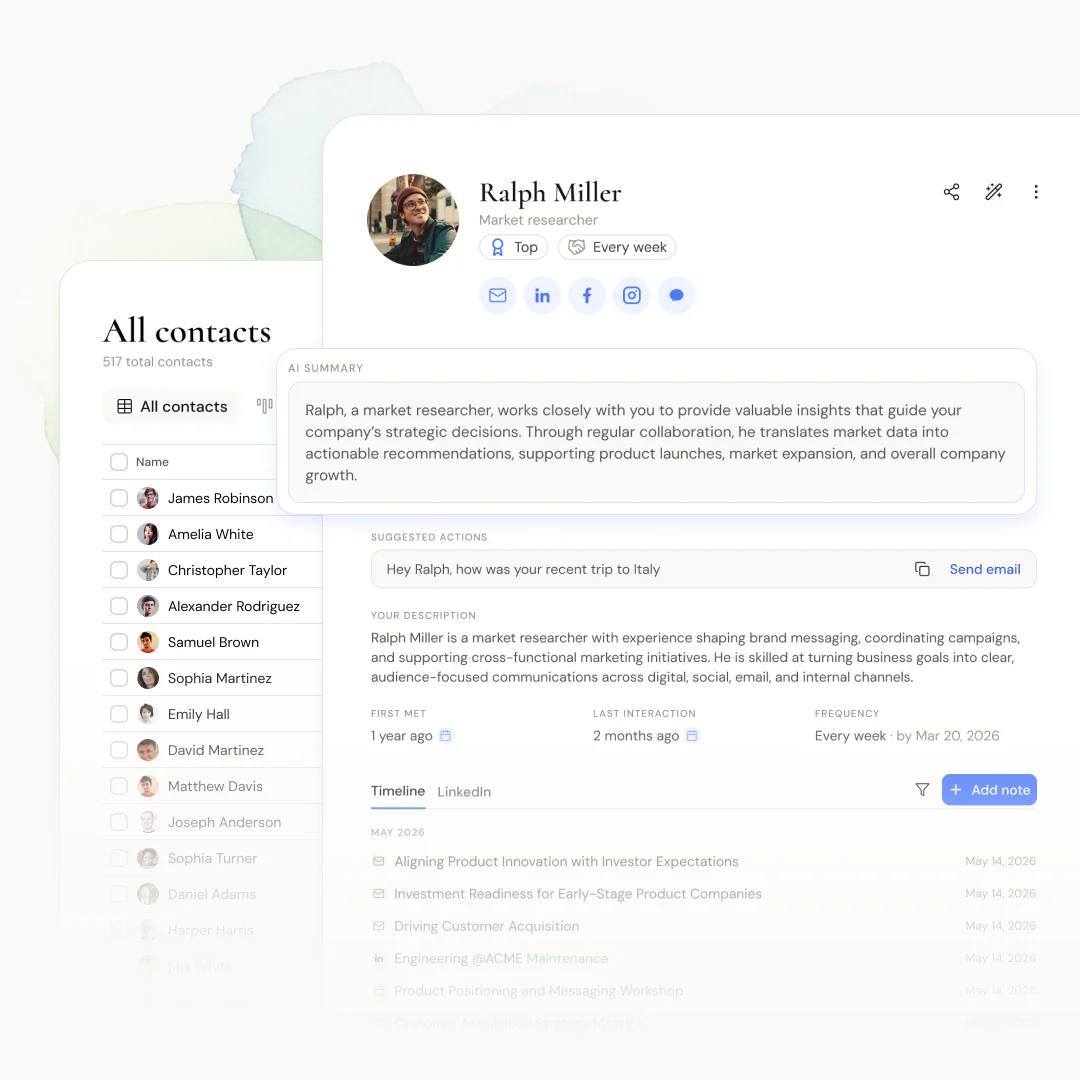
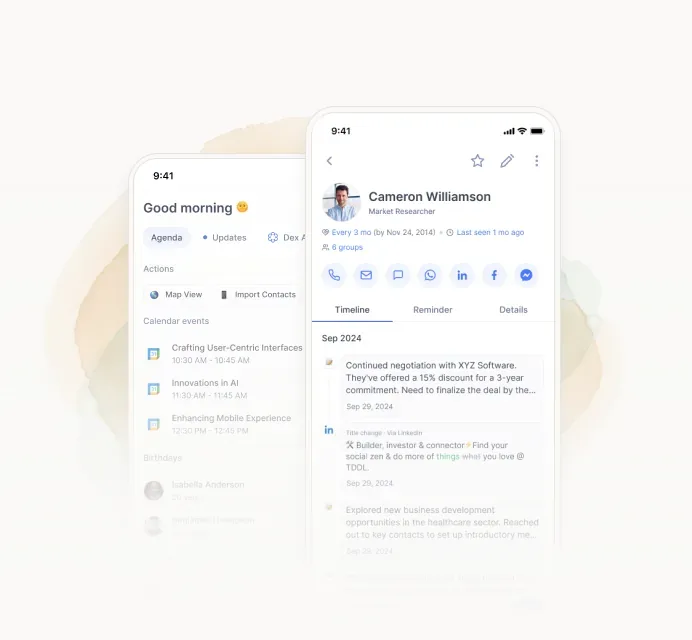
The fix is a system that remembers for you, and that's what we built Dex to be. Dex is a personal CRM that pulls your contacts and conversations from Gmail, Outlook, Google Calendar, LinkedIn, WhatsApp, and iMessage into one timeline per person. (iMessage and phone call sync run through the Dex desktop app on a Mac.) From there:
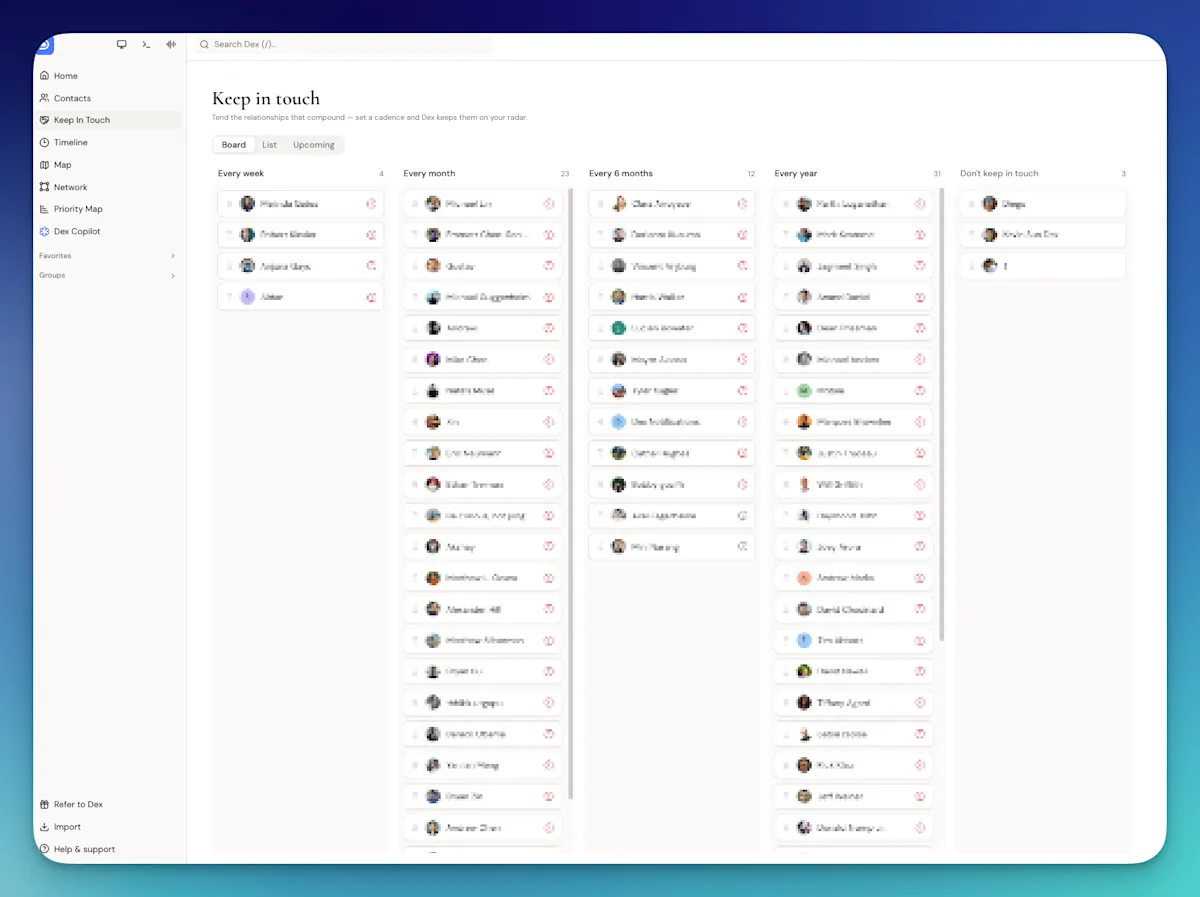
You choose how often you want to talk to someone, every two weeks or once a year, and Dex tells you when it's time. A text or email to them counts, so the reminder resets by itself.
The Daily Digest, rebuilt in June 2026, is one morning email with who you're due to contact, whose birthday it is, and your reminders for the day.
Each contact gets a short AI summary of your history together, so you don't have to open with "so, what's new?"
Dex Shuffle, launched in June 2026, picks someone you've drifted from, explains why they came up, and drafts a short message you can edit. You get two a day, and nothing goes out unless you send it.
Make Time for Each other
Along with staying in contact with each other, make sure to meet each other in person. Sure, email and texts are great. But the real way we build connections is by being with the people we want to bond with. If you live far away from each other, make sure to at least set-aside time to FaceTime or call each other.
Some ideas for spending time include bringing a new client out for dinner to say thank you for the business, bringing your family to the park for some bonding time, or going to a movie that you and your friends have been excited for the release of.
Dex can handle some of the planning. Ask Dex Copilot "who from my college friends group lives in Chicago?" before a trip, then have it put the dinner on your calendar. Since August 2026, Copilot can create and reschedule calendar events, and so can Claude or ChatGPT once they're connected through the Dex MCP server. And before a coffee with someone you haven't seen in a while, the pre-meeting brief emails you your recent emails, past meetings, and notes on them about 10 minutes ahead.
Make Sure to Set Boundaries
In both your professional relationships and those you have with friends and family, remember to set boundaries. One way you can do this is to set boundaries on your time. Make sure to not let others monopolize your time, to the point where other relationships or parts of your life begin to slip.
For example, if you promised to spend time with your family, maybe tell that coworker you can’t join them at the bar after work this Friday. This can go the other way too.
Show Appreciation for the People Around You
Make sure to show appreciation for those around you. Even a small showing of appreciation can go a long way. When those around you know that you appreciate them and the relationship you have, it will make the connection stronger.
Listen to What They Have to Say
In today’s age, it is so easy to half-listen to what those around us are saying. Make sure to avoid doing this. When someone is talking to you, give them your full attention. Showing that you are interested in what they will have to say will make them feel noticed and appreciated. It will also help you to get to know them better, and again, help to build new relationships and strengthen old ones.
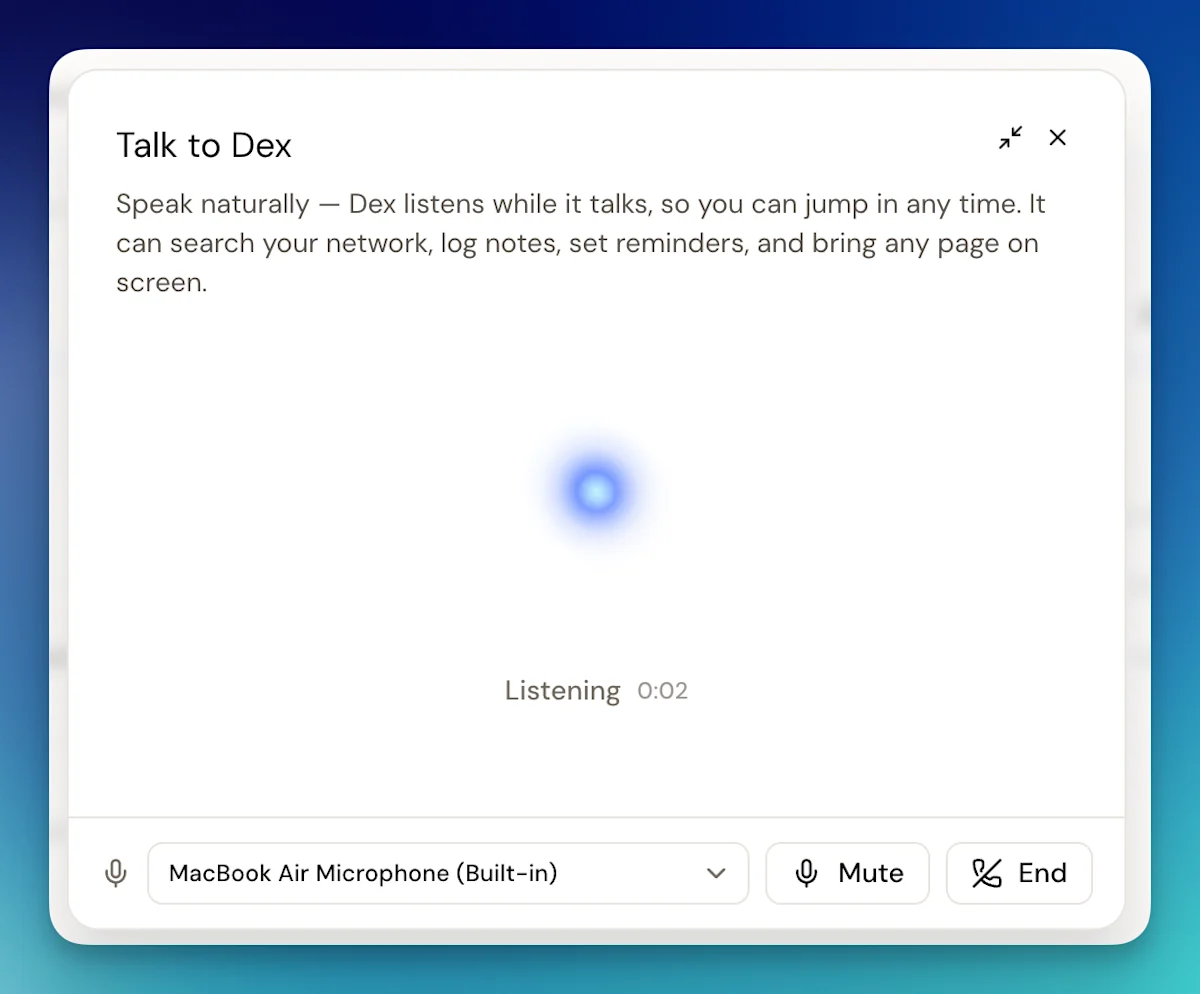
Then write down what you heard. The details people mention in passing, like a new job, a parent in hospital, or a trip they're planning, are the ones they notice you remembered months later. With voice mode, added in September 2026, you can say "Add a note to Sarah: she's starting a fintech company and loves hiking on weekends" on the walk back to your car, and Dex saves it to her contact. Voice mode is part of the Professional plan.
How Dex Helps You Keep Personal Relationships Going
Everything above comes down to two habits: reach out regularly, and remember what people tell you. Here's a 20-minute setup in Dex that covers both.
Connect your email, calendar, and LinkedIn so Dex can fill in who you know and when you last talked.
Pick the 20 to 50 people you most want to stay close to and give each a Keep in Touch cadence. Family and close friends might be every two weeks; old colleagues, every quarter.
Add birthdays and any dates that matter to those people.
After each conversation, leave a one-line note, typed or spoken.
Dex won't keep the relationship going for you. It tells you who's due and what you talked about last time, and the call is still yours to make.
What's New in Dex in 2026
Month | Update | How it helps your relationships |
|---|---|---|
Sep 2026 | Voice mode | Add people, log notes, and set reminders by talking |
Sep 2026 | Granola sync | Meeting notes land on each attendee's contact and update last-seen dates |
Aug 2026 | Desktop app for Mac and Windows | Syncs LinkedIn in the background, plus iMessage and calls on Mac |
Aug 2026 | @ mentions in contact descriptions | Links related people, like a spouse or the friend who introduced you |
Jul 2026 | Share into Dex and a rebuilt card scanner | Save someone from LinkedIn, Instagram, X, your phone contacts, or a business card in seconds |
Jun 2026 | Dex Shuffle | Resurfaces someone you've lost touch with and drafts a message |
Jun 2026 | Rebuilt Daily Digest | Keep-in-touch reminders, birthdays, and follow-ups in one morning email |
May 2026 | Claude and ChatGPT connection (MCP) | Look people up, log notes, and set reminders from your AI assistant |
Apr 2026 | Map View filter by group | See which friends live near where you're traveling |
The full list is in the Dex changelog.
Pricing: Dex Premium is $12 a month billed annually ($20 month to month) and includes Keep in Touch reminders, the mobile, web, and desktop apps, LinkedIn and WhatsApp sync, and map view. Professional adds voice mode, Granola and other notetaker integrations, Outlook, and mail merge. Both start with a 6-day free trial. A card is needed to start it, and you aren't charged until the trial ends.
Nurturing Meaningful Personal Relationships in a Tech-Driven World
What is the personal relationship? A personal relationship is a connection that you have with friends, family, and those that you work with. When looking at work relationships in specific, they can be broken down into even more categories like the relationship between coworkers and mentor/mentee relationships.
Remember that these relationships are important because they benefit both you, and those around you. They fill your needs socially, keep you physically and mentally healthy, and can even help your career. We hope that you are now prepared to set out and create great relationships! If you'd like help remembering who to call and when, try Dex.
Frequently Asked Questions About The Importance of Personal Relationships
Why Is A Relationship Important?
Personal relationships play a vital role in our overall well-being. They provide trust, support, and a sense of belonging, helping us navigate challenges both personally and professionally. Strong, healthy connections, with friends, family, colleagues, or mentors, improve emotional and mental health, enhance productivity, and even positively impact physical health. In 2026, combining digital tools and AI-assisted CRMs like Dex with in-person interactions ensures these relationships remain strong, meaningful, and resilient in a fast-paced world.
Why Is Connection Important In A Relationship?
Strong connections in personal and professional relationships have a profound impact on our well-being. Research shows that meaningful social contact can improve both mental and physical health, sometimes even outweighing other risk factors and contributing to a longer, healthier life. Relationships also provide crucial support during challenging times, offering guidance, encouragement, and resilience.
Why Are Human Relationships Important?
Human relationships are essential for personal well-being and professional success. They build empathy, trust, and respect, reduce conflict, and create a positive environment. Professionally, strong relationships attract talent, encourage collaboration, and drive results. Personally, they provide support, reduce stress, and foster a sense of belonging.
How Do You Keep Track of Personal Relationships?
Write down the basics, such as how you met, birthdays, family names, and what you last talked about, and set a reminder to reach out on a regular schedule. A spreadsheet works for a few dozen people. Past that, a personal CRM like Dex does most of it for you: it syncs your email, calendar, LinkedIn, and messaging apps, logs each interaction, and reminds you when someone is due for a check-in.
What Is a Personal CRM?
A personal CRM is a contact manager for your own relationships rather than a sales pipeline. It keeps notes and history on each person and reminds you to stay in touch. Our guide on what a personal CRM is covers how they work and who they're for.
Related guides


